




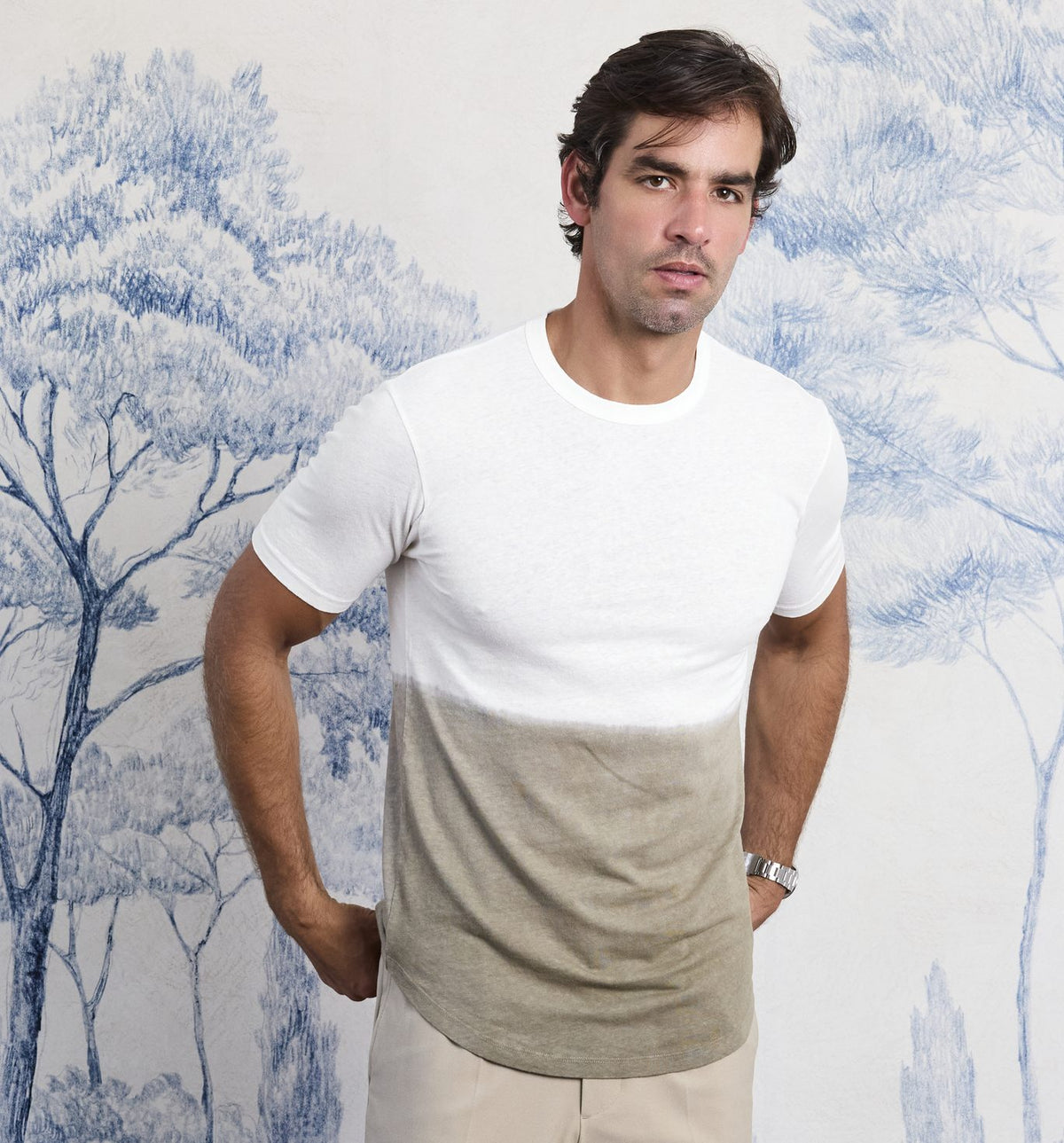
Cacio Pepe builds its t-shirt range around a few distinct silhouettes rather than an endless rotation of cuts, and each one is named for the construction detail that sets it apart. Between the slim Classico, the curved-hem Camisa, and the boxier 89 Crew, the lineup covers fitted, body-conscious shapes alongside a looser, retro-leaning alternative. The following sections break down what separates each cut, the fabrics used across them, and where the production happens.
The Classico Crew: Slim Fit with Modern Details
Cacio Pepe describes the Classico Crew as the quintessential classic t-shirt with a modern touch, built on a slim fit meant to enhance the upper body with a straight hem finished in a mini side split and a ribbed collar reinforced with extra stitching to hold its shape wash after wash. It is offered in colorways including Black and Honey, alongside an overdyed deadstock variant in a lightweight mini slub terry finished with contrast white stitching.
The Camisa Crew: Curved Hem and Enhanced Upper Body Fit
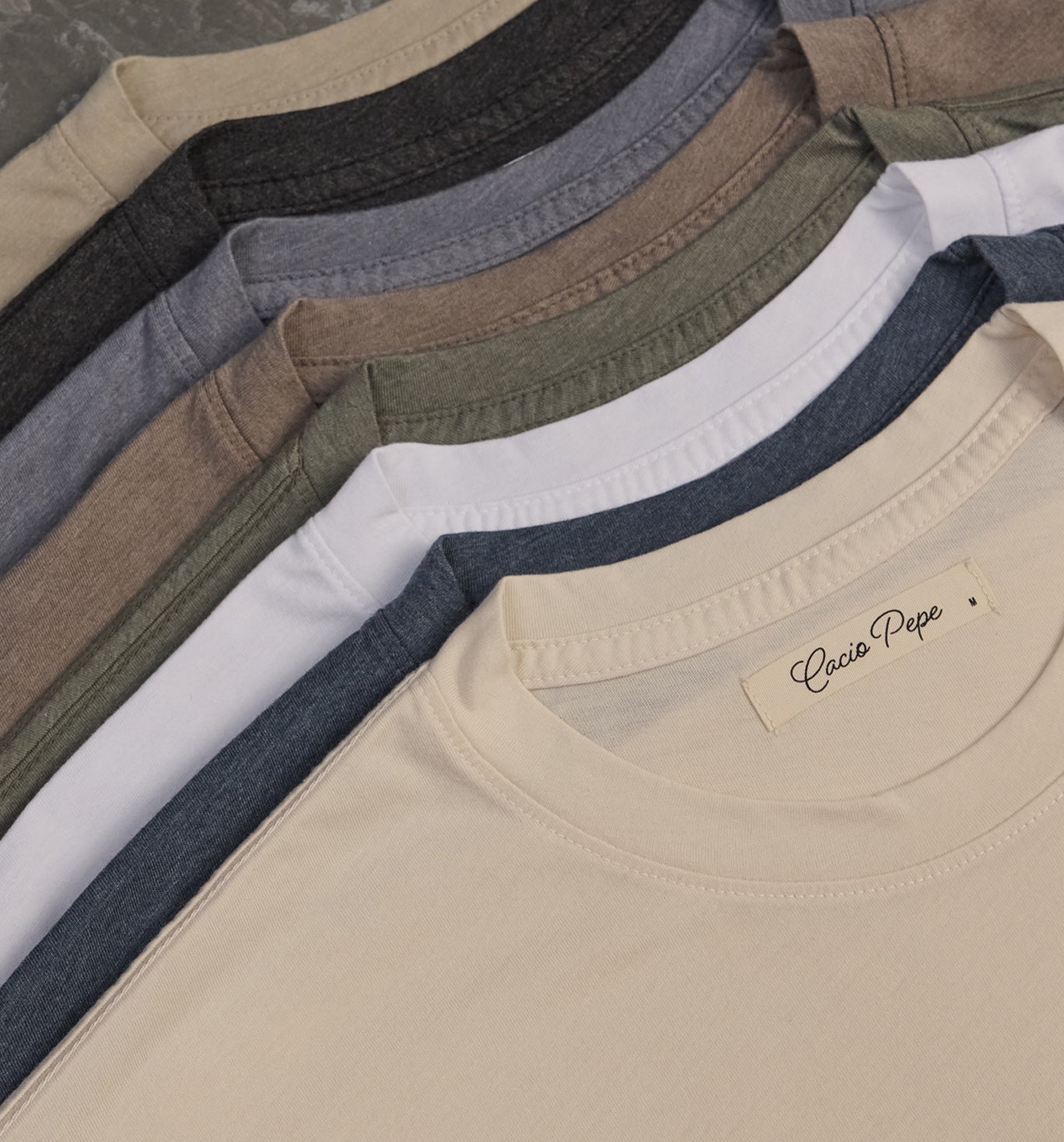
The Camisa Crew takes its name directly from its curved shirt hem, which is the defining feature that separates it from the straight-hemmed Classico. Like its sibling, it is built on a slim fit designed to enhance the upper body, and it relies on ribbed collar binding for stability over repeated washes. An Organic Hemp Cotton version of the Camisa Crew is also listed, described by Cacio Pepe as feeling like linen but softer and without the wrinkles, positioned as light and breezy for warmer temperatures or year-round wear. A best-selling Inside Out Camisa Crew takes the same curved-hem construction and turns the garment inside out before finishing, giving the style a different surface texture from the standard build.
The 89 Crew: Relaxed Fit Inspired by Late 80s and Early 90s Silhouettes
Where the Classico and Camisa lean fitted, the 89 Crew is built as a boxier, shorter style drawing on late 80s and early 90s silhouettes, with a straight hem finished in a mini side split and a self collar reinforced with stitching on the base version for durability. A pocketed variant, the 89 Pkt Crew, adds a chest pocket and swaps in a ribbed collar with reinforced stitching, and it is available in organic cotton across colorways such as Slate, Olivo, Iron, and Bronzo. Both the base 89 Crew and the 89 Pkt Crew carry a price of $33.00, putting them below the $75.00 price point attached to the Classico and standard Camisa styles.
Material Choices Across the Core Range: Organic Cotton, Hemp Blends, and Recycled Poly
Across the Classico, Camisa, and 89 Crew lines, Cacio Pepe draws on a small set of recurring materials rather than a sprawling list of fabric options. Certified organic cotton jersey is the base fabric for the Classico Crew and the standard Camisa Crew, both finished with recycled polyester labels and cut, sewn, and dyed in Los Angeles, CA, USA. A Dip Dyed Organic Hemp Cotton Camisa Crew extends the hemp blend into a treated colorway, sitting alongside the long sleeve Camisa Crew and long sleeve Camisa Henley that also use the same hemp fabric. A Recycled Poly build of the 89 Crew, offered in a Marina colorway at $33.00, rounds out the material list as the one synthetic-leaning option set against the organic cotton pieces that make up most of the range.
Made in USA Production and Sustainable Construction Details
Cacio Pepe describes itself on its brand page as a sustainably minded lifestyle brand built around quality, transparency, positivity, and style, with apparel positioned as premium, understated knitwear made from natural fibers or recycled synthetics. The Classico and Camisa core styles are specifically cut, sewn, and dyed in Los Angeles, CA, USA, tying the stated sustainability focus to a named production location rather than a vague claim. The brand’s manufacturing page also states a goal of being transparent about where garments are produced and what materials they are constructed from, which lines up with the fabric and location details attached to individual product listings. Beyond the core t-shirts, the brand also runs a Second Chance offering built on repurposed vintage t-shirts, hand selected and printed with an arch logo in water-based ink, finished with an interior neck label and an exterior Second Chance label printed on recycled poly canvas.
Styling Versatility and Seasonal Fabric Adaptations
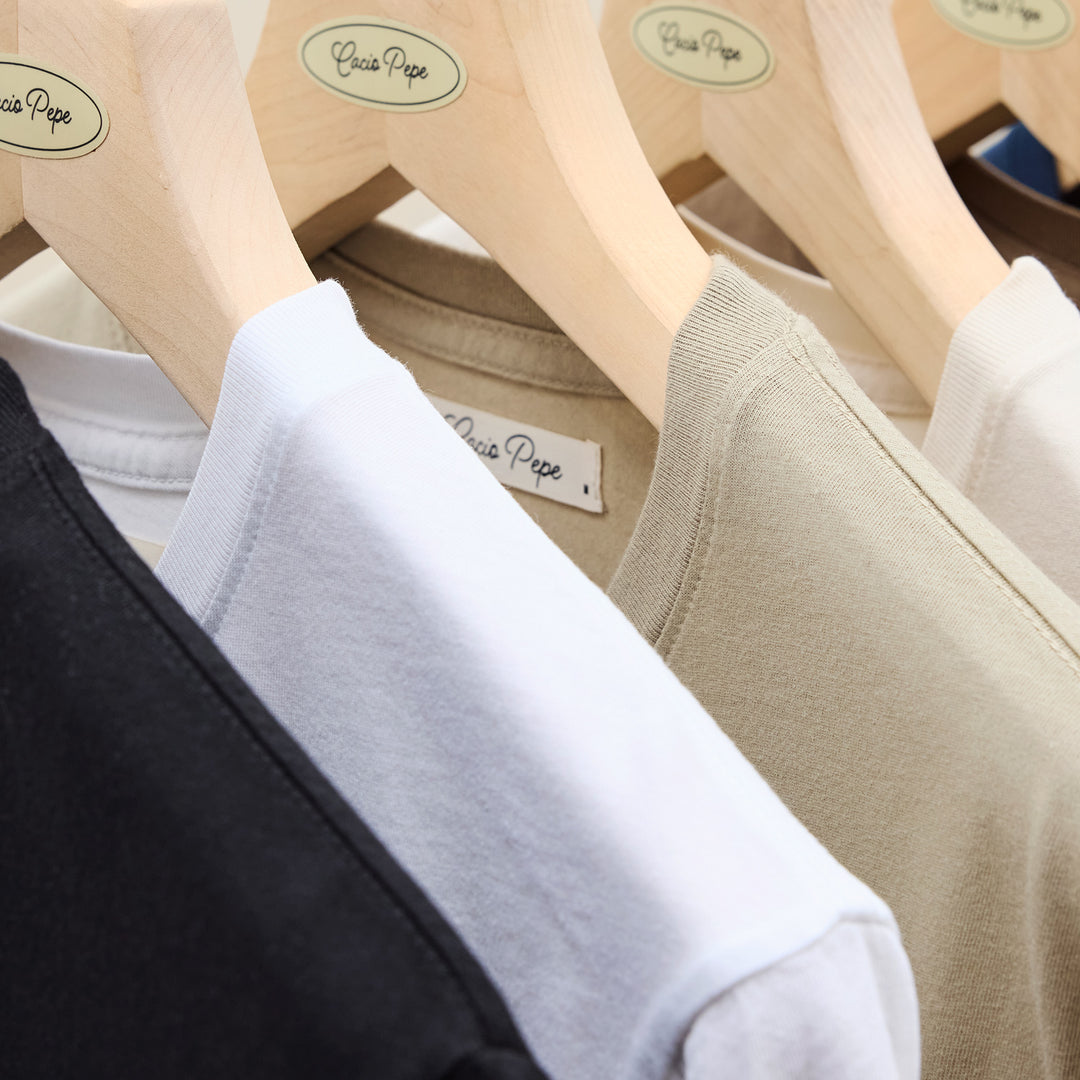
The spread between fitted and relaxed cuts within the t-shirt range means the silhouettes can serve different dressing occasions without duplicating one another. The slim Classico and Camisa styles sit closer to the body, while the boxier 89 Crew and its pocketed counterpart offer a looser alternative built around the same organic cotton base in most colorways. Limited deadstock pieces, such as a striped long sleeve Camisa and a striped 89 Crew made from fabric found in a fabric partner’s warehouse in LA, add heavier, double-faced constructions for cooler conditions without changing the underlying silhouette names. A deadstock striped Camisa Polo, built on the same curved-hem Camisa construction, further extends the range into an open-collar format limited to 50 pieces.
- The Classico Crew uses a ribbed collar with reinforced stitching and a straight hem with a mini side split detail.
- The Camisa Crew is defined by its curved hem and ribbed collar binding, built on the same slim, upper-body-enhancing fit as the Classico.
- The 89 Crew uses a self collar with reinforced stitching and a straight hem with a mini side split, cut in a boxier, shorter profile than the Classico or Camisa.
- The 89 Pkt Crew adds a chest pocket and a ribbed collar with reinforced stitching on top of the base 89 Crew construction.
- Fabric options across these silhouettes include certified organic cotton jersey, an Organic Hemp Cotton blend found on Camisa styles, and a Recycled Poly build on the 89 Crew’s Marina colorway.
Three distinct collars, hems, and fits give the range clear starting points rather than one shape repeated in different colors.