




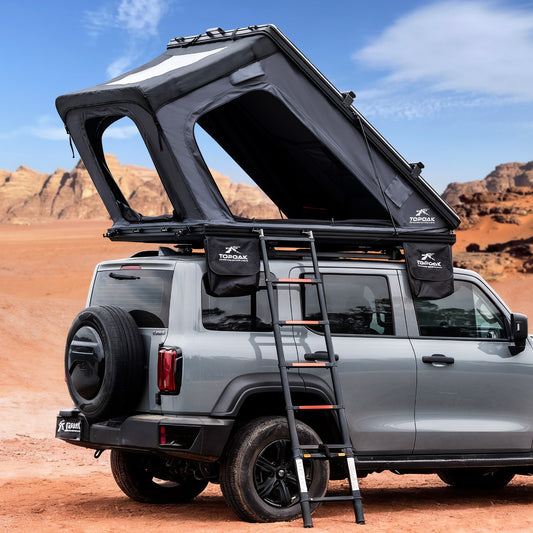
Buying a rooftop tent is one of those decisions that sounds simple until you start comparing options. Some tents look fantastic in photographs but weigh too much for your vehicle. Others promise comfort yet leave barely enough room to sit upright. And then there is the price, which can make you wonder whether sleeping on your car is really worth the investment.
That is why TOPOAK Overland deserves a closer look. Its range of hard shell rooftop tents includes lightweight designs, spacious family options, and models built with longer outdoor trips in mind.
But what actually makes these tents interesting beyond their appearance?
The Little Details That Matter After a Long Drive
Picture arriving at a campsite after six hours behind the wheel. You are hungry, tired, and probably more interested in making dinner than spending another forty minutes assembling a tent.
This is where a well-designed rooftop tent earns its place.
TOPOAK Overland uses opening mechanisms designed to make deployment relatively quick. Its hard shell models feature assisted opening systems, reducing the effort involved in preparing your sleeping area.
The aluminium shell also provides a sturdy protective structure when the tent is closed. Unlike traditional ground tents, there is no separate bag of poles to unpack every evening.
For travellers who change locations frequently, this convenience can make a real difference. You spend less time dealing with camping equipment and more time enjoying wherever you have stopped.
There Is More Than One Way to Camp
Not everyone needs the same rooftop setup. A solo traveller exploring mountain roads has different priorities from a family spending a long weekend beside a lake.
One appealing aspect of TOPOAK Overland is the variety within its tent collection.
The Galaxy Light is particularly interesting for drivers who want a relatively compact rooftop tent. Its slim profile makes it worth considering when vehicle height and overall weight are important concerns.
The Vision takes a different approach, offering a more spacious sleeping arrangement suited to campers who need additional room.
Meanwhile, the Stellar features panoramic viewing opportunities and a skylight, appealing to travellers who enjoy waking up surrounded by scenery.
These differences matter because choosing the wrong tent can become frustrating surprisingly quickly. Extra space is wonderful, but not if the tent exceeds your vehicle’s roof capacity.
Would You Actually Sleep Comfortably?
A rooftop tent can look impressive from the outside, but the real test happens at two in the morning.
You want enough room to stretch out, decent ventilation, and a mattress that does not leave you counting the hours until sunrise.
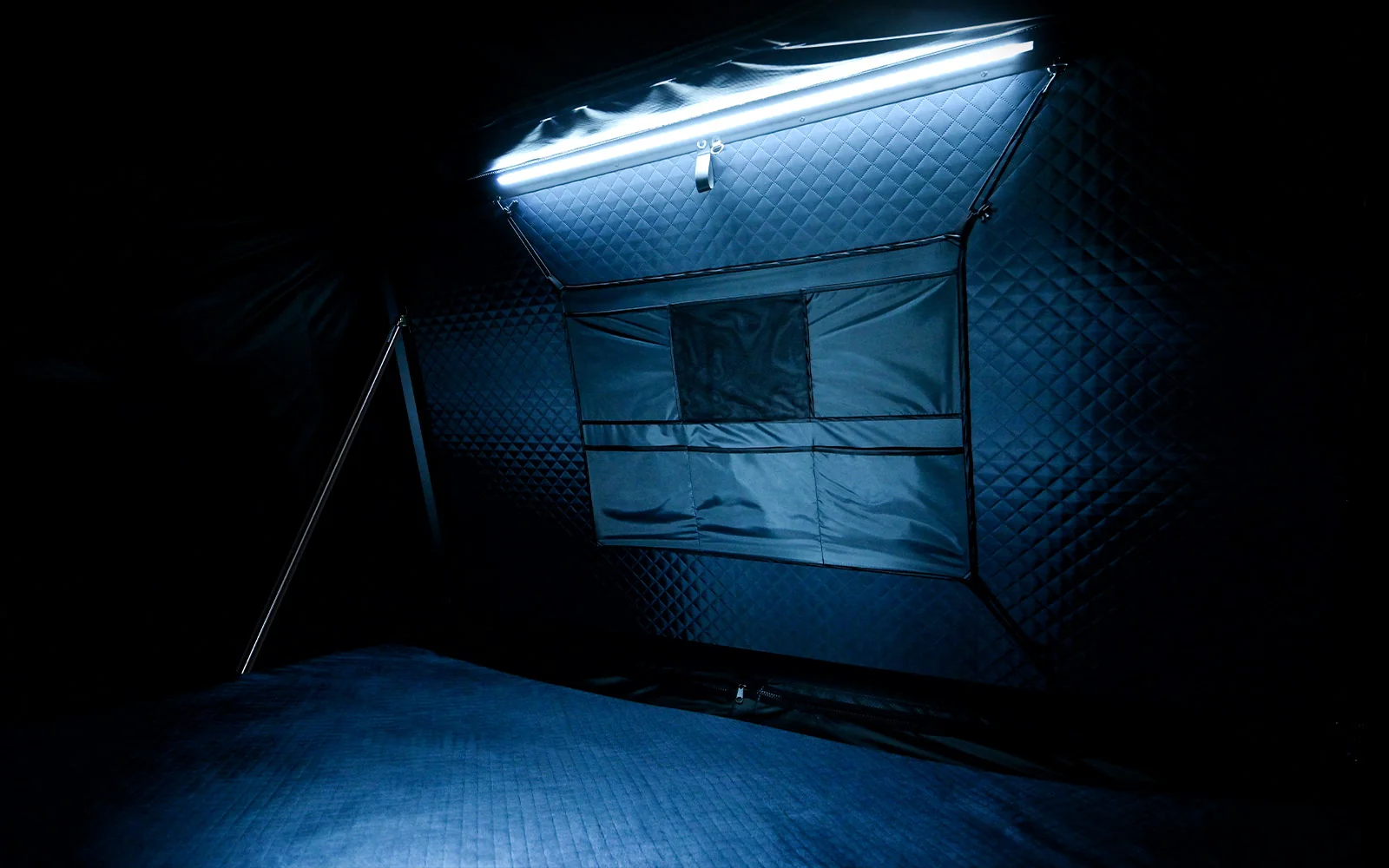
The tents from TOPOAK Overland feature foam mattresses and blackout fabrics designed to improve sleeping comfort.
The brand also offers thermal insulation liners for campers planning trips during colder weather.
Of course, comfort is personal. Someone accustomed to a thick mattress at home might still prefer additional cushioning. It is worth checking the sleeping dimensions and mattress specifications before choosing a model.
A little research beforehand is much easier than discovering your tent feels cramped halfway through a week-long trip.
The Extras Can Change Your Whole Campsite
A rooftop tent handles sleeping arrangements, but what about everything else?
Imagine spending a rainy afternoon at camp. You want somewhere sheltered to sit, prepare a meal, or simply enjoy a cup of coffee without retreating into the car.
This is where TOPOAK Overland’s wider camping equipment collection becomes useful.
Alongside rooftop tents, the company offers 180-degree and 270-degree vehicle awnings, folding tables, camping chairs, and additional shelter accessories.
A vehicle awning can turn the space beside your car into a practical outdoor living area. Add a couple of chairs and a small table, and you have somewhere comfortable to relax between activities.
You do not need every accessory immediately, either. Starting with the tent and gradually building your camping setup is often the more sensible approach.
Three Things Worth Checking Before Buying
Even an excellent rooftop tent can be the wrong purchase if it does not suit your vehicle or travelling habits.
Before making a decision, pay attention to three practical details:
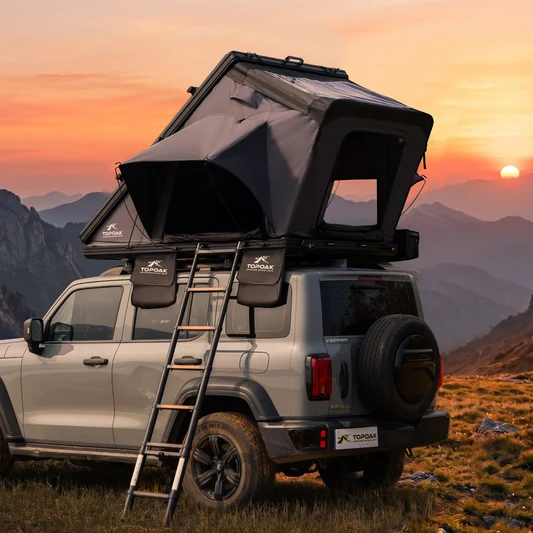
- Vehicle compatibility: Check the roof rack specifications, mounting requirements, and your vehicle’s permitted roof loads.
- Sleeping capacity: Consider the actual dimensions rather than relying entirely on advertised occupancy.
- Storage and everyday driving: Think about the tent’s closed height, weight, and whether you intend to leave it mounted between trips.
It is also worth checking warranty coverage. TOPOAK Overland advertises a three-year warranty on its rooftop tents, which provides some reassurance when investing in equipment intended for repeated outdoor use.
The Real Question Is How Often You Will Use It
A rooftop tent is not necessarily the right choice for someone who camps once a year. A conventional tent may offer everything they need at a much lower cost.
However, regular road trippers often value convenience differently.
If you enjoy spontaneous weekends, exploring unfamiliar countryside, or travelling between several campsites, having a sleeping area attached to your vehicle can make those adventures easier to organise.
That is the strongest argument for considering TOPOAK Overland. The brand offers different rooftop tent designs rather than expecting every camper to want the same thing.
Choose carefully, check compatibility, and think about the trips you genuinely plan to take.
The right camping equipment should make you excited to get outside more often, not give you another complicated piece of gear to worry about.