




Candle care mistakes often go unnoticed until a jar is half empty and the fragrance has already faded. A scented candle can look fine on the surface while quietly losing its scent throw and burn time to habits most people never think twice about. Understanding what actually damages performance helps any jar candle, from a Yankee Candle Large Jar to a WoodWick Ellipse, last as long and smell as strong as it should. Candlesdirect stocks both of those ranges alongside tea lights, votives, and reed diffusers, which makes it a useful reference point for how different formats should be treated.
Why Candle Wick Length Matters More Than Most People Realize
Wick length controls flame size, and flame size controls how much fragrance oil gets released into the air. A wick left too long after repeated burns creates a larger, hotter flame that burns through wax too quickly without improving scent throw. That imbalance is one of the quietest candle care mistakes, because the candle still lights normally and nobody suspects the wick is the culprit.
Shorter, properly maintained wicks burn cleaner and more evenly across the surface of the wax. This matters just as much for a small votive as it does for a Medium Jar Candle, since both rely on a steady flame to carry fragrance oils upward. Ignoring wick length is a simple oversight with an outsized effect on how long a candle stays usable.
The Tunneling Problem: How Improper First Burns Waste a Yankee Candle
Tunneling happens when a candle burns down the middle only, leaving a thick ring of unused wax around the edges. It is usually caused by cutting the first burn short, before the melt pool reaches the edge of the jar. Once a tunnel forms, later burns tend to follow the same narrow path, trapping fragrance inside the unburned wax rather than releasing it into a room.
This is particularly relevant for a Yankee Candle Large Jar Candle sold through Candlesdirect, where the wider surface area needs a longer first burn to melt evenly. Skipping that step wastes a portion of the wax and shortens the realistic burn time far below what the jar’s stated hours suggest. A full, even first burn is one of the simplest ways to avoid this kind of candle care mistake entirely.
WoodWick Crackle Candles and the Myth of Constant Flame Dancing
WoodWick candles use a wooden wick that produces a gentle crackling sound as it burns. A common misconception holds that the flame should constantly flicker or dance for the candle to be working properly. In reality, a steady, consistent flame with an occasional crackle is a sign of a healthy burn, not a dull one.
Candlesdirect lists several WoodWick options built around that effect, including the HearthWick Flame design used in the Evening Onyx Ellipse Jar Candle, which burns for up to 80 hours. Treating a calm flame as a problem can lead people to trim wicks too aggressively or relight candles unnecessarily. Both habits disrupt the melt pool and reduce how efficiently the fragrance notes are released.
Trimming vs. Mushrooming: Understanding Wick Care for Longer Burn Times
Mushrooming refers to the small carbon buildup that forms at the tip of a wick after extended burning. Left untrimmed, this buildup can cause soot, uneven flames, and weaker scent throw over time. Trimming the wick between burns removes that buildup and keeps the flame burning at a consistent, controlled size.
This single habit separates careful candle owners from those who unknowingly repeat common candle care mistakes every time a jar gets lit. It applies across the range, whether it is a Yankee Candle Signature Large Jar Candle or a WoodWick Trilogy Medium Jar Candle, both carried by Candlesdirect in multiple fragrance lines. Consistent trimming protects both the wax and the fragrance oils suspended within it.
Jar Candle Storage Conditions That Actually Preserve Scent Strength
Where a candle sits when it is not burning matters almost as much as how it is lit. Direct sunlight, heat, and humidity all degrade fragrance oils over time, weakening scent throw before the candle is ever used. Storing jar candles in a cool, dark place helps preserve the intensity of the fragrance notes for longer.
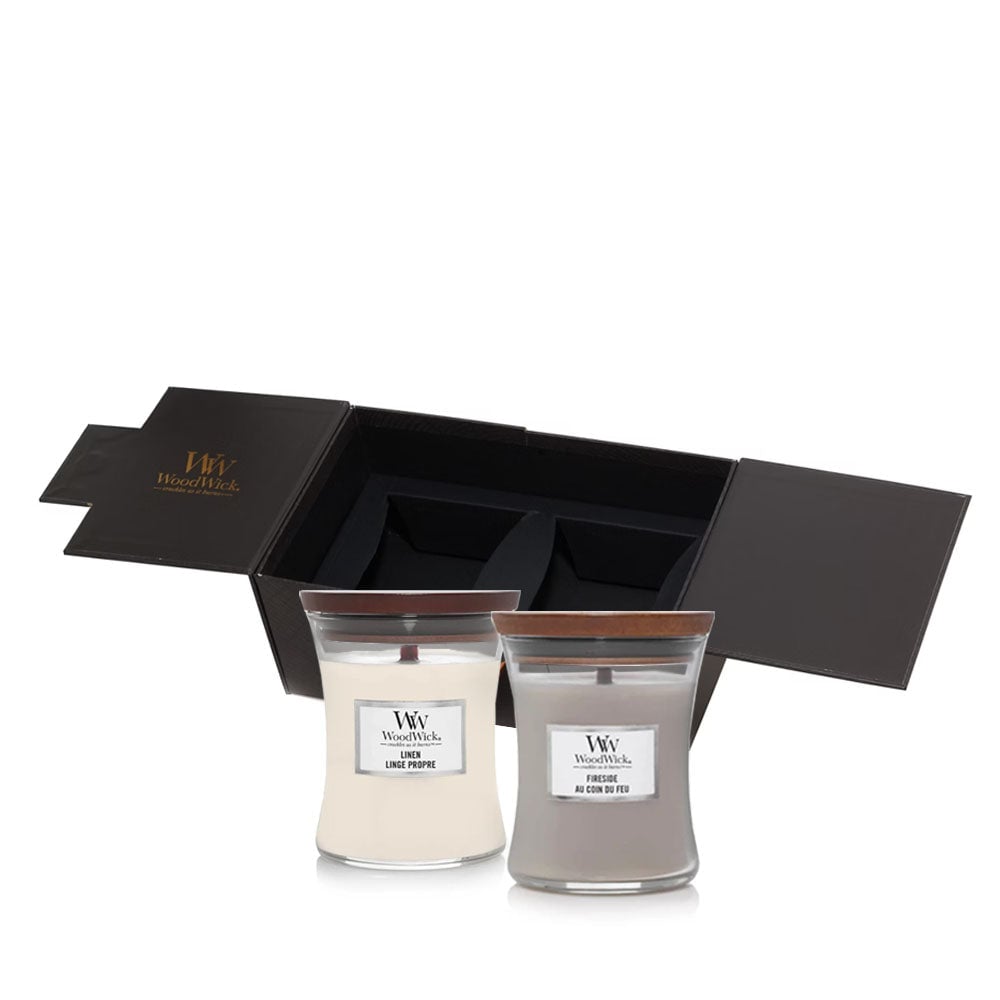
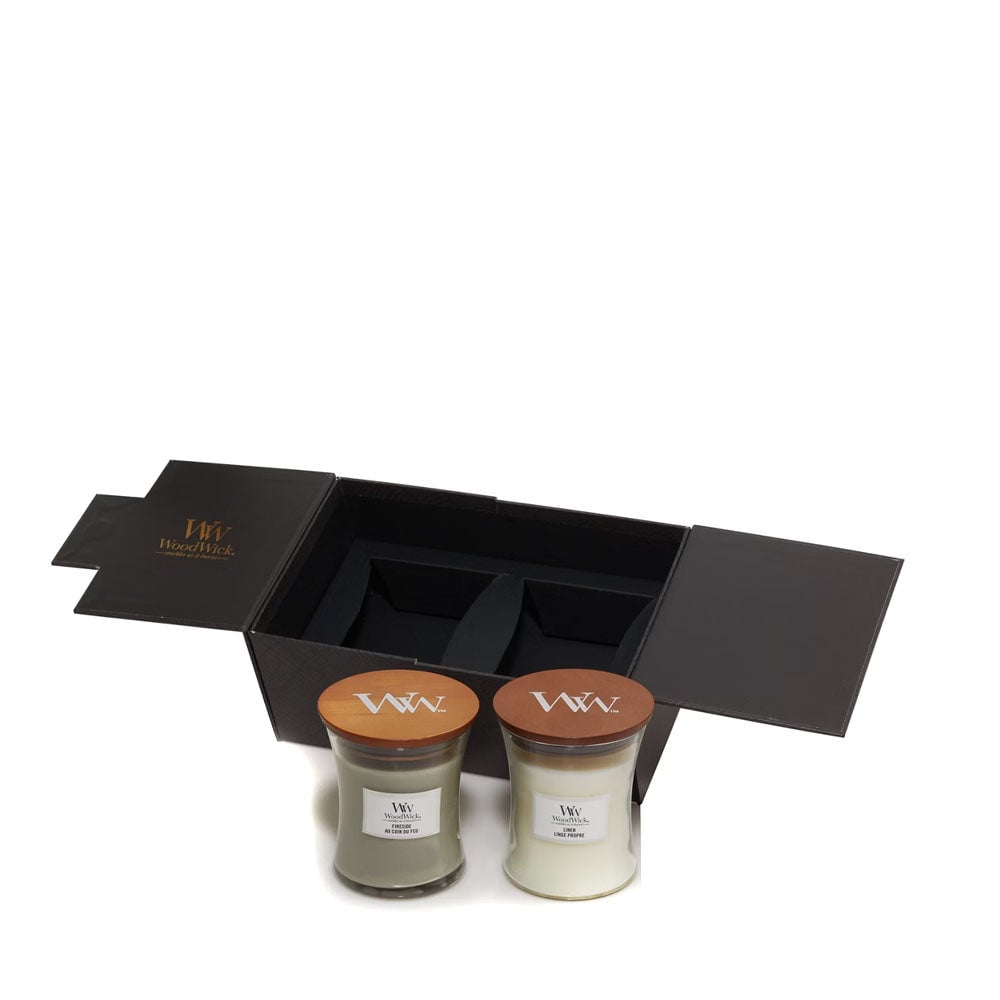
Lids also play a protective role by keeping dust and airborne moisture away from the wax surface. The Fireside and Linen gift set from Candlesdirect pairs two Medium Jar WoodWick candles, each with a burn time of 50 to 65 hours, presented in a foil embellished gift box that helps shield the wax between burns. Treating storage as an afterthought is one of the more overlooked candle care mistakes, since the damage happens silently before the wick is ever lit.
The Truth About Blowing Out Candles vs. Using Candle Snuffers
Blowing out a candle can scatter hot wax droplets and send smoke drifting through a room, carrying soot particles onto nearby surfaces. A candle snuffer instead smothers the flame without disturbing the melt pool or pushing smoke outward. This small difference in method can affect both air quality and the appearance of the jar over repeated use.
Choosing a snuffer over blowing out a flame is a minor adjustment, yet it reflects the kind of attention that keeps fragrance quality consistent across a candle’s full burn life. Accessories like these sit alongside the wider range of jar candles, tea lights, votives, and reed diffusers that make up the one-stop shop Candlesdirect describes on its own site.
- Skipping the first full burn causes tunneling and locks fragrance inside unused wax.
- Leaving a wick untrimmed between burns leads to mushrooming, soot, and a weaker flame.
- Storing candles near sunlight or heat breaks down fragrance oils before they are ever burned.
- Burning a candle for too short a session each time prevents the wax pool from reaching the jar’s edge.
- Blowing out a flame repeatedly can scatter soot and shorten the clean appearance of the glass jar.
- Ignoring a wooden wick’s natural crackle and over-trimming it disrupts a WoodWick candle’s intended burn pattern.
Good candle care is less about effort and more about consistency across every burn.