




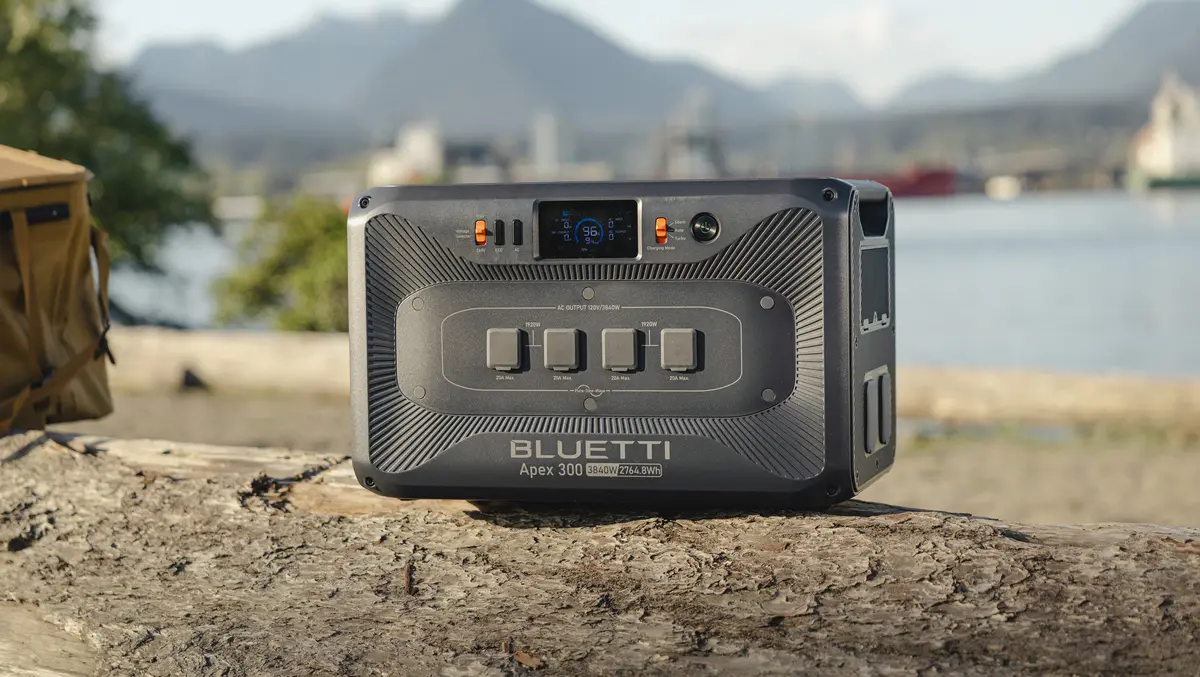
Shoppers researching portable power stations vs home backup options often discover that the real decision hinges on where the power will actually be used. Bluettipower addresses that split with two distinct product lines, the Elite series built for carrying and the Apex series built for staying put. Looking closely at capacity, charging speed, and expansion options makes it easier to match a specific energy need to the right hardware, whether the goal is a travel-ready solar generator or a fixed home battery backup.
Portable Power Stations: The Elite Series for Mobile and Flexible Use
The Elite series centers on moving power from one place to another without giving up meaningful capacity. The Elite 30 mini weighs only 7.3 lbs (3.3kg) and includes a built-in 140W retractable USB-C cable, making it suited for desks, travel bags, or camping gear. Its 288Wh capacity and 300W output, paired with 7 ports, cover daily device charging and short emergency needs.
Moving up in size, the Elite 100 V2 stays lightweight at 25lbs with a 17L footprint and a hidden handle for easy transport. Bluettipower lists a 1,800W output and 1,024Wh capacity for this model, giving it more headroom than the Elite 30 mini while still fitting in a trunk or closet. The Elite 300 continues this mobile focus while adding meaningfully more capacity for RV and home use.
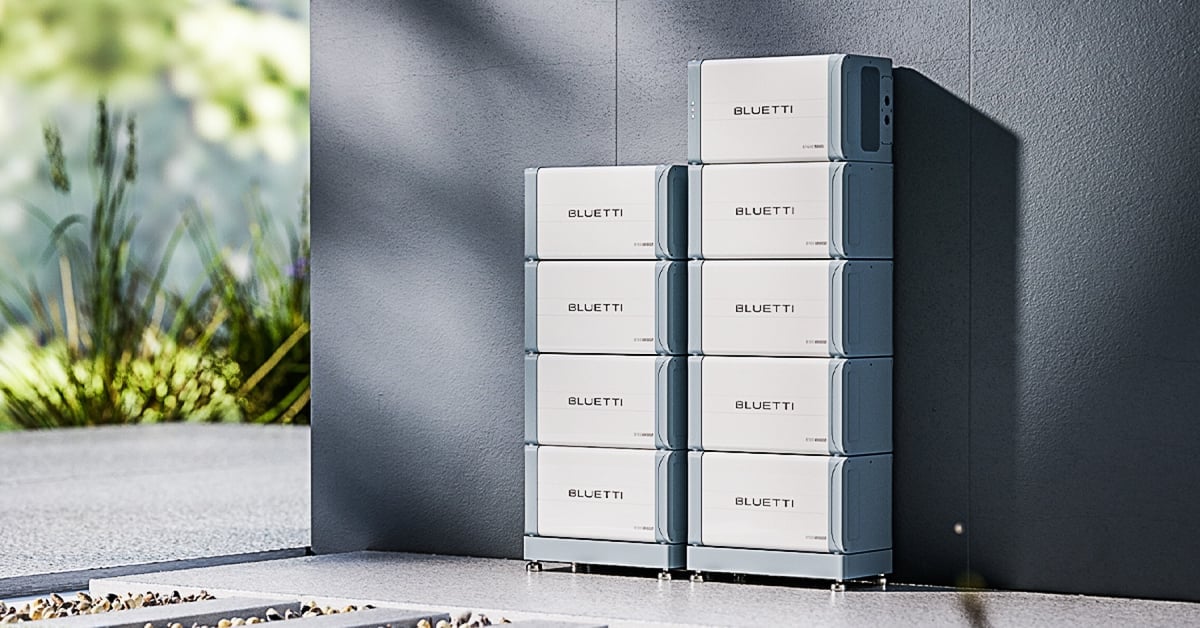
Home Backup Systems: The Apex Series for Stationary Power Security
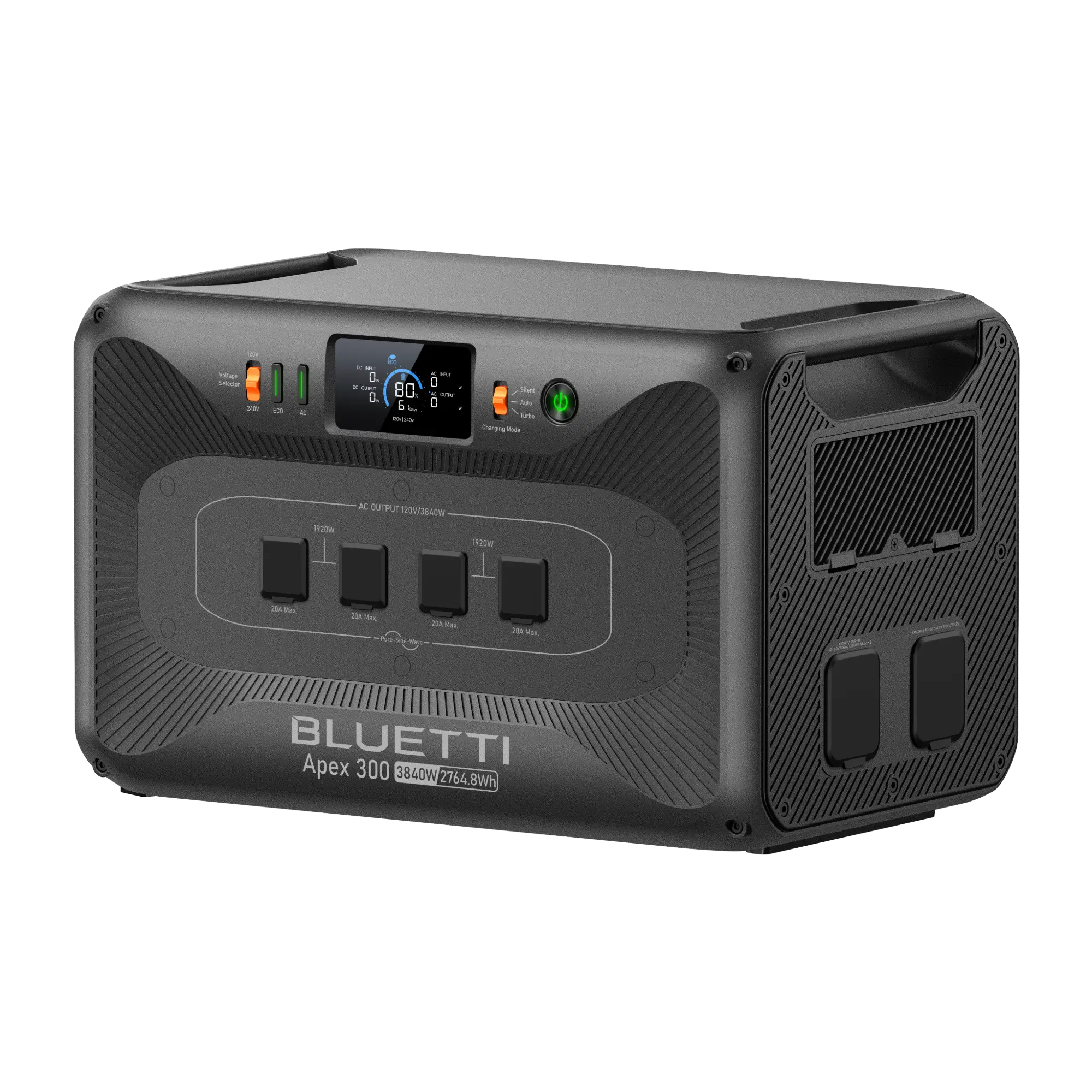
The Apex series takes a different approach, prioritizing expandable capacity over ease of carrying. The Apex 300 delivers 3,840W of output paired with 2,764.8Wh of capacity, built to keep a refrigerator, lights, television, and WiFi running during short outages. Unlike the Elite lineup, Apex units are positioned as home battery backup systems rather than travel companions.
Configurations like the Apex 300 + B300K raise capacity to 5,529.6Wh, while a dual-unit setup, 2*Apex 300 + 2*B300K + Hub A1, pushes output to 7,680W and capacity to 11,059.2Wh, showing the top end of what a linked system can reach. Other combinations, such as the Apex 300 + 2*B500K, land at 8,294.4Wh, filling in the range between a single unit and a dual-unit array. These figures show how the Apex series scales toward whole-home reliance rather than single-trip portability.
Capacity and Output Differences Between Elite and Apex Models
Lining up capacity and output side by side shows the core split behind portable power stations vs home backup hardware, with Elite units built around a fixed footprint and Apex units built around modular growth. The Elite 300 offers 3,014Wh of capacity and 2,400W of output, described by Bluettipower as the smallest 3 kWh portable power station available, with up to 4,800W of lifting power for heavier loads like microwaves and heaters. The Elite 400 pushes capacity further to 3,840Wh with 2,600W output, while still fitting the Elite series’ home-and-travel framing.
Apex units, by contrast, start at a higher output baseline. Even the base Apex 300 configuration holds 3,840W of output, exceeding the Elite 400’s figure while matching a similar capacity range. This difference in starting output reflects how Apex hardware is meant to anchor a home circuit rather than move between locations.
Charging Speed and Input Options: Turbo Boost vs. Scalable Expansion
Elite models lean on rapid charging methods suited to active, mobile use. The Elite 100 V2 reaches 80% charge in 45 minutes using 1,200W AC TurboBoost, and completes a full solar charge in 70 minutes through its 1,000W MPPT solar input. The Elite 30 mini offers five charging options, including AC, solar, USB-C, car charging, and an expansion charger, with pass-through charging reaching 80% in 46 minutes.
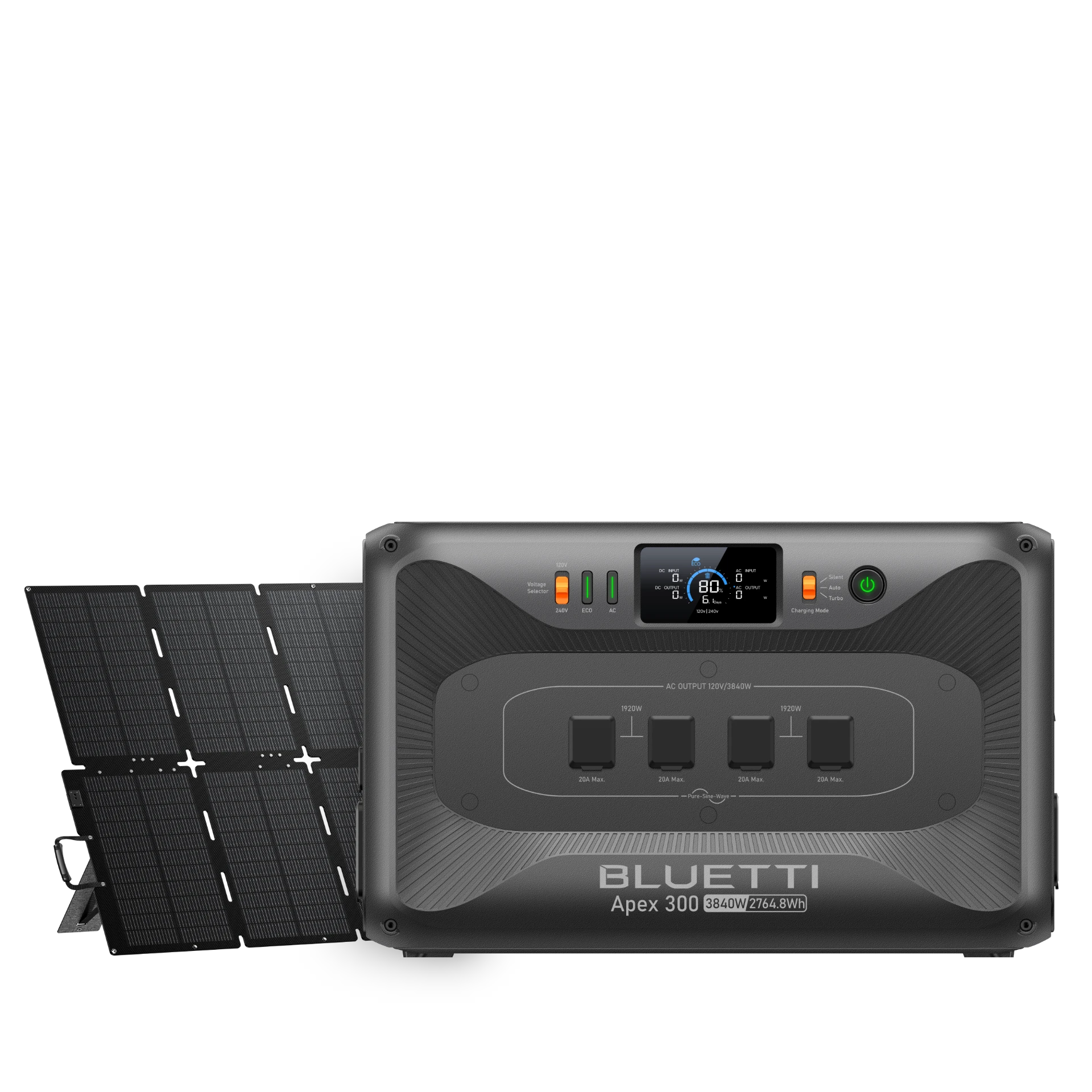
Apex systems instead focus on layered solar input built for ongoing, stationary charging. The Apex 300 + 500W configuration pairs 500W of solar input with its 3,840W output and 2,764.8Wh capacity, while the Apex 300 + 350W configuration swaps in a 350W solar panel instead. These are not single quick-charge events but part of a larger, scalable energy setup meant to stay connected long-term, a distinction that matters when comparing portable power stations vs home backup charging habits.
Expandability and Future-Proofing in the Elite 300 and Apex 300 Lines
The Elite 300 can be paired with accessories like Charger 1, Charger 2, or additional solar panels, extending its solar input without changing its portable nature. Its TT-30 outlet and 12V/30A DC port make it compatible with RV electrical setups directly out of the box. This keeps the Elite 300 flexible for households that also travel.
The Apex 300 line is built around deeper expansion, with battery modules like B300K and B500K layered onto the base unit to raise stored capacity. One such build, the Apex 300 + B300K + 2*350W, combines 5,529.8Wh of capacity with 700W of solar input, showing how storage and charging can both grow together. Bluettipower also lists the Apex 200, a related expandable model joining the lineup, as starting at 2.56kWh and scaling up to 99.84kWh with compatible battery modules, which illustrates how far the Apex approach to expansion can go.
UPS Switching and Smart App Control Across Both Ranges
Both series share some technology despite their different purposes. The Elite 300 includes a 10ms UPS switch, keeping security systems, aquariums, or workstations running without interruption during outages. Bluettipower also builds app control into the Elite 30 mini, allowing Bluetooth and WiFi monitoring of battery status along with remote wake functions.
This shared backbone of UPS switching and app-based monitoring means that, regardless of which line is chosen, a consistent layer of oversight carries across the system. For anyone weighing portable power stations vs home backup options side by side, this overlap narrows the gap between a mobile Elite unit and a stationary Apex setup.
- The Elite 30 mini weighs just 7.3 lbs (3.3kg) and uses a nylon strap with an optional shoulder strap for travel-ready carrying.
- The Elite 100 V2 keeps a 17L footprint and a hidden handle, staying at 25lbs for easy transport.
- The Elite 300 includes a TT-30 outlet and a 12V/30A DC port, allowing direct RV connection alongside home use.
- The Apex 300 starts at 3,840W of output and 2,764.8Wh of capacity, built around home integration rather than mobility.
- Apex battery modules such as B300K and B500K allow capacity to scale well beyond the base Apex 300 configuration.
- The Apex 200, an expandable model joining the lineup, is designed to grow from 2.56kWh up to 99.84kWh using additional modules.
Placement, more than any single spec sheet, separates a unit meant to travel from one meant to anchor a home circuit and grow with it.