





Portable power station shopping often turns into a maze of spec sheets that oversimplify real-world performance. Many portable power station misconceptions take root when buyers compare numbers without understanding what those numbers mean once a unit is actually running a household or a campsite setup. This article works through six common misunderstandings that push buyers toward the wrong model or toward misusing the one already sitting in a garage.
Misconception: Solar Panels Fully Charge a Station in Hours
A persistent belief holds that any solar panel will top off a large battery within a short afternoon. Charging speed actually depends on panel wattage, sunlight conditions, and the unit’s maximum solar input rating. BLUETTI pairs its Elite 100 V2 with a 200W panel and a 1,000W MPPT controller, reaching a full charge in 70 minutes under suitable conditions, which is considerably faster than mismatched panel setups allow.
That speed is tied to a specific panel and controller combination, not a universal outcome. Pairing a small panel with a large-capacity unit stretches charging time well beyond what marketing photos tend to suggest. This is one of the more common portable power station misconceptions, because solar charging is usually advertised under ideal, not typical, conditions.
Misconception: All 3 kWh Portable Power Stations Are Built the Same
Labeling two products as roughly 3 kWh suggests they perform identically, but output, weight, and connectivity can vary a great deal. BLUETTI markets its Elite 300 as the world’s smallest 3 kWh portable power station, built to be as compact as a 2 kWh unit while holding 3,014Wh of capacity, and the same unit delivers 2,400W of continuous output with 4,800W of lifting power for heavier loads such as microwaves and heaters, a combination recognized with Frost & Sullivan certification. A different 3 kWh unit from another brand could still offer lower output or skip features like RV-ready connections, so capacity alone never tells the full story.
Output numbers tell a separate story from capacity, and that gap is exactly where misconceptions multiply, since two stations can share an identical watt-hour rating on a spec sheet while differing sharply in continuous output, surge handling, and port selection once plugged into real appliances. Shoppers who stop reading after the headline capacity figure miss those differences entirely.
The Elite 300 and Elite 400: Why Size Doesn’t Determine Real-World Capacity
Comparing the Elite 300 and Elite 400 side by side shows how naming conventions can mislead buyers who judge a unit only by its model number. The Elite 300 holds 3,014Wh of capacity, while the Elite 400 is positioned as a step up, offering up to 4 kWh for essential home backup. Despite the numerical jump in the name, the practical difference comes down to capacity and intended backup role rather than physical size.
This matters for anyone trying to match a unit to actual appliance needs rather than a marketing label. A buyer focused purely on the model number might overlook that the Elite 300 is built around RV readiness with a TT-30 outlet and a 12V/30A DC port, while the Elite 400 leans toward essential home backup duty. Reading capacity and output figures together, instead of the model name alone, gives a clearer picture of what each unit can actually support.
Misconception: Portable Power Stations Cannot Run High-Wattage Appliances
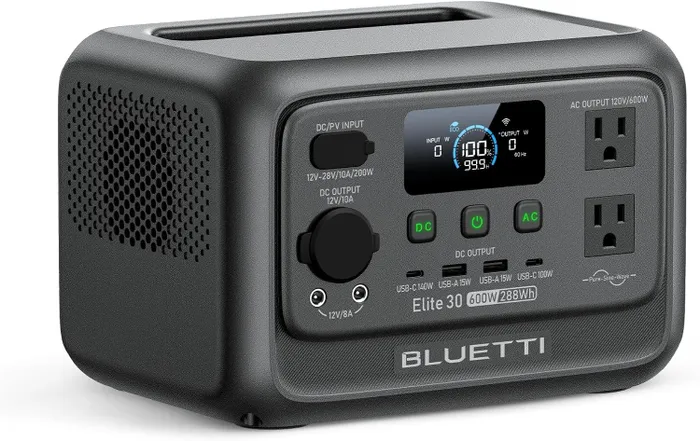
Many assume portable power stations suit only small electronics like phones and laptops. In reality, continuous output and surge or lifting power determine what a unit can run, and several BLUETTI models are built specifically for heavier loads. Larger systems push this further, since the Apex 300 delivers 3,840W of output and can handle a 12kW bypass for heavier equipment such as HVAC systems and EV charging when configured with compatible accessories.
That kind of output figure matters more than the general category label most shoppers rely on. This shows that the assumption about limited appliance support is one of the more outdated portable power station misconceptions still circulating among new buyers.
Misconception: Battery Cycle Life Means a Station Dies After That Many Charges
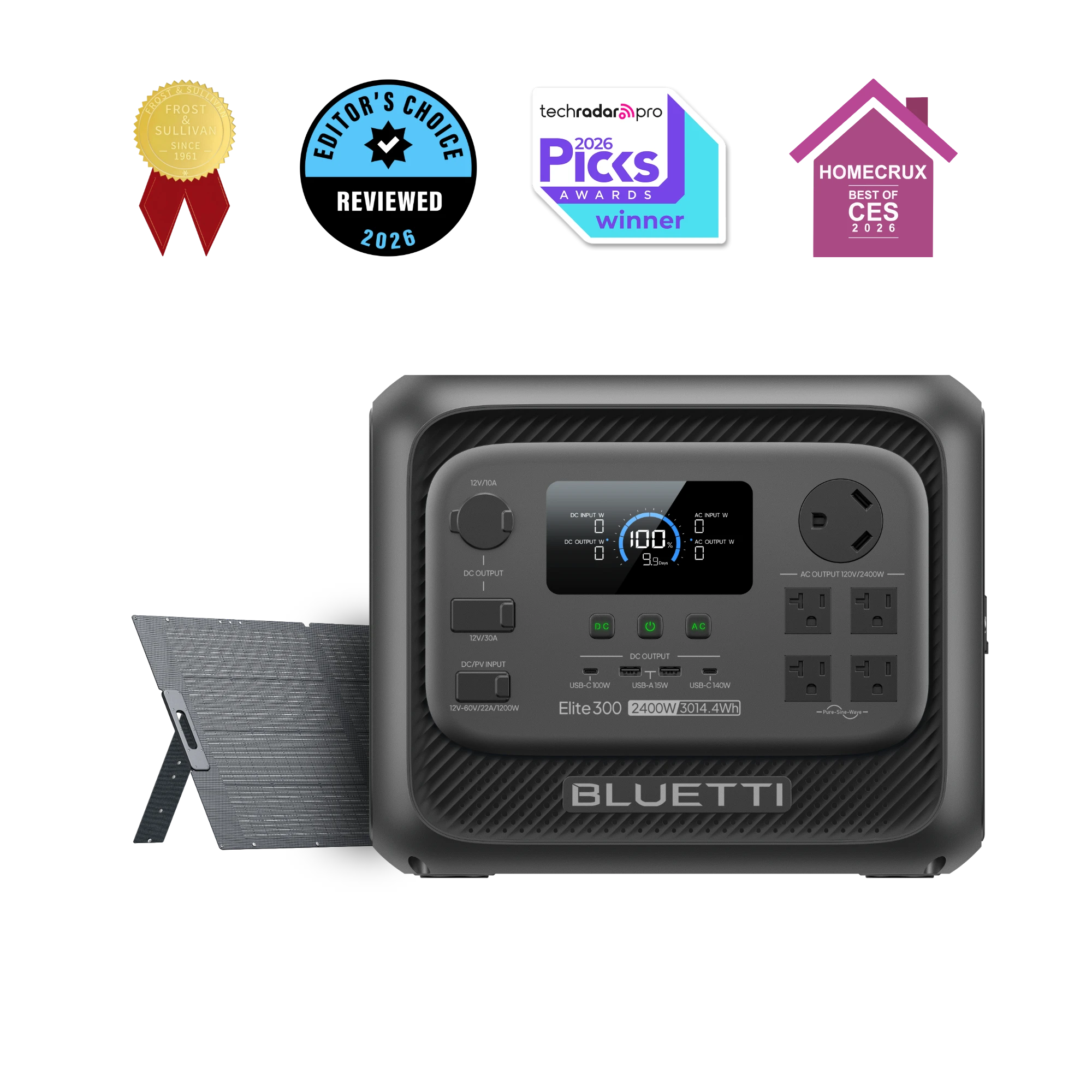
Cycle life figures are often misread as a hard expiration date rather than a performance benchmark. BLUETTI lists the Elite 300 and the Elite 30 mini each with 6,000+ charge cycles, a figure that reflects how many charge cycles a battery can undergo before capacity may begin to decline, not a sudden cutoff. The Apex 300 goes further, built around EV-grade LiFePO₄ chemistry that the brand associates with a 17-year battery life span.
Treating cycle counts as a countdown to failure overstates what the number actually represents. A high cycle rating simply signals that a battery chemistry is designed for repeated, long-term charging and discharging. This is one of several portable power station misconceptions that stems from treating a durability metric as a strict deadline.
What BLUETTI Power Stations Actually Do During Power Outages
During an outage, the practical question is how fast a unit switches from grid power to battery power, since a slow transition can interrupt sensitive electronics. The Elite 300 includes a 10ms UPS function designed to keep items such as security systems, aquariums, and workstations running without a noticeable gap. The Apex 300 takes this further with a 0ms UPS switchover intended to keep essentials running without interruption.
Home backup oriented units also add monitoring features that extend beyond simple battery storage. The Apex 300 is described as storm-ready, with an app sending early alerts and preparing the system automatically ahead of severe weather. Pairing that kind of monitoring with fast switchover response addresses a real-world outage scenario rather than a theoretical specs comparison, and it is BLUETTI that packages both features into a single home backup lineup.
- Some buyers believe a bigger battery number always means longer appliance runtime, ignoring that output wattage limits what can run at all.
- Others assume any solar panel charges any power station at the same speed, overlooking the role of panel wattage and the unit’s MPPT controller.
- A common safety myth holds that all portable power stations handle heat and overload the same way, even though stated UPS switchover speeds differ between models.
- Many shoppers treat a cycle life rating as a strict expiration date instead of a general durability benchmark for the battery chemistry used.
- There is also a tendency to assume every 3 kWh labeled unit is physically identical, when weight, dimensions, and port selection can vary considerably between models.
Portable power station misconceptions tend to fade once capacity, output, and switchover specifications get read together instead of a single headline figure. Real-world performance, as these models show, depends on how those numbers interact, not on size or branding alone.