




Button-based communication has drawn wide attention online, but it has also generated a long list of talking buttons misconceptions about what dogs and cats actually learn. Some owners expect fluent.pet conversation within weeks, while others dismiss the whole concept as a trick. Separating the realistic from the exaggerated helps set expectations before anyone sets up a single tile.
What Talking Buttons Actually Do and Don’t Do
Sound buttons let an animal trigger a recorded word by pressing a panel with a paw or nose. They do not translate thought into sentences, and they do not guarantee an animal understands grammar the way a person does. What they offer is a consistent, repeatable way for a dog or cat to associate a sound with a context, such as a word for going outside or asking for food.
Many talking buttons misconceptions start here, with the assumption that a pressed button equals a fully formed idea. In reality, researchers and trainers generally treat single-word presses as requests or associations rather than proof of abstract reasoning. fluent.pet markets its buttons as tools for understanding and communication, not as devices that produce spontaneous language.
The HexTiles System: Organization, Not Magic
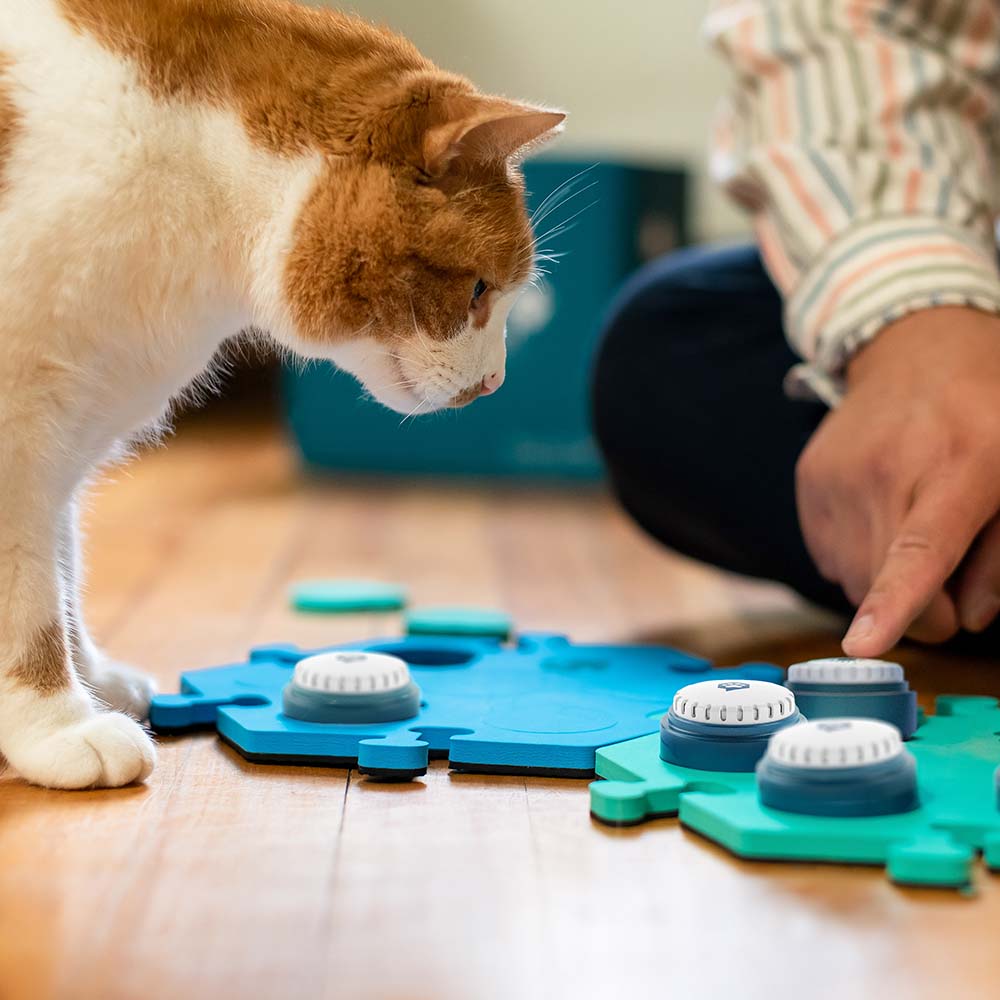
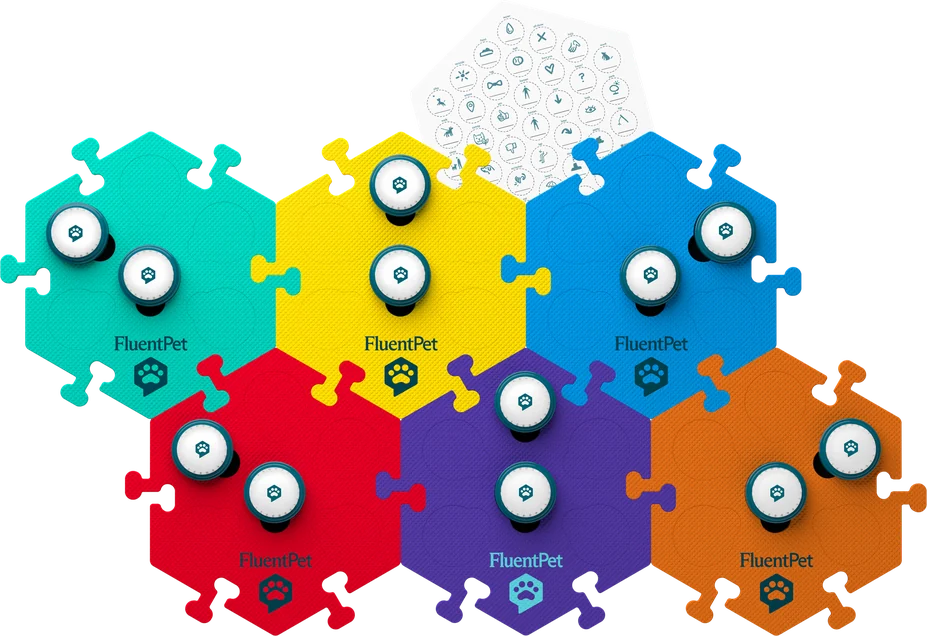
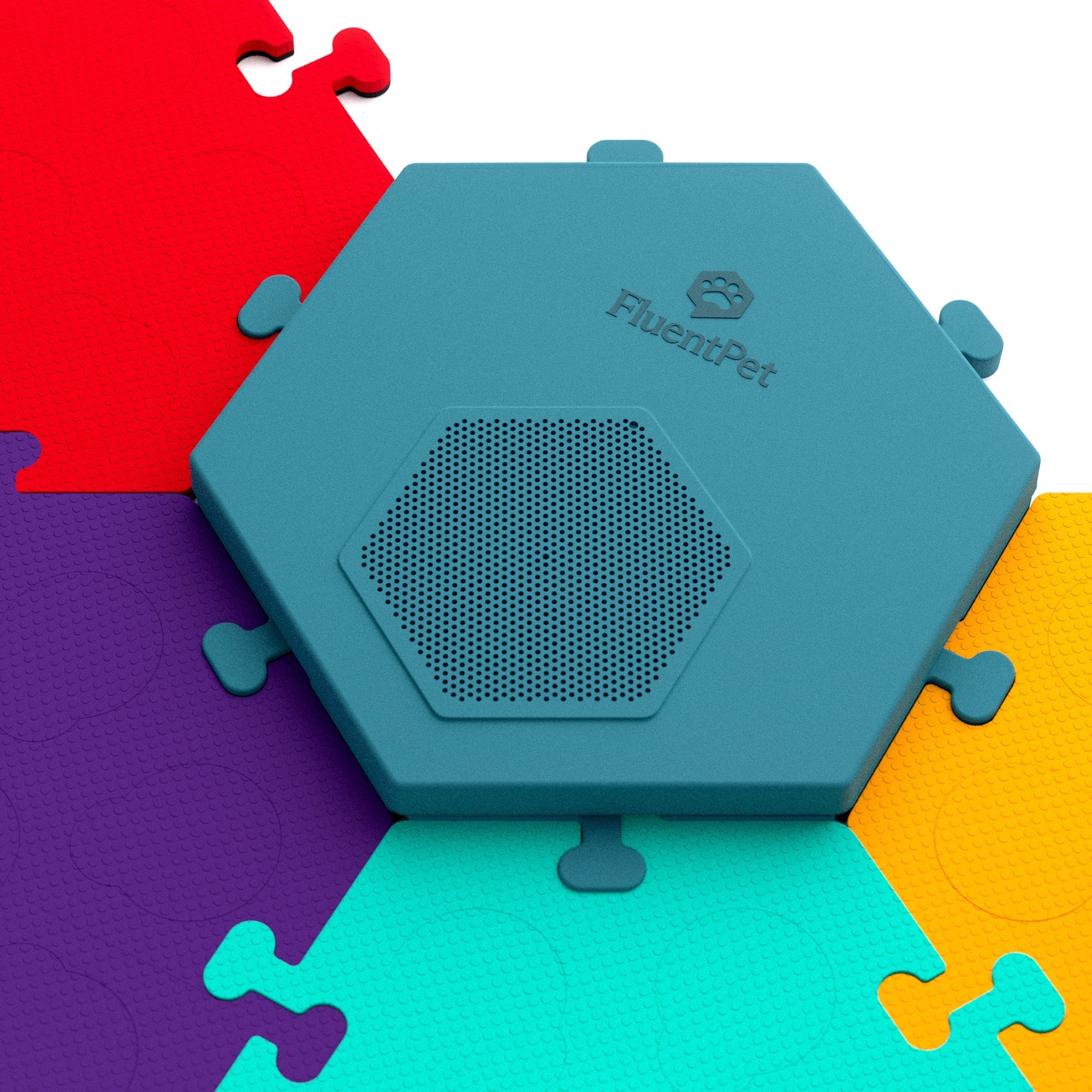
fluent.pet‘s HexTiles are hexagonal bases that hold individual buttons in place and let them interlock into larger boards. The company describes this layout as being inspired by the Fitzgerald Key, a method for organizing vocabulary by category rather than by random placement. Grouping words by theme is meant to make a board easier to navigate for both the learner and the household.
It is worth being clear that the tiles themselves do not teach anything. They are a physical organizing structure, described by the brand as durable and non-slip, that supports multi-button communication by keeping related words together. The learning still depends on repetition, modeling, and context provided by the people around the animal.
Why Button Training Requires Consistent Human Effort
One of the more persistent talking buttons misconceptions is that buttons work passively, as if simply placing them on the floor is enough. In practice, progress depends on humans modeling button use themselves, pressing words aloud in relevant moments so the animal can build associations over time. This is closer to how caregivers narrate actions for a young child than to flipping a switch.
fluent.pet addresses this expectation gap by offering a free Button Bootcamp session to new customers, alongside live sessions covering topics such as picking vocabulary and managing multi-learner households. These sessions suggest that the company itself treats human involvement as central to the process, not incidental to it.
Buttons Are Not a Substitute for Traditional Training
Sound buttons are not designed to replace leash manners, recall work, or behavioral training for anxiety or reactivity. They operate on a different track, focused on vocabulary and requests rather than obedience or behavior modification. An animal can be well trained on a leash and still have no exposure to buttons, and vice versa.
Because of this, button systems are best understood as an addition to a household’s existing routine rather than a replacement for established training methods. fluent.pet’s own materials frame the product around understanding and communication, which sits alongside, rather than instead of, conventional training approaches.
The Speak Up! Kits: Modular Growth, Not All-in-One Solutions
fluent.pet sells its starting products as Speak Up! kits, including a Get Started Kit and a Key Vocab Kit, designed to introduce core vocabulary before expanding further. The interlocking design of the HexTiles means additional words and categories can be added later as a learner progresses, rather than requiring a single large board from day one. There is also a Kit Builder option for assembling a setup around a specific household’s chosen words.
Beyond the starting kits, the brand offers Connect Kits described as tools for tracking a learner’s progress over time. This modular structure reflects the idea that vocabulary expansion happens gradually, in line with what an individual dog or cat demonstrates readiness for, rather than all at once.
Real Communication vs. Mimicry: What the Research Shows

A recurring question is whether button presses reflect genuine intent or simple mimicry of a routine. This is one of the more debated talking buttons misconceptions, since outside observers often cannot tell the difference from a single press alone. Patterns across many presses, including combinations and timing relative to events, are what researchers and experienced button teachers tend to look at more closely.
fluent.pet references research-driven design in its marketing and notes that its buttons are used by prominent button-using animals, including Bunny the Talking Dog. That association does not mean every learner will reach the same visibility or vocabulary size, since individual results vary by animal, household consistency, and time invested.
- Some owners expect a dog or cat to form sentences within days, when most progress with single words takes considerably longer.
- Pressing a button accidentally is sometimes mistaken for intentional communication, even though context and repetition matter for interpretation.
- Many assume buttons alone can resolve behavioral issues, though button systems are not designed as a behavior correction tool.
- There is a common belief that more buttons always mean more understanding, even though vocabulary growth depends on consistent modeling rather than board size.
- Some new users think the HexTiles themselves teach language, when the tiles mainly organize vocabulary rather than generate it.
Expectations around talking button systems tend to settle once the basics are clear. Progress is gradual, human involvement matters, and the tools organize communication rather than manufacture it on their own.