




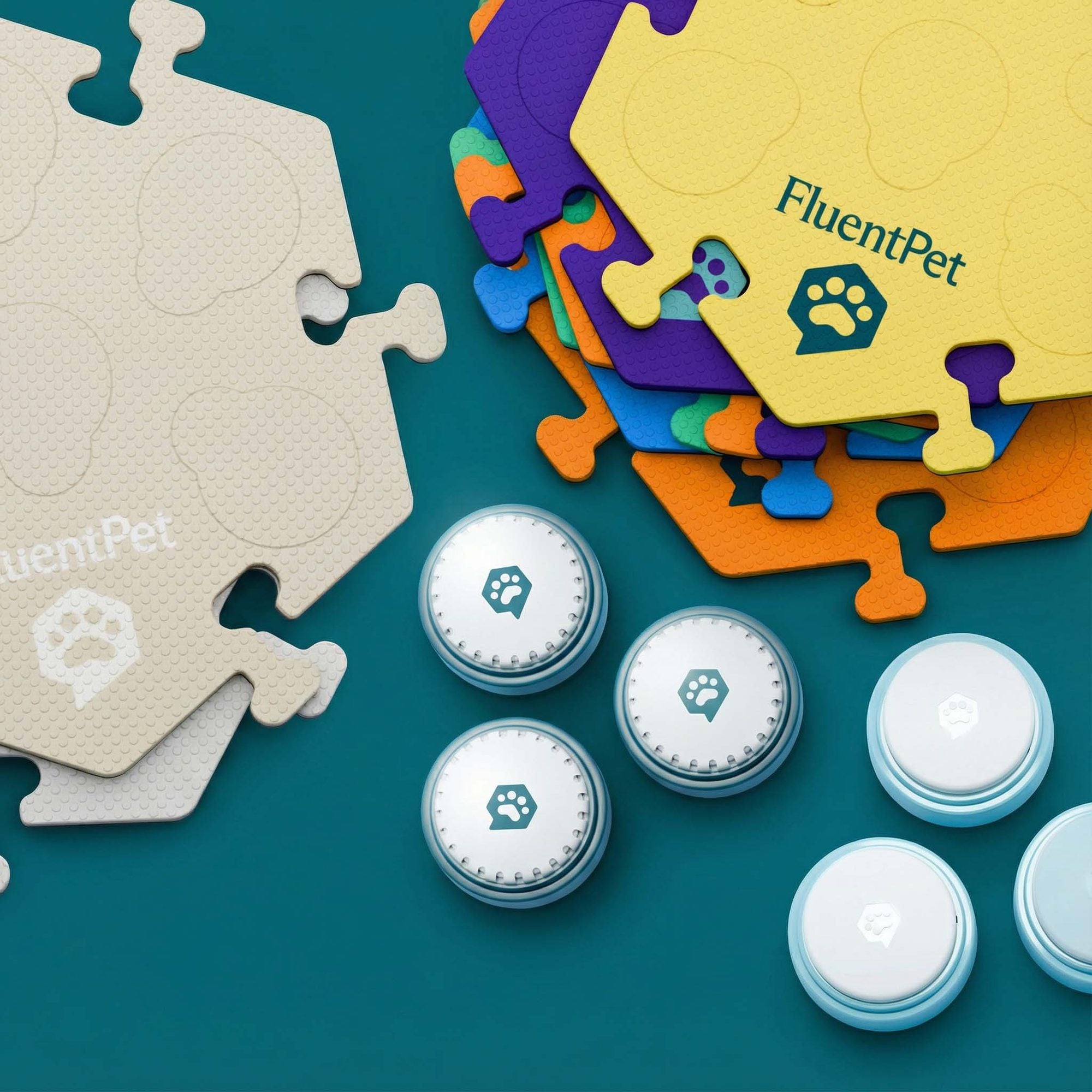
Button teachers comparing setups for dogs and cats quickly run into a basic organizational question: how should the buttons actually be arranged on the floor? The HexTile organization system from fluent.pet offers one answer, built around modular, interlocking hexagonal tiles rather than a single flat mat or scattered loose buttons. This article looks at how that approach differs from traditional layouts and why many experienced teachers gravitate toward it as a learner’s vocabulary grows.
Understanding HexTile-Based Organization in FluentPet Systems
fluent.pet describes its HexTiles as durable, non-slip surfaces designed to hold individual sound buttons in small, deliberate clusters. Rather than lining buttons up in one long row, the HexTile organization system groups them onto separate hexagon-shaped bases that can sit alone or connect to others. The brand states this organization is inspired by the Fitzgerald Key, a reference point used in augmentative communication research.
Each hexagon becomes a kind of neighborhood for related words, rather than just another slot in a line. That distinction matters because it changes how a layout is read at a glance, both by the animal learner and the person teaching. fluent.pet positions this as a structural difference, not just a cosmetic one.
How HexTiles Enable Memorable Concept Grouping for Multi-Button Communication
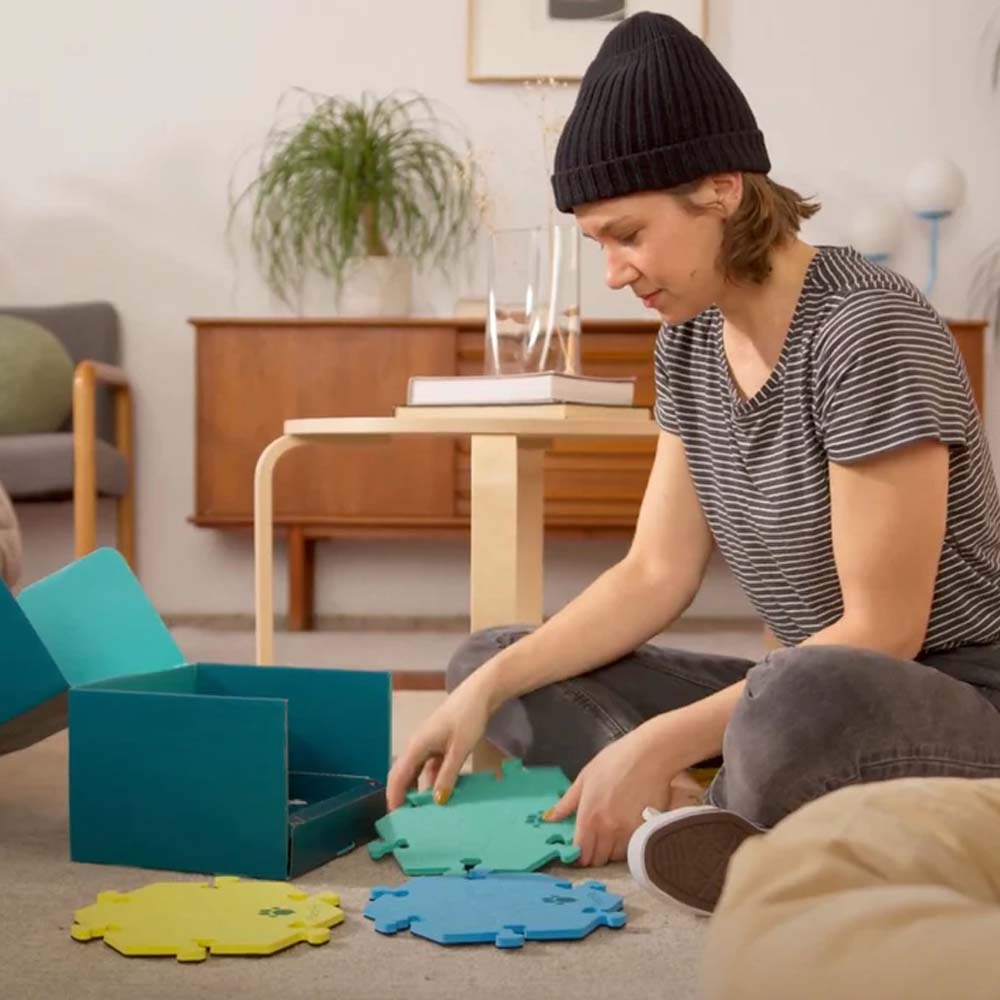
According to fluent.pet, the HexTiles “enable memorable concept organization that facilitates multi-button communication.” In practice, this means buttons tied to similar ideas, such as places, feelings, or people, can sit together on one tile. That grouping is meant to make it easier to locate a specific word once the total button count climbs past a handful.
Traditional single-mat or loose-button arrangements do not offer that same built-in separation. Everything lives on one continuous surface, so any grouping has to be imposed manually and re-marked every time something is added. The HexTile organization system instead keeps that grouping fixed in the hexagons themselves, so a cluster added for one concept stays visually distinct from the next cluster added later.
Scalability and Expansion: Building Custom Layouts with Interlocking HexTiles

Because HexTiles interlock, fluent.pet notes that the system allows expansion customized to a learner’s journey. New hexagons can be added alongside existing ones as vocabulary grows, without requiring a full redesign of the setup already in place. This is part of what the brand calls a modular and scalable design.
That scalability is a meaningful departure from fixed button boards, which typically have a set number of slots from the outset. Once those slots are full, expanding usually means replacing the whole board or starting a second, disconnected one. The interlocking hex shape instead lets new sections snap onto the edges of what already exists.
Button Pressing Mechanics and Physical Design Considerations Across Kit Types
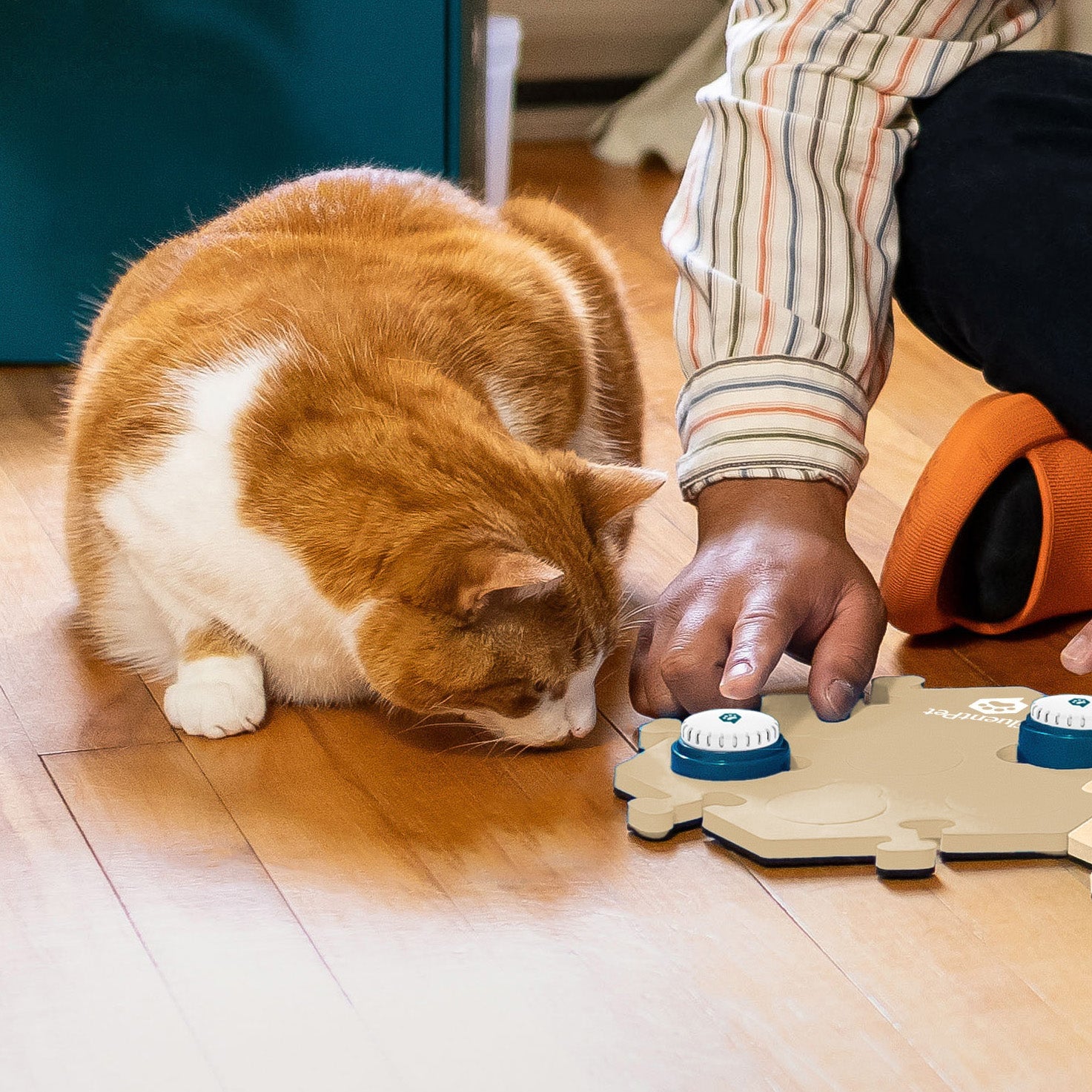
Beyond organization, fluent.pet also addresses the mechanics of the buttons themselves. The brand states its buttons are designed to be “ultra-easy to press,” specifically for cats and small dogs, and it emphasizes high-quality sound output so both the animal and the household can hear and understand each press clearly. These physical design details complement the HexTile layout rather than replacing it, since pressing ease and sound clarity are handled as separate design priorities from how the tiles themselves are grouped.
Sound clarity and ease of pressing work together with the organizational layer within the broader system. A clearly grouped layout does little good if the buttons themselves are hard to activate or difficult to hear. The combination of buttons plus HexTiles is meant to address both sides of that equation at once.
Speak Up! Kits and Progressive Expansion Pathways
The current lineup includes the Speak Up! kits, among them the Get Started Kit and the Key Vocab Kit, alongside Connect Kits for tracking progress and a Kit Builder option for building a custom kit. These kits give a starting structure for new learners while still relying on the same interlocking HexTile foundation described above. As vocabulary expands, additional HexTiles and buttons can be incorporated into the existing arrangement.
The broader system also includes an app-integrated element and Button Bootcamp sessions offered to new customers, and the community built around these resources has logged over 50+ million button presses to date. That volume of activity sits around the physical kits rather than changing how the HexTiles themselves are organized. The expansion pathway stays tied to the same modular hexagon logic from the first tile onward.
Comparing Layout Approaches: What Advanced Button Teachers Know
Experienced button teachers working with multiple learners or large vocabularies tend to notice the limits of a single flat board fairly quickly. A modular HexTile organization system offers a way to physically separate concepts without losing the ability to expand later. That combination, grouping plus room to grow, is part of why the brand highlights modularity as a defining feature of its design.
- Traditional button boards typically offer a fixed number of slots, while interlocking HexTiles allow new hexagons to be added as needed.
- A single flat mat groups all buttons on one continuous surface, whereas HexTiles separate concepts onto distinct hexagon-shaped sections.
- Non-modular layouts generally require manual rearrangement to signal new categories, while the HexTile organization system builds that separation into its physical shape.
- fluent.pet pairs its HexTiles with buttons built for easy pressing and clear sound, addressing layout and mechanics as related but distinct design elements.
- Expansion on a fixed board often means replacing the whole unit, while interlocking HexTiles let new sections connect directly to existing ones.
These distinctions explain why many teachers describe their setups in terms of hexagon clusters rather than button counts alone. The physical shape of the layout becomes part of how the vocabulary itself gets organized and recalled over time.
Closing Thought
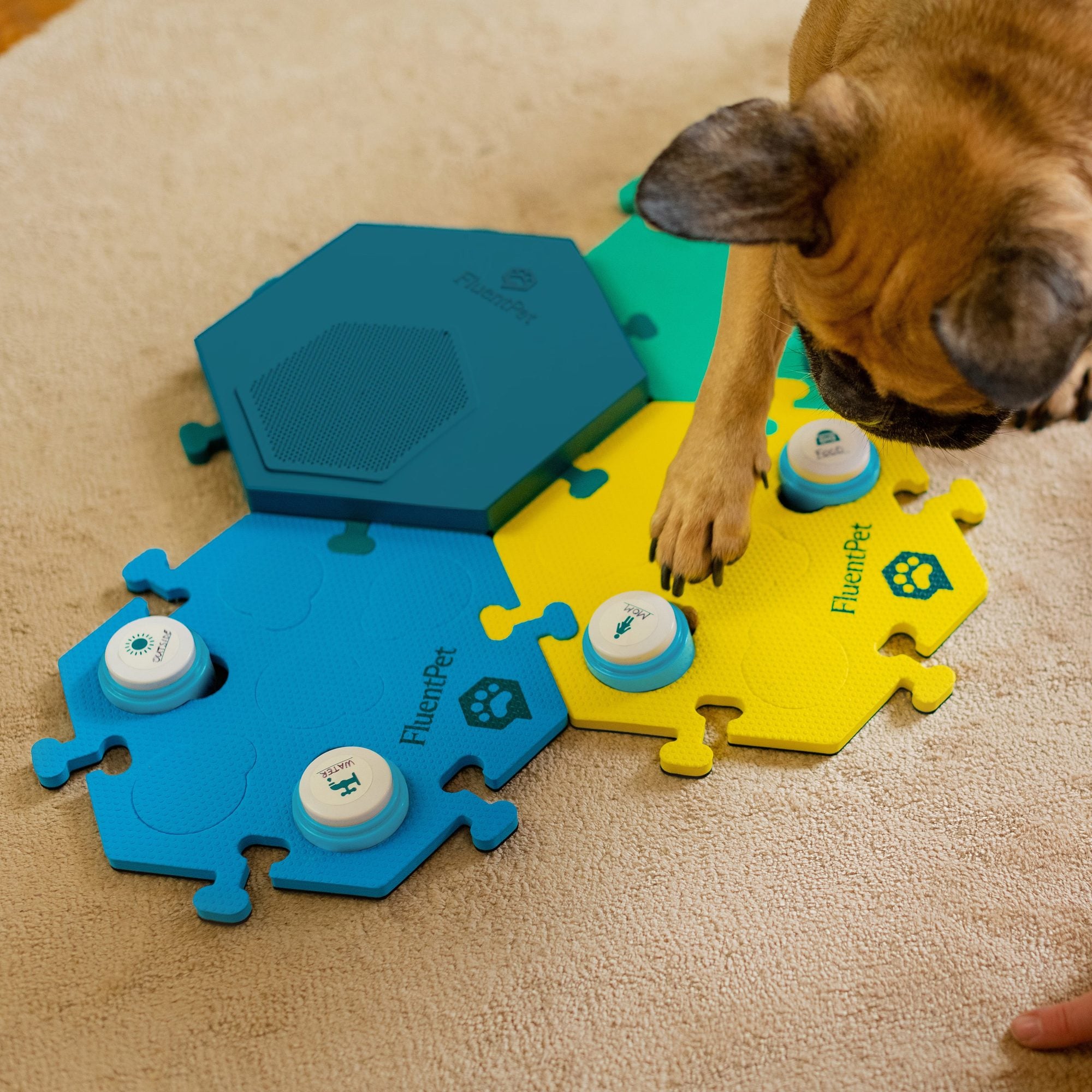
Layout choices shape how a communication system gets used just as much as the buttons themselves, and that is the quiet advantage of building around hexagons instead of a flat board.