




Tap water passes through many possible filtration technologies before reaching a glass, and ceramic sits among the oldest and most studied of them. Ceramic water filters rely on a solid, microporous structure rather than loose carbon or a membrane, which changes how they handle sediment, bacteria, and taste. This article looks at how that process works and where Doulton‘s ceramic systems fit alongside other filtration approaches on the market.
What Ceramic Water Filters Are and How They Work
A ceramic water filter uses a microporous ceramic material to reduce contaminants as water passes through it. The structure is dense enough to physically block sediment and many microorganisms, while still letting water flow through at a usable rate. Many ceramic filters also include a carbon core inside the shell, which adds a further stage of filtration and helps improve the taste of the water.
The shape of a ceramic filter is not accidental. It is designed for even water flow and effective filtration, and it also suits the slip-casting process used to manufacture it. That distinctive form allows the filter to release cleanly from its mould, which helps reduce breakages and material waste during production. Because the material itself is natural, ceramic filtration is often positioned as a more sustainable way to treat drinking water compared with some disposable alternatives.
Doulton’s Ceramic Filter Technology: The Ultra Sterasyl and Biotect Ultra Approach
Doulton builds its systems around a small number of named ceramic filter types, rather than a single generic cartridge. The Biotect Ultra filter, on the other hand, sits at the core of Doulton’s countertop and under sink ranges.
This split matters because it lets Doulton match a filter type to a format rather than forcing one cartridge into every housing. The It Countertop Water Filter System is sold with Biotect Ultra, for example, while gravity-fed British Berkefeld units are built around Ultra Sterasyl. Both are ceramic at heart, but the surrounding system, flow path, and installation differ.
Under Sink Systems vs. Countertop and Gravity Filters: Doulton’s Installation Options
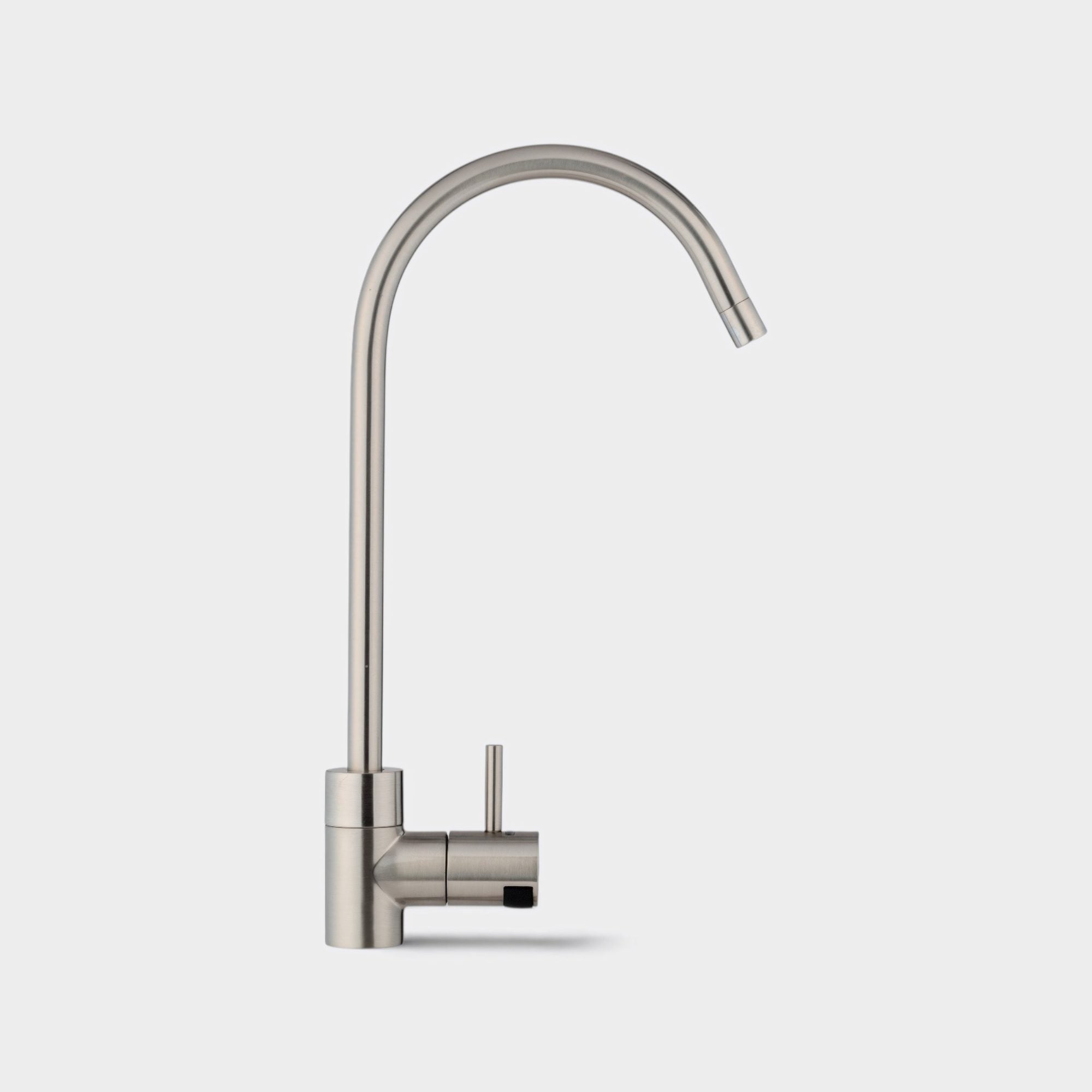
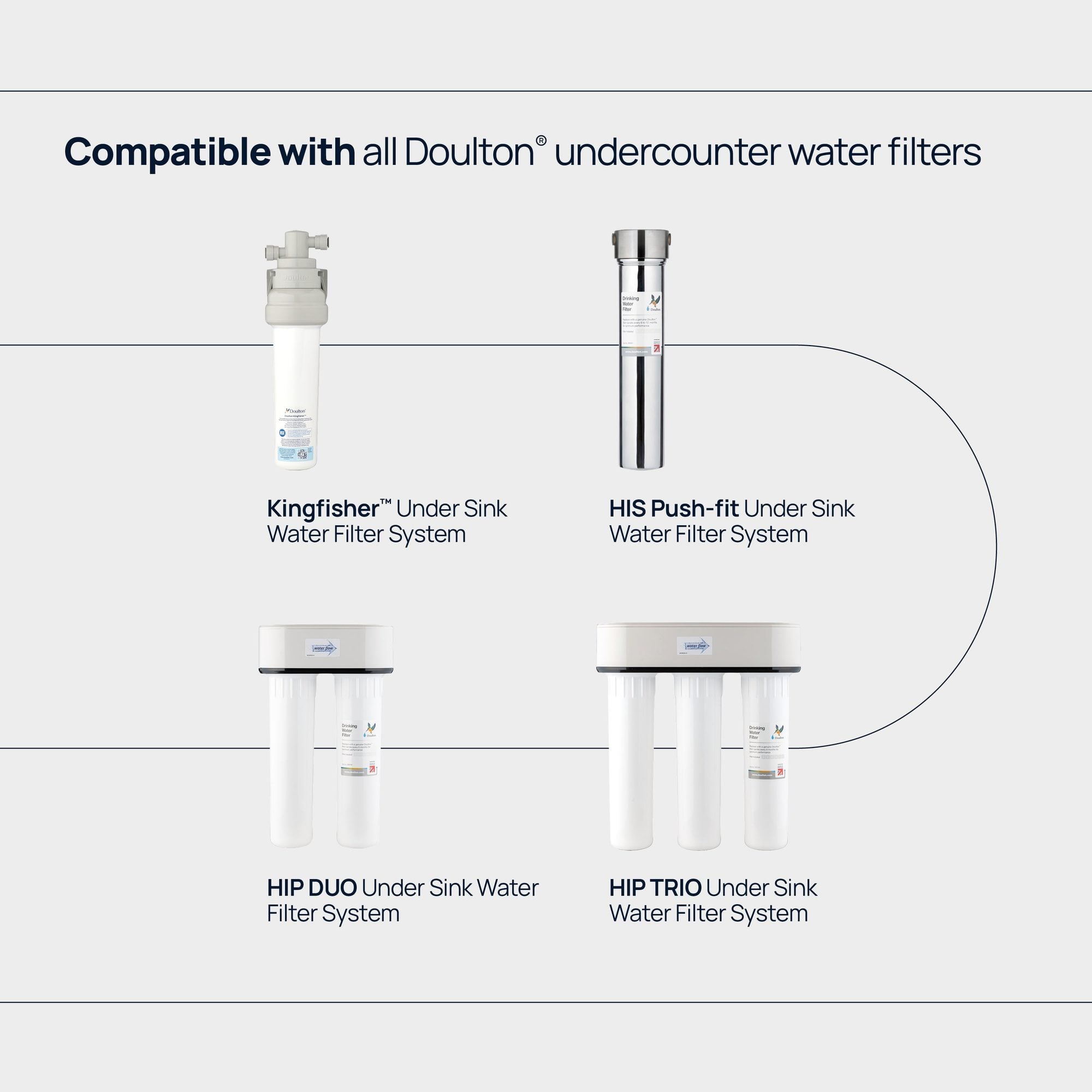
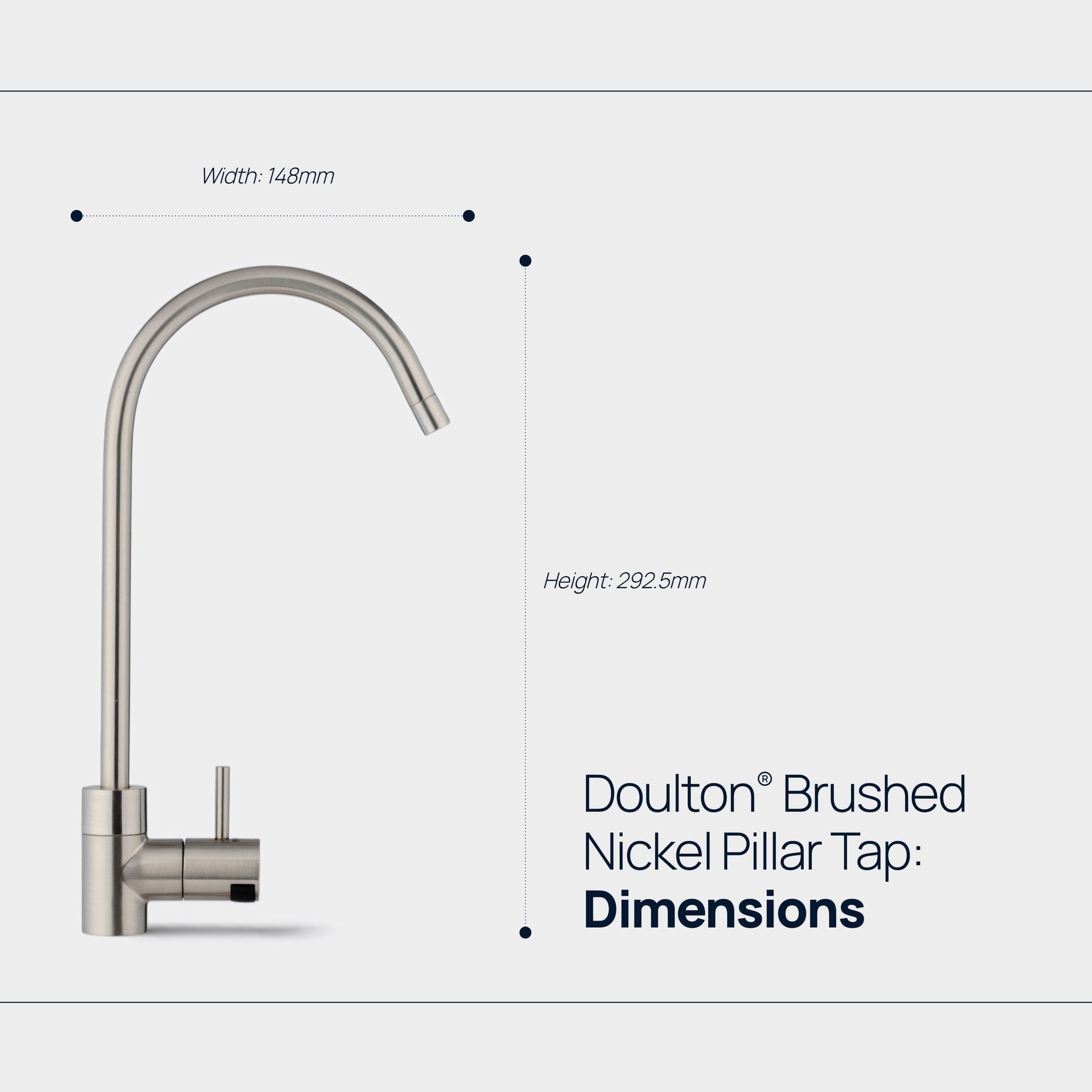
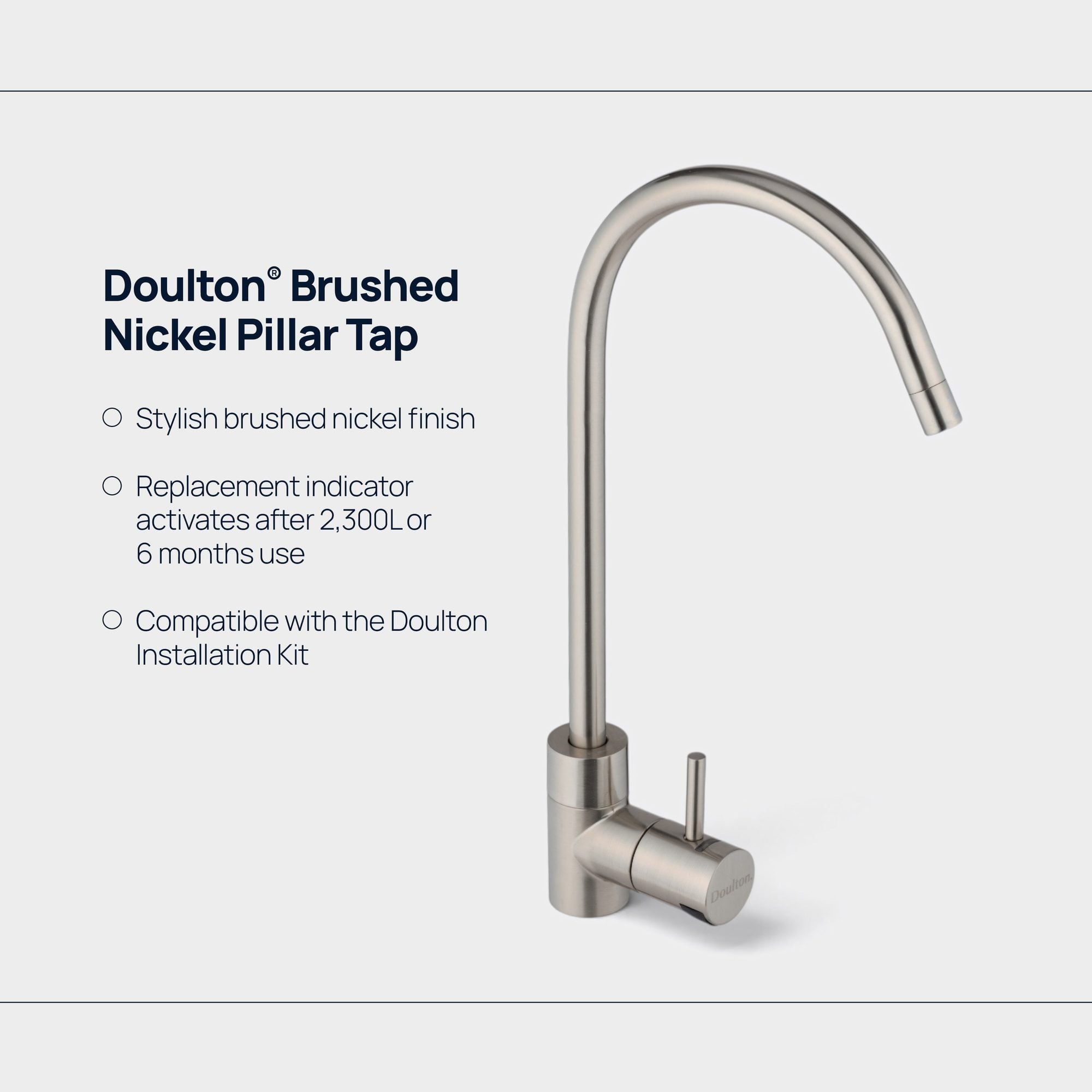
Doulton‘s under sink water filter systems are designed to sit discreetly beneath a kitchen sink, connected to the existing plumbing. The range includes named models such as the Kingfisher Under Sink Water Filter System, the HIS Push-fit Under Sink Water Filter System, and the HIP DUO and HIP TRIO systems, all built with Biotect Ultra at their core. These are aimed at permanent installation, often alongside a dedicated tap such as a pillar tap or an L-shaped mixer tap.
Countertop units take a different path. The Doulton Countertop Water Filter System with Biotect Ultra needs no plumbing modification and sits directly on a worktop, which suits renters or anyone who prefers not to alter pipework. Gravity systems go further still, requiring no plumbing or electricity at all, which is why British Berkefeld stainless steel gravity systems are positioned for both kitchen use and off-grid settings. Each format uses the same underlying ceramic filtration principle, just packaged for a different kind of household or living situation.
How Ceramic Filters Reduce Common Contaminants
Because ceramic filters work through a physical, microporous barrier, they are suited to reducing sediment, cloudiness, and certain microorganisms from tap water. Adding a carbon core, as Doulton does in many of its filters, extends that reduction to chlorine taste and odour as well. Specialist cartridges then target specific problems that a plain ceramic shell does not fully address on its own.
Limescale is one example. The Biotect Ultra SI is described as working to reduce scale deposition while retaining minerals in the water, and a dedicated Limescale Reduction Cartridge is also offered for DUO and TRIO under sink systems. For PFAS, commonly known as forever chemicals, the brand states that its ceramic technology is NSF-tested and designed to reduce 95% of PFAS, based on its own test data.
- Sediment and cloudiness are addressed by the core microporous ceramic structure found in both Ultra Sterasyl and Biotect Ultra filters.
- Chlorine taste and odour are reduced by the carbon core built into many ceramic water filters in the range.
- Limescale and water hardness effects are targeted specifically by the Biotect Ultra SI filter and by the Limescale Reduction Cartridge for DUO and TRIO systems.
- PFAS, or forever chemicals, are addressed through NSF-tested ceramic filtration, supported by the brand’s own test data.
- General everyday taste and odour concerns are covered broadly across the Ultra Sterasyl and Biotect Ultra ranges used in gravity, countertop, and under sink systems.
The British Berkefeld Gravity System: Portable Ceramic Filtration Without Plumbing
British Berkefeld gravity systems represent the plumbing-free end of the range. The Ultra Sterasyl ceramic filter appears across several of these stainless steel gravity units, offered in different sizes, including a 1 litre system and an 8.5 litre bundle that includes a steel tap and an insulating sleeve, with the 8.5 litre bundle carrying NSF certification. Because these systems rely on gravity rather than water pressure, they work anywhere a container can be filled and placed, including caravans, campervans, and off-grid settings.
This makes British Berkefeld a notably different proposition from under sink or countertop filtration, even though it shares the same ceramic core technology. There is no connection to a water line and no tap modification involved. For situations where plumbing simply is not an option, this gravity format offers the same Ultra Sterasyl filtration found elsewhere in the lineup, just delivered in a portable shell.
Replacement Filters and Long-Term Maintenance of Ceramic Filter Systems
Ceramic filters are not permanent fixtures and need periodic replacement to keep performing as intended. Doulton sells standalone replacement cartridges, including the British Berkefeld Ultra Sterasyl filter, the Biotect Ultra SI, and the Ultracarb SI, so individual elements can be swapped without replacing an entire housing. This modular approach extends across under sink, countertop, and gravity formats alike, including bundle options such as the Ultimate Starter Bundle that pairs a system with its own set of replacement filters.
To simplify reordering, a subscription option on replacement filters is also available, framed as a way to avoid manually reordering each time a cartridge needs changing. Accessories such as the shower head with filter, available in chrome and brushed nickel finishes, follow the same logic of a replaceable filter inside a fixed fitting. Maintaining a ceramic system, in other words, is less about replacing a whole unit and more about cycling through the specific filter element it was built around.
What changes between formats is the housing, the installation method, and the cartridge paired with it, while the ceramic core stays constant throughout.