



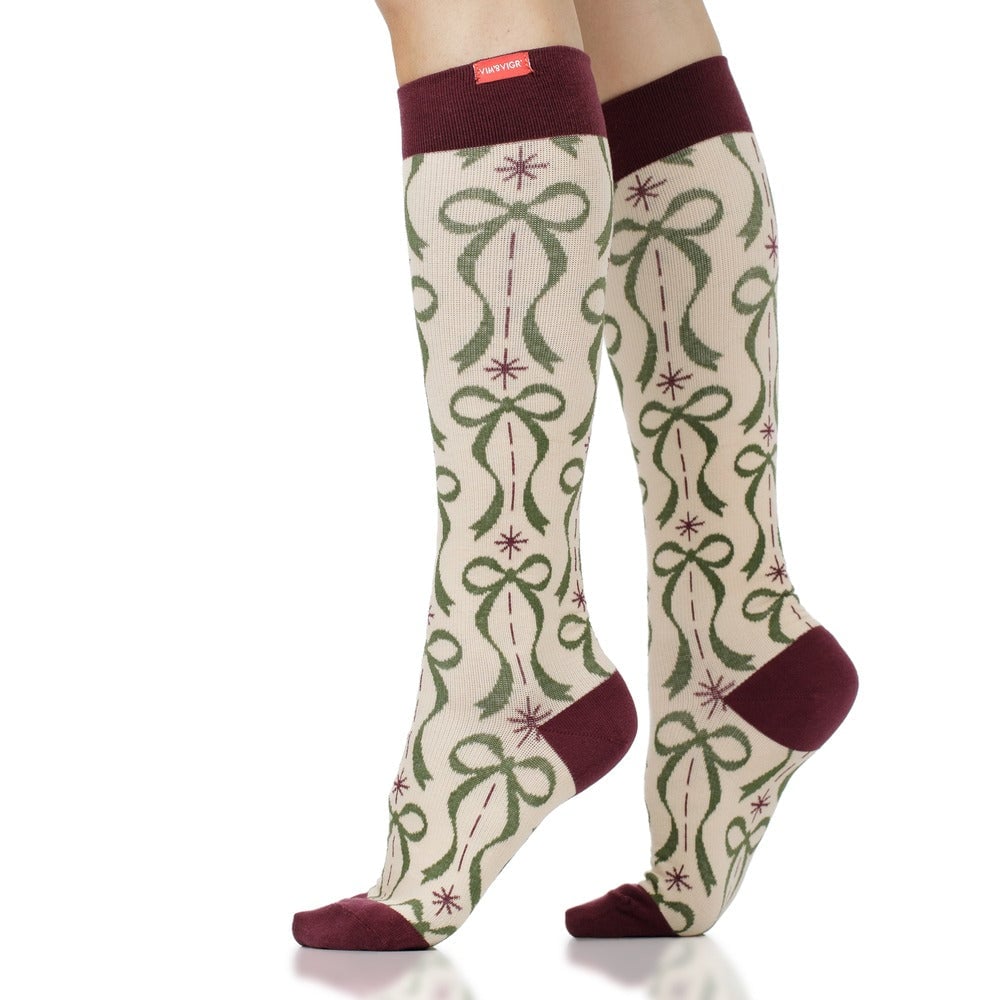
Compression socks explained in simple terms are garments knit to apply graduated pressure to the lower leg, supporting circulation throughout the day. Interest in the category has grown as more people look for everyday wellness solutions that fit into work, travel, and active routines. Vimvigr has built a range around this idea, pairing graduated compression with fabric and design choices meant for daily wear.
What Are Compression Socks and How Do They Work
Graduated compression socks are knit tighter at the ankle and gradually looser moving up the leg. This structure is meant to encourage blood flow back toward the heart rather than letting it pool in the lower legs. Vimvigr frames this as a way to reduce swelling and ease achiness that can build up over a long day. The brand also notes that compression therapy is considered one of the more accessible ways to support general leg wellness.
Graduated compression is the mechanism most brands in this space refer to, and Vimvigr is no exception. Its product pages describe socks engineered to energize the legs from the first step of the day onward. That everyday framing is part of why compression socks explained to a general audience tend to focus on comfort as much as medical use.
The Three Compression Levels: 15-20 mmHg, 20-30 mmHg, and 30-40 mmHg

Vimvigr organizes its signature compression socks around three pressure measurements, 15-20 mmHg, 20-30 mmHg, and 30-40 mmHg. These figures describe the amount of pressure applied at the ankle, and they are a standard way compression socks are explained and compared across the category. The open toe compression line, by contrast, is available specifically in 20-30 mmHg, which the brand describes as medical-grade and generally recommended or prescribed by a doctor.
Compression tights follow a similar pattern, offered in 15-20 mmHg and 20-30 mmHg selections, with footless options available at the lower level. Compression sleeves, meanwhile, are available in 15-20 mmHg. Having the same pressure vocabulary across socks, tights, and sleeves gives shoppers a consistent reference point when comparing items.
Fabric Options: Cotton, Nylon, and Merino Wool
Fabric choice is one of the more distinctive parts of how the brand structures its lineup. The Cotton collection, including styles such as Swellegant and Snow Globe, uses a custom cotton blend described as offering increased breathability, durability, and softness. These socks list a material composition that includes 48% cotton as part of the blend.
The Nylon collection includes a Classic Nylon knit with four-way stretch for added strength and flexibility, alongside a Choice Nylon option that adds a seamless toe construction. The Merino Wool collection, found in styles such as Petite Bows and Parisian Stripe, uses high-grade Australian Merino Wool, described as offering fine softness, temperature regulation, and natural moisture-wicking properties. Three distinct fabric families give buyers a way to match material preference to climate or occasion rather than compression level alone.
Beyond Standard Socks: Open Toe Compression and Compression Sleeves
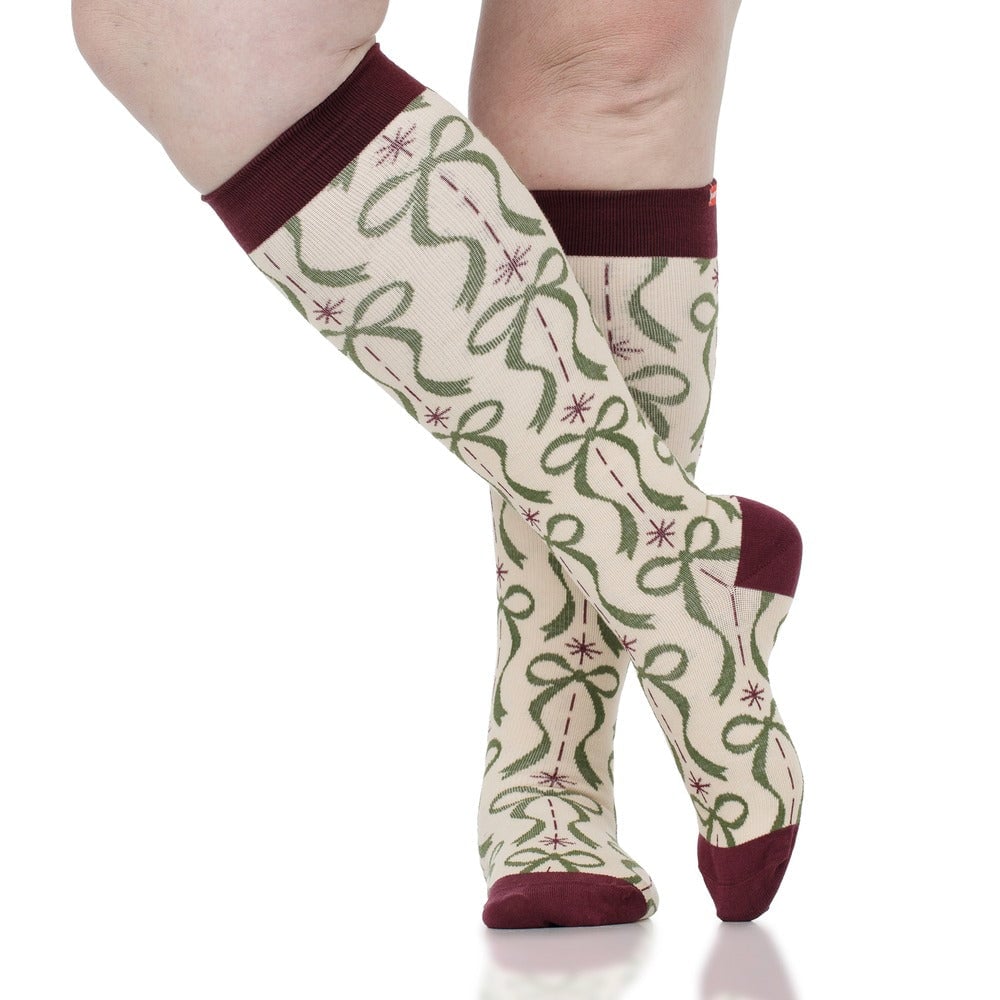
Not every product in the range is a traditional knee-high sock. The open toe compression line carries the same graduated compression technology as the signature socks but leaves the toes exposed, and its cotton version is built with a 200-needle count construction for flexibility and comfort. This style allows compression through the arch of the foot while keeping the toe area open, a design choice the brand highlights for these styles.
Compression sleeves are positioned differently again, described as suited to higher intensity activity such as running, hiking, and pickleball. These sleeves are offered at 15-20 mmHg and use a nylon construction similar to other nylon products from Vimvigr. Compression tights extend the same graduated approach up the full leg rather than stopping at the knee, which suits those who want coverage beyond a standard sock.
Design Meets Function: Stylish Patterns and Medical Credibility
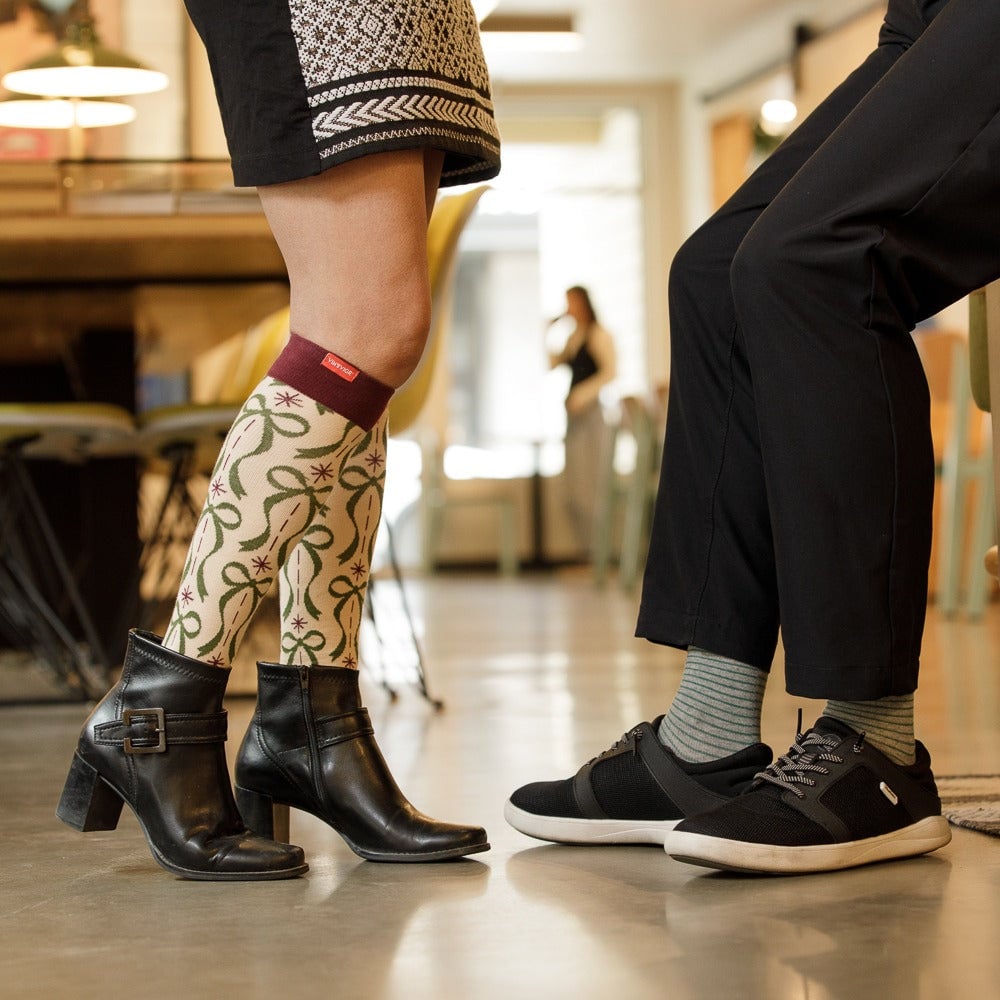
Vimvigr markets its products as fashionable, with pattern names such as Nautical Stripe, Rugby Stripe, Pinstripe, and Heathered Collection appearing across its cotton and nylon lines. This pattern-driven approach sits alongside claims of medical backing. The brand states its socks were developed in partnership with vascular surgeons and vein clinics, and that products are HSA and FSA eligible and registered with the FDA.
That combination, pattern variety on one side and clinical partnership claims on the other, is central to how Vimvigr positions itself within the compression therapy category. Compression socks explained through this lens become less of a purely medical device and more of an everyday wardrobe choice with a stated wellness function. The brand also points to use cases including diabetes, varicose veins, pregnancy, and POTS as contexts where compression is commonly discussed.
- Everyday comfort applies to people who stand or sit for long stretches at a desk job or similar occupation.
- Travel scenarios involve long periods of immobility that are common on flights and road trips.
- Nursing and other on-the-feet work involve extended standing as a routine part of the shift.
- Athletic and high intensity activity such as running, hiking, and pickleball calls for a different fit.
- Pregnancy-related circulation support appears among the listed use cases.
- Medical contexts such as diabetes, varicose veins, and POTS appear as specific use-case categories on the site.
Occupational health context adds some weight to why compression is discussed so often in work settings. The brand notes that sitting for 90 minutes or more can cause blood flow below the knee to decrease by 50%, and that standing all day carries its own negative effects. These figures are presented specifically in relation to work-related sitting and standing, which is the context where Vimvigr raises them.
Across its site, the brand also mentions free US shipping and a 30-day postage paid returns policy, details that sit alongside the product information rather than the compression claims themselves. Taken together, the range spans socks, open toe styles, sleeves, and tights, each tied to a specific mmHg level and fabric choice.
Compression wear continues to move between medical supply and everyday fashion, and that overlap is unlikely to simplify soon. What stays constant is the basic graduated-pressure concept that underpins the entire category.