





Creatine has spent decades filed under “gym supplement,” sitting next to protein powders and pre-workout tubs. That reputation undersells it. A growing body of research treats a creatine monohydrate supplement as something closer to a daily wellness staple, relevant to brain function, cellular energy, and aging, not just muscle output. The category is also shifting in format, moving past plain tubs of powder toward easier daily formats.
Understanding Creatine: Beyond the Gym Supplement Myth
Creatine is one of the most studied molecules in sports nutrition, yet its reach extends well past weightlifting. The body naturally produces it and stores it in muscle and brain tissue, where it helps regenerate energy cells reach for first during effort. That dual presence in muscle and brain is part of why interest in a daily creatine monohydrate supplement has moved beyond athletes and into general wellness routines.
Arq-8 frames this shift directly in its own messaging, positioning creatine alongside protein, magnesium, probiotics, and electrolytes as a category of daily essential rather than a niche gym add-on. That framing reflects a broader trend in the supplement category, where daily staples are increasingly expected to support more than one system at once. Whether that framing changes actual habits is a separate question, but the positioning itself is clear.
How the Phosphocreatine Pathway Powers Both Strength and Mental Clarity
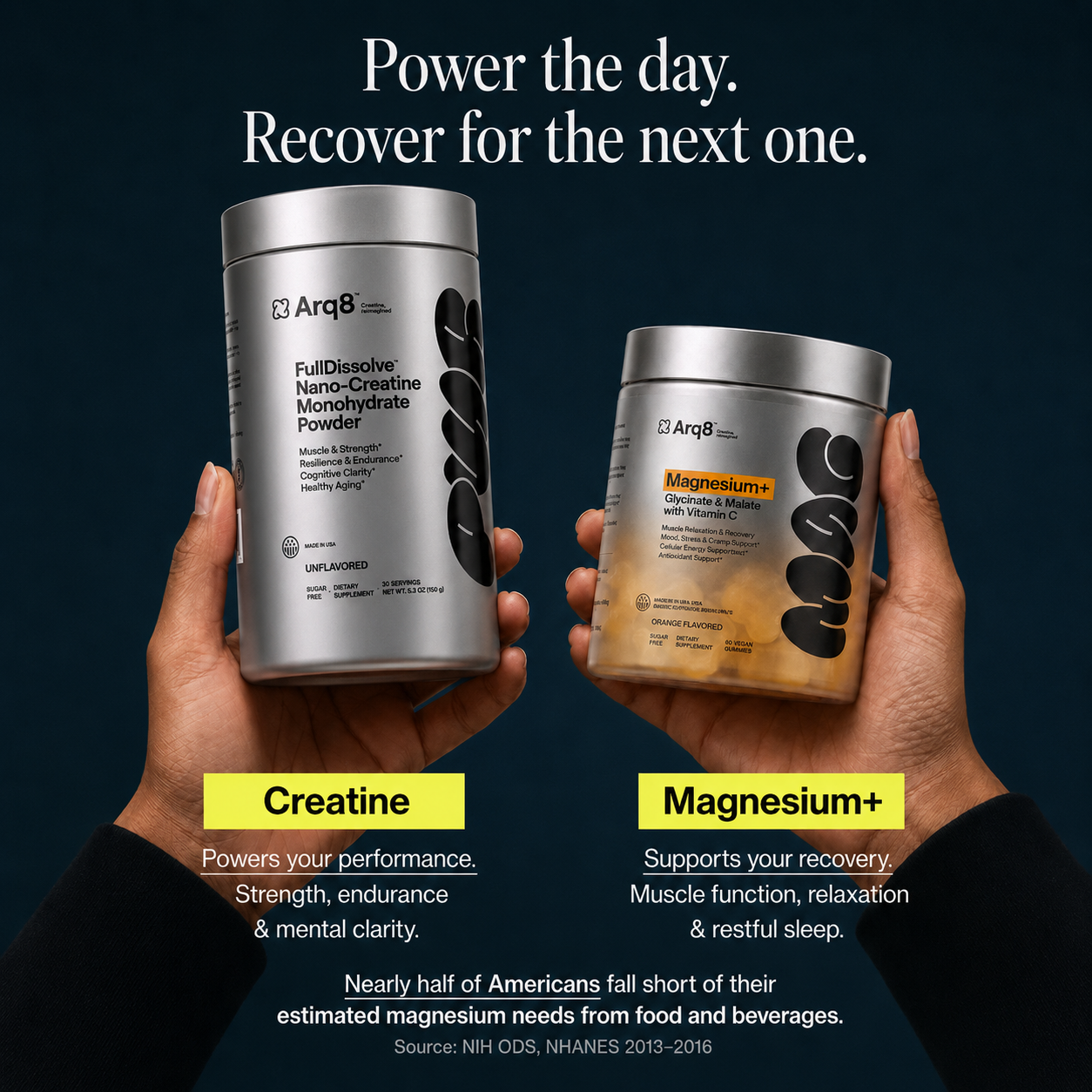
Creatine’s role centers on the phosphocreatine pathway, the body’s primary short-burst energy system. This pathway fuels strength output and plays a part in recovery after physical effort. Because the brain also relies on fast energy turnover, the same pathway connects to cognitive performance and stress resilience, not only physical capacity.
According to the brand’s own product information, consistent intake is linked to strength and lean mass development, along with cognitive performance and stress resilience. That dual claim, physical and mental, is part of why creatine keeps getting re-examined outside of strength training circles. Interest in cellular aging and long-term energy metabolism has pulled the conversation further into general wellness territory.
- Daily creatine intake is associated with strength and lean mass development over time.
- The same pathway supports cognitive performance and stress resilience, according to available product information.
- Consistent use is tied to recovery support following physical effort.
- Ongoing interest in the molecule extends to long-term cellular health and aging-related research.
The Delivery Problem With Traditional Creatine Monohydrate
The molecule itself is not the obstacle. Traditional creatine monohydrate is often gritty, slow to dissolve, and prone to settling at the bottom of a glass. According to Arq-8’s own description of the category, that discomfort is the reason many people skip days and lose momentum with the routine, rather than any flaw in the molecule itself.
Some users also report bloating or digestive unease with older-generation creatine formats, a pattern Arq-8 names directly in its own product messaging. That combination of grit, poor solubility, and GI discomfort is presented as a delivery issue, not a reason to doubt the underlying ingredient. The distinction between the molecule and its format is central to how Arq-8 positions its own products.
FullDissolve Nano-Creatine: Arq8’s Approach to Superior Absorption
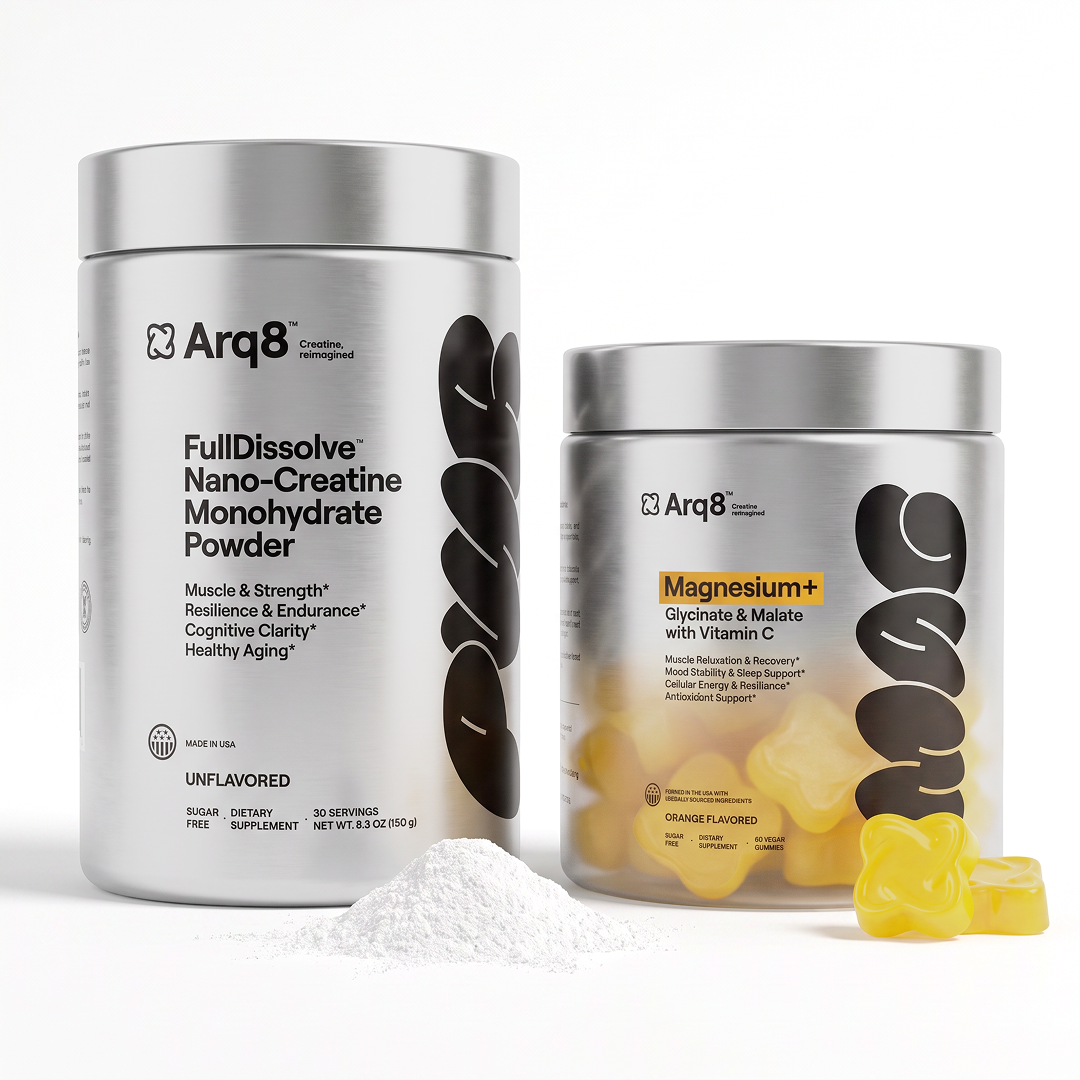
Arq-8 addresses the delivery problem with what it calls FullDissolve Nano-Creatine Monohydrate, described as a patent-pending nano-refinement process developed in Switzerland. The stated goal is complete solubility, so the powder mixes clear in water, coffee, a shake, or cereal, instead of sitting as grit at the bottom of a glass. The brand also states the format is gentle on digestion, with no bloat or GI issues reported, and no water retention.
On absorption, Arq-8 states the nano-refined format delivers 10x better cellular uptake compared with traditional creatine, with the company describing efficient absorption into muscle and brain tissue. The flagship powder product, the FullDissolve Nano-Creatine Monohydrate Powder, is a 500 mesh unflavored formula built around this refinement claim. It is positioned as the at-home option within the wider product range.
Arq8 Creatine Gummies Versus Powder: Format Flexibility for Daily Use
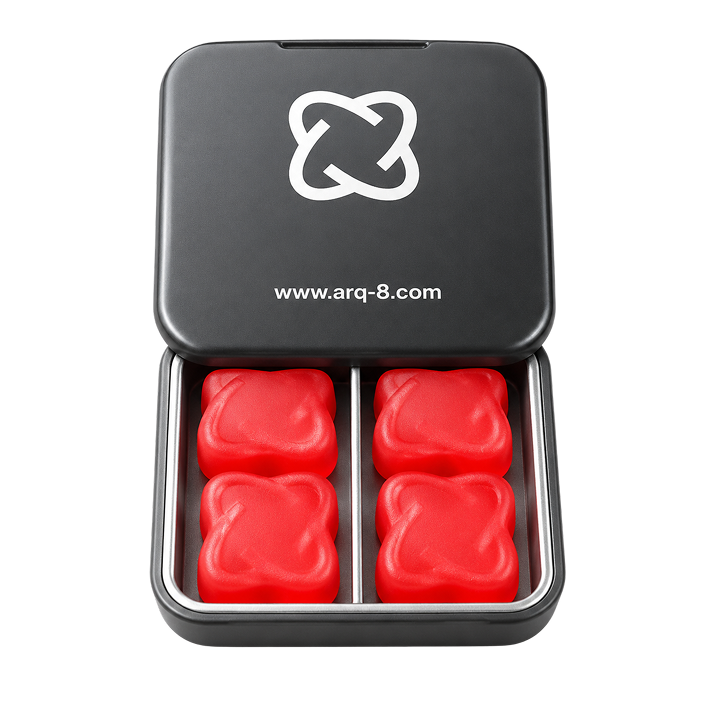
Beyond the powder, Arq-8 offers Nano-Creatine Monohydrate Gummies, described as sugar-free and built on the same FullDissolve technology, available in two flavor options. The gummies are positioned for use away from home, in a bag or at a desk, while the powder is positioned as the version mixed into a drink at home. Several product listings describe a 5g clinical dose paired with three supporting ingredients in the gummy format.
The range also includes combination products, such as creatine paired with Magnesium+ gummies, described as supporting muscle recovery, calm, and deeper sleep alongside the creatine dose. A variety pack and a combined powder-and-gummies bundle are also listed among the product options. Having both a powder and a gummy version under one creatine monohydrate supplement line is presented by the brand as a way to keep daily format flexible, whether someone is at a kitchen counter or traveling.
Building Consistent Creatine Habits for Long-Term Cellular Health
Supplement categories such as protein, magnesium, and electrolytes have become everyday fixtures because they fit easily into existing routines. Creatine’s path toward that same status depends on similar factors, including taste, mixability, and digestive comfort. A creatine monohydrate supplement that solves those practical frictions is easier to fold into an existing morning or post-workout routine than one that does not.
Arq-8 markets its products as third-party tested and made in the USA, with a stated zero-sugar formulation across its gummy lines. Independent of any single brand, the broader research interest in creatine now spans strength training, cognitive support, and aging-related cellular health, which is part of why the ingredient keeps expanding beyond its original gym-supplement reputation.
Creatine’s reputation has shifted from a niche strength aid to a broader daily wellness ingredient, and format innovation is a visible part of that shift.