




Every traveler faces the same frustration limited cargo space. Your vehicle’s trunk, hatchback or truck bed fills up quickly, forcing difficult choices about what to bring and what to leave behind. For camping trips, road adventures and extended travels, this space constraint becomes a real problem. Tents, sleeping bags, coolers, cooking gear and luggage all compete for limited room. That’s where OutfitR cargo carriers step in, offering a straightforward solution that transforms how you pack for any journey.
Understanding Cargo Carrier Types and Mounting Options
Cargo carriers come in several styles, each suited to different vehicles and travel styles. Roof-mounted boxes are the most common option, sitting on top of your vehicle using roof racks or crossbars. They’re excellent for maximizing cargo while keeping your interior spacious and keeping gear accessible without opening your trunk. Rooftop boxes work well for any vehicle with roof attachment points and can often hold 15 to 20 cubic feet of gear.
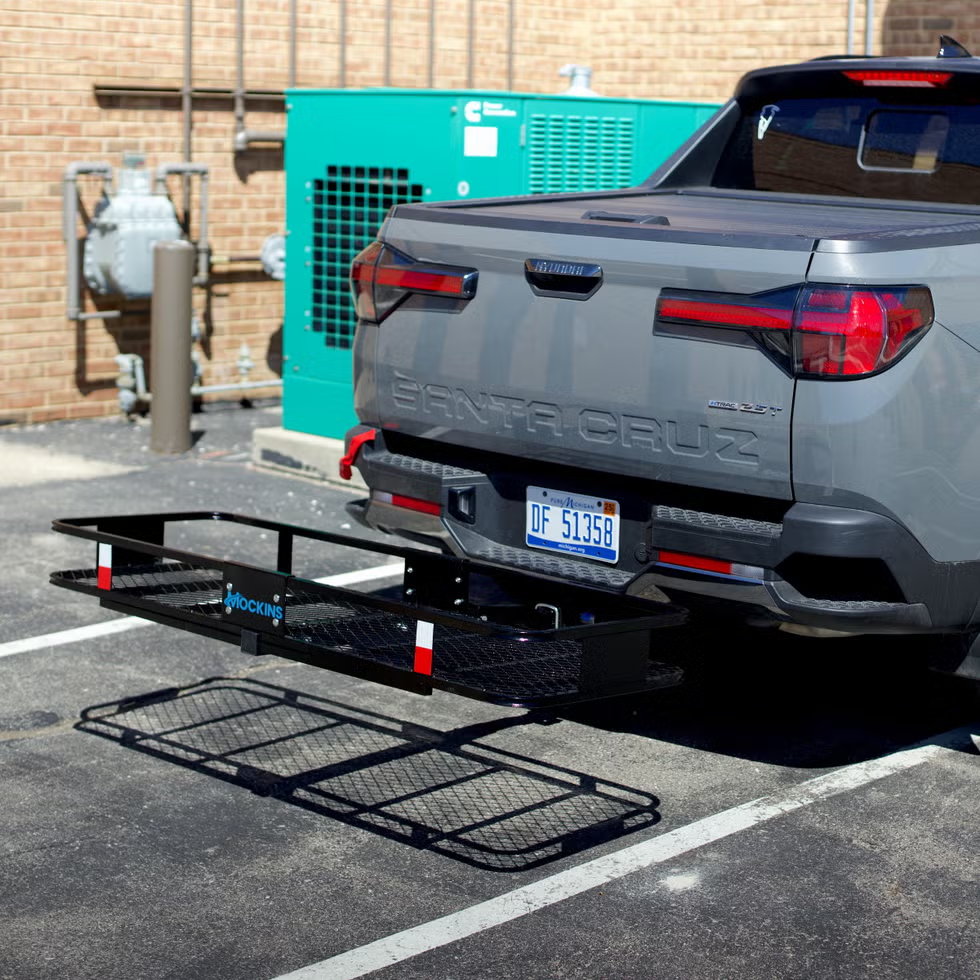
Hitch-mounted cargo carriers attach to your vehicle’s towing receiver, similar to bike racks and cargo trays. These sit behind your vehicle, sometimes called rear-mounted carriers. They’re incredibly popular because most modern vehicles have receiver hitches and they keep cargo lower and closer to your center of gravity than roof boxes. OutfitR designs hitch carriers with durable weatherproofing and secure locking mechanisms that protect your gear while traveling.
Some travelers prefer cargo baskets or platform-style carriers, which mount on roof racks or hitches but lack enclosed sides. These work well for oversized items like kayaks, lumber or awkward camping gear that won’t fit in an enclosed box. OutfitR offers these open-platform options for adventurers with unconventional packing needs.
Storage Capacity and Practical Volume
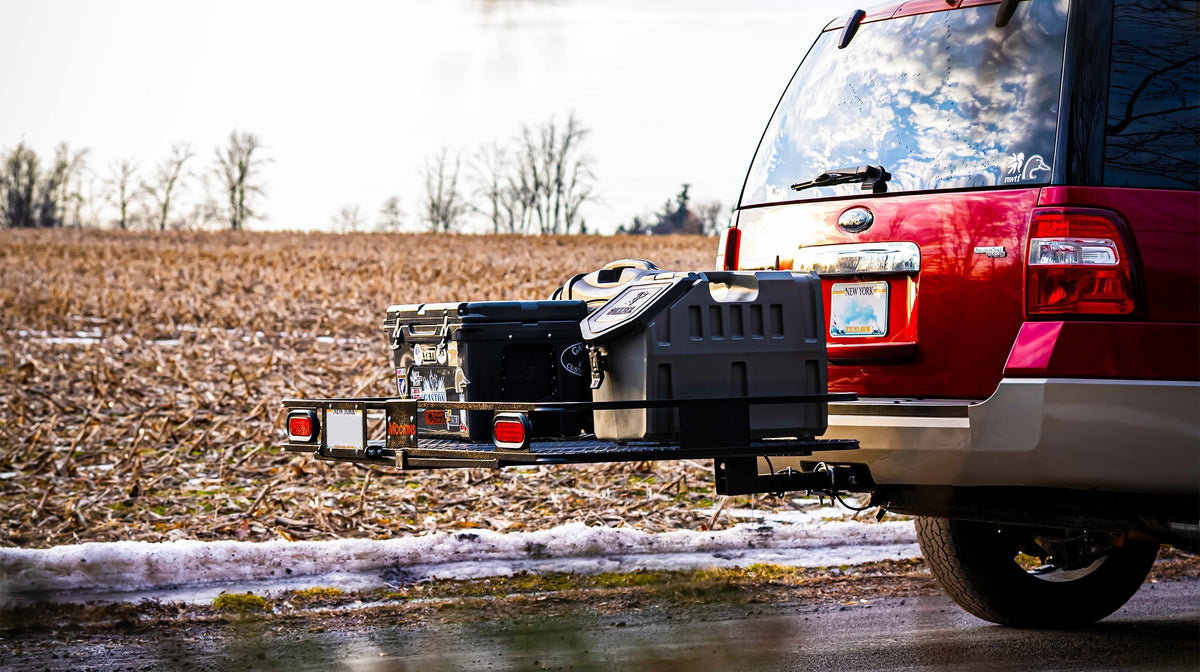
Cargo carrier capacity ranges widely, from 10 cubic feet to over 30 cubic feet depending on the model. Understanding actual usable space versus advertised capacity matters tremendously. A 20-cubic-foot box sounds spacious, but inside dimensions and awkward angles can reduce practical packing space. Consider what you typically carry on trips and measure items you’ll pack frequently. A sleeping tent, rolled-up sleeping bag, camping stove and cooler might take up more or less space than you expect.
Vehicle ride height and handling change when you add a cargo carrier. Rooftop boxes raise your vehicle’s center of gravity, affecting how your car handles in turns and emergency maneuvers, plus they slightly increase wind noise and fuel consumption. Hitch carriers pull weight behind your vehicle, affecting braking distance and backing up visibility. OutfitR carriers are engineered to minimize these effects while providing maximum useful storage.
Protection, Weather Resistance and Security
Your gear deserves protection from rain, dust, UV rays and rough road conditions. Quality cargo carriers feature weatherproof seals along all edges and lids, keeping interior contents dry even during heavy downpours or high-speed highway driving. Material quality matters tremendously, cheap plastic carriers crack under sun exposure or split apart if they hit an overhanging branch on a dirt road. Durable carriers use reinforced polymers or aluminum construction designed for years of use.
Security features protect against theft and accidental cargo shifting. Look for carriers with lockable lids, ideally integrated locks that attach to your roof rack or hitch receiver. Some travelers tether contents inside the carrier with cargo nets to prevent everything from sliding around during sharp turns or sudden braking. Internal padding or foam keeps fragile items safe from bumps and vibration.
- Weatherproof seals on all access points prevent water and dust infiltration.
- Heavy-duty locks with corrosion-resistant hardware resist tampering and rust.
- Reinforced mounting brackets distribute weight evenly across your vehicle structure.
- Interior coating prevents scratches and protects your gear from damage.
Installation, Compatibility and Ease of Use
A cargo carrier is only useful if you can actually install and use it without frustration. Roof boxes typically require crossbars with specific T-slot or rail systems. Hitch carriers simply bolt or slide into your receiver, a process taking five to ten minutes once. Some carriers fold down or tilt away from your vehicle, letting you access your trunk without fully removing the carrier, this feature dramatically improves daily usability.
Weight capacity and vehicle load limits matter too. If your vehicle’s roof is rated for 150 pounds total and your carrier plus gear weighs more, you’re overloading it. Hitch receivers have weight ratings; exceeding them can damage your vehicle’s frame or cause safety issues during towing. Responsible cargo carriers clearly mark their weight limits and mounting requirements.
Price and Value for Different Travel Styles
Cargo carriers range from simple, inexpensive carriers under one hundred dollars to sophisticated systems exceeding five hundred. Budget carriers work fine for occasional trips if you don’t mind basic weatherproofing and simpler mechanics. Mid-range options offer better construction, smoother operation and more reliable seals at reasonable prices. Premium carriers use premium materials and refined designs, worth the investment if you travel constantly or haul valuable or delicate gear.
Think about your actual usage. If you camp twice a year, an affordable carrier probably suits you fine. If you’re a frequent adventurer traveling monthly, investing in a quality carrier pays dividends through durability and convenience. Consider this a long-term purchase that handles countless trips over years of ownership.
Transforming Your Travel Experience
The right cargo carrier eliminates the packing puzzle that frustrates so many travelers. Instead of agonizing over what to leave behind, you pack everything you actually need for your adventure. You protect your gear from weather and theft, stabilize your vehicle’s handling and access your trunk whenever necessary. Camping becomes more comfortable, road trips feel less cramped and weeklong adventures are suddenly feasible without compromising on essential equipment or comfort items. Explore what OutfitR cargo carriers offer and discover how extra storage simplifies your travels.