




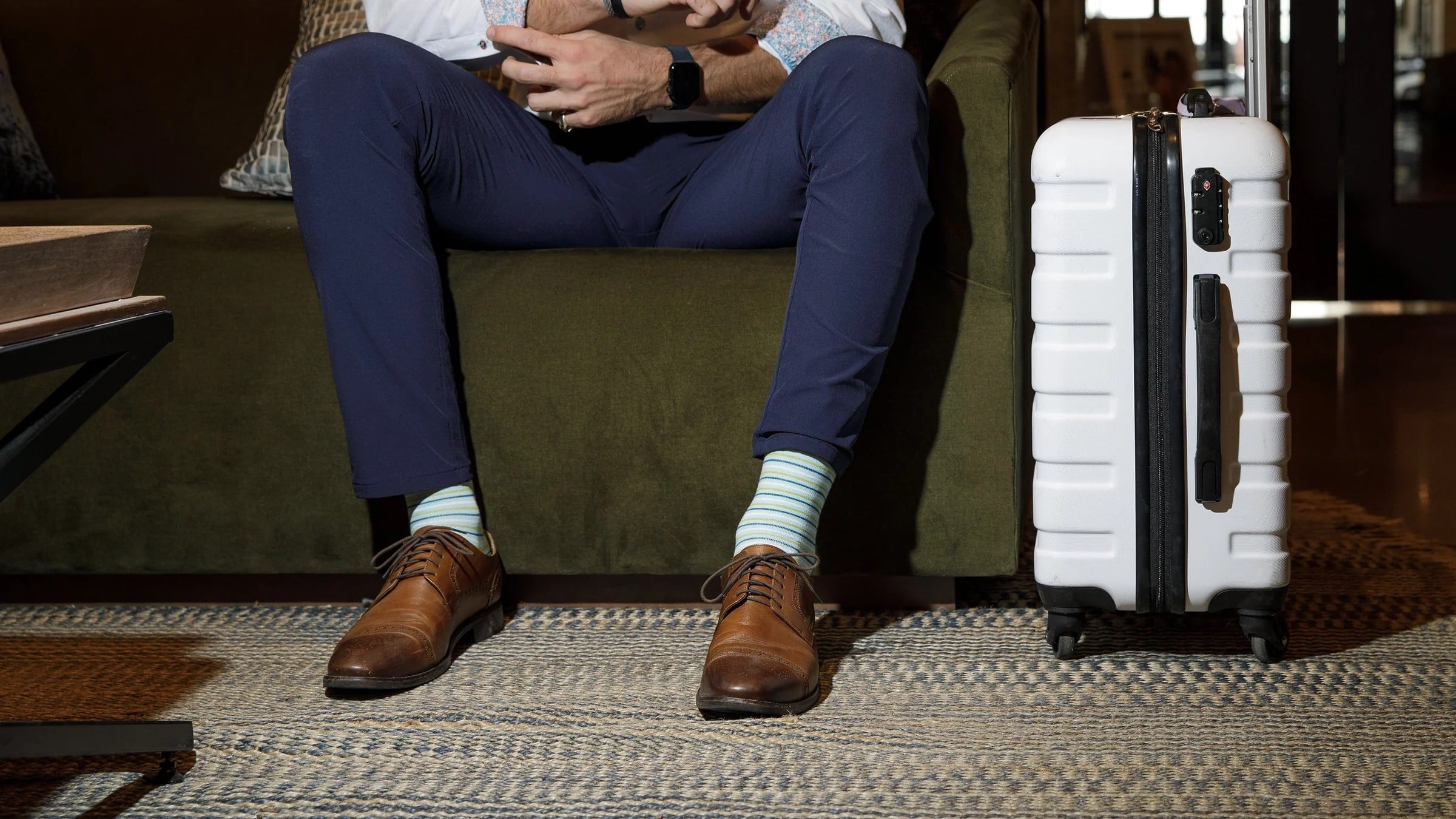
Long periods of sitting create a different clothing challenge from an ordinary active day. Socks need to stay in place, fit the leg correctly and remain comfortable for hours without being treated as a substitute for movement. Graduated compression socks are designed to apply the greatest pressure near the ankle and less pressure higher on the leg. VIM & VIGR offers several compression levels and lists travel and work among common use cases, so the range illustrates why fit and intended support level should be considered together. A person choosing compression for a flight, train journey or desk-based schedule should start with accurate measurements and the manufacturer’s size chart. Medical conditions, a history of blood clots or uncertainty about stronger compression are reasons to involve a healthcare professional rather than choosing a higher level simply because it sounds more effective.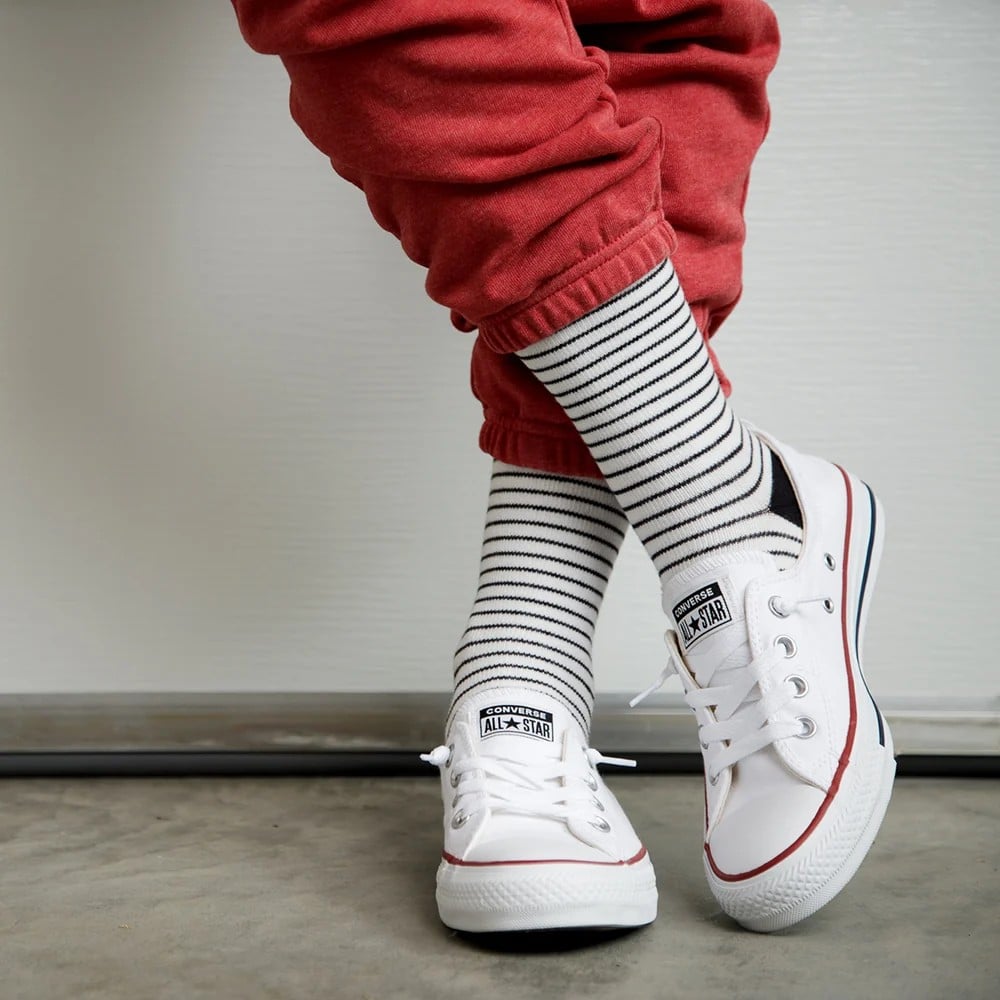
Fit should be decided by measurements rather than ordinary shoe size
Compression socks are meant to sit more closely against the leg than conventional socks, so the correct size depends on the measurements requested by the manufacturer. Calf circumference and other sizing points can matter alongside shoe size. VIM & VIGR offers standard and wide-calf options in several styles, which shows why one generic size assumption does not work for every leg. Measuring is best done when swelling is minimal and the measuring tape is level without digging into the skin. A sock that is too large may bunch or fail to provide its intended graduated fit, while one that is too small can be excessively difficult to apply and uncomfortable to wear. The top band should sit flat rather than being folded down, because folding creates a concentrated band of pressure. Correct sizing is the foundation for any later decision about fabric, color or compression level. Shoe choice should be tested with the socks before travel day. A close-fitting shoe may feel different once a compression garment replaces a thin everyday sock, particularly across the toes and instep.
Travel and desk use call for a realistic support level
Compression strength is expressed in millimeters of mercury and a higher range indicates stronger compression. The everyday 15-20 mmHg category shown by VIM & VIGR is marketed for general wear and travel, while stronger levels are also available for people whose needs may be different. Selecting stronger compression should not be treated like choosing a firmer athletic sock. Product guidance and healthcare advice become more important when medical-grade ranges are considered. For a healthy traveler using compression for general comfort, the practical questions include how long the socks will be worn, whether the person can put them on correctly and whether there is any condition that changes circulation or sensation in the legs. During long sitting periods, compression is only one part of the routine. Regular movement, position changes and appropriate hydration remain relevant travel and work habits. Desk workers can also use calendar or movement prompts so compression does not become a reason to stay seated for an entire work block. Short walks and ankle movement remain part of a sensible routine.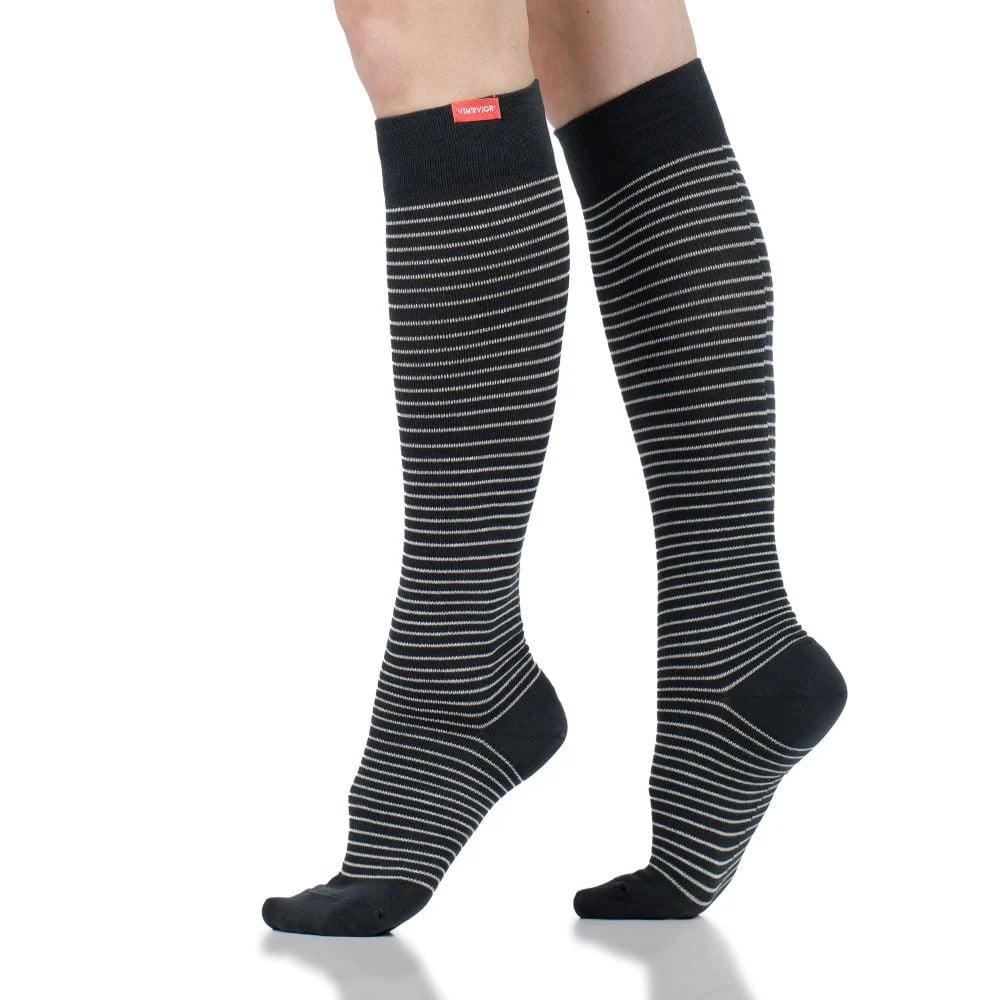
Application technique can make a long day more comfortable
A correctly sized sock can still feel awkward if it is pulled on unevenly. The fabric should be distributed gradually from the foot upward rather than stretched forcefully from the top band. VIM & VIGR provides fitted knee-high designs, and those garments work best when the heel and ankle are seated in their intended positions before the calf section is smoothed upward. Putting the socks on with dry hands and dry skin often makes fabric distribution easier. Rings or sharp nails should be handled carefully because repeated snagging can damage the knit over time.
- The sock should be put on before prolonged sitting when the leg is comfortable rather than waiting until substantial swelling has already developed.
- Wrinkles should be smoothed out because a folded or bunched area can create an uneven pressure point during many hours of wear.
- The top band should remain flat at its intended height and should not be rolled or doubled over to shorten the sock.
- The wearer should remove the garment and seek appropriate advice if there is unusual pain, numbness, marked color change or another concerning symptom.
Fabric and routine determine whether the socks are actually worn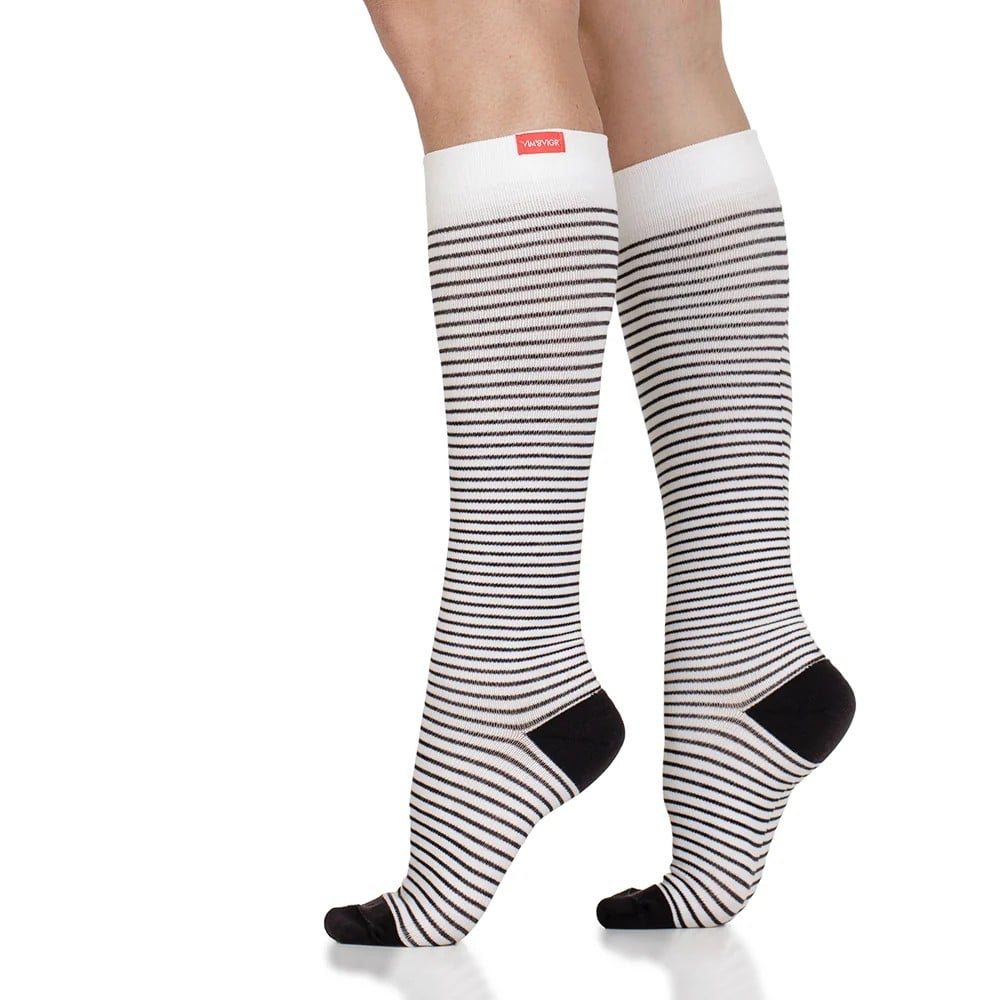
A technically suitable sock has limited value if its fabric, warmth or appearance makes a person avoid wearing it. VIM & VIGR offers cotton, merino wool and moisture-wicking nylon options as well as patterned designs, so everyday preferences can be considered after the size and compression range are established. A frequent traveler may prioritize easy-care fabric and shoes that accommodate the sock comfortably. Someone at a desk may care more about breathability and a style that works with work clothing. Socks should be washed according to their care instructions because repeated wear and laundering can affect fibers over time. They should also be inspected for stretched areas or damage rather than kept indefinitely because they still look acceptable from a distance. The most practical travel or desk setup is one in which the garment fits correctly, can be applied without excessive struggle and works alongside regular movement instead of encouraging a person to remain still for even longer periods. On a long journey, the wearer should know how the garment normally feels before departure. Trying a new size for the first time on a long flight makes it harder to distinguish ordinary close fit from an actual problem.