




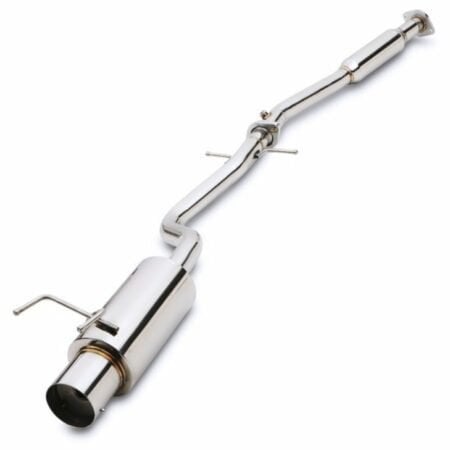
Intercoolers vs radiators is a comparison that trips up plenty of owners shopping for cooling upgrades, since both components deal with heat but in very different parts of the engine. Turbocharged builds tend to lean on intercoolers, while engines running hot under sustained load usually need a stronger radiator. Gravityperformance stocks both categories, along with the supporting hoses and fans that keep a cooling system working as a whole.
Understanding Intercooler Kits and Their Role in Turbocharged Setups
Intercooler kits exist to cool the charged air coming out of a turbo before it reaches the engine. Hot, compressed air is less dense, so cooling it down allows more oxygen into each cylinder. That supports more consistent power delivery under load, particularly once a vehicle has been tuned beyond factory settings. Gravityperformance describes its intercooler kits as offering increased cooling capacity with minimal pressure drops, which matters because excessive pressure loss can undercut the benefits of a larger core.
The brand positions these kits as a strong addition for modified cars or vehicles that see regular track use, rather than as a universal upgrade for every build. One listed front mount intercooler core and hose kit uses a bar-and-plate core with high flow end tanks, built from aluminium and rated to withstand up to 3 Bar of boost.
Direnza Intercoolers: Cooling Charged Air for Tuned Performance
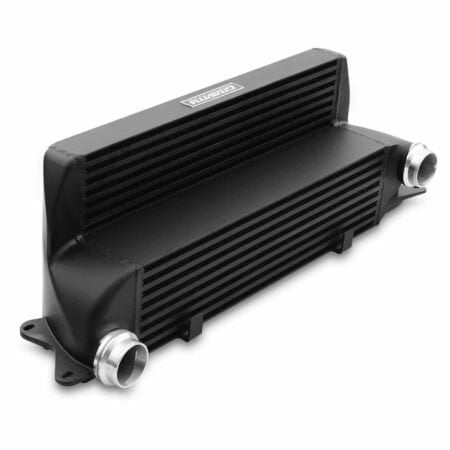
Alongside its own intercooler kits, Gravityperformance also carries the Direnza intercooler range. These units are built to cool charged air from turbo systems and support steady power delivery as boost increases. The stated aim is to stabilise engine temperatures and preserve torque under pressure, which is particularly relevant on tuned or turbocharged setups where heat soak can creep in during sustained driving. For anyone weighing intercoolers vs radiators on a turbocharged platform, the Direnza line sits firmly on the intercooler side of that comparison, addressing intake air temperature rather than coolant temperature.
Gravity Performance Radiators: Aluminium Construction and Heat Dissipation
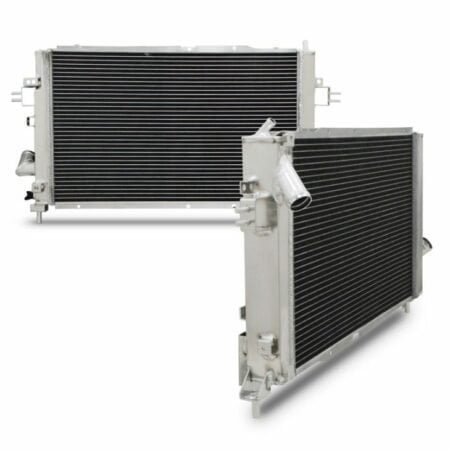
Radiators handle a different job entirely, moving heat out of the engine coolant rather than the intake charge. Gravityperformance offers twin-core aluminium radiators as an upgrade over a factory unit. Aluminium is noted as stronger than typical OEM materials, which allows thinner fins and pipes while still holding up structurally. Because aluminium is lighter, the range also includes larger radiator sizes, such as a 40mm high flow unit, without adding excessive weight.
This radiator line is presented as a good option for older vehicles or those driven hard on track, which is a different use case than the turbo-focused intercooler kits.
Why Track Cars and Modified Vehicles Need Upgraded Cooling
Vehicles used on track or run with aftermarket tuning place more demand on every part of the cooling system than a standard road car does. Higher boost levels raise intake air temperature, while sustained high engine speeds push more heat into the coolant. Weighing up intercoolers vs radiators for a particular build usually means looking at where that heat actually accumulates, whether in the charge air or in the coolant loop itself, rather than assuming one component covers both jobs. A tuned, track-driven car frequently benefits from both an intercooler capable of handling increased boost and a radiator sized to cope with extended high-load running.
Silicone Hoses and Supporting Cooling System Components
Factory rubber hoses are prone to stiffening, cracking, and eventually failing, particularly as a vehicle ages or is modified. Gravityperformance offers silicone hoses built with a 5mm thick wall and reinforcement intended to handle higher pressures and temperatures. Silicone is noted as a stable material, which is why it is positioned as a fit for track cars and modified vehicles rather than standard applications alone. These hoses connect directly into the broader cooling discussion, since an intercooler or radiator upgrade is only as reliable as the piping that carries air or coolant between components.
Cooling Fans, Oil Coolers, and the Complete Cooling Ecosystem
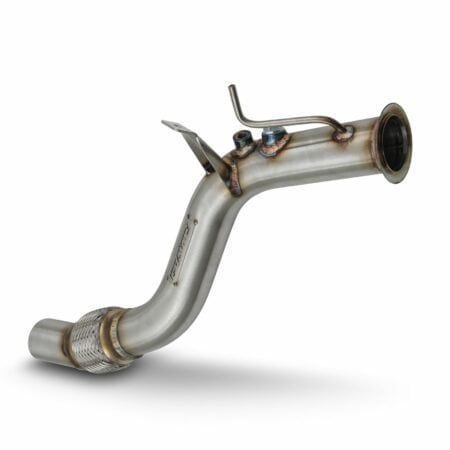
Beyond intercoolers, radiators, and hoses, the cooling category also lists cooling fans and oil coolers. The fans are offered in both universal and direct-fit applications, giving flexibility depending on the vehicle and radiator combination fitted. Oil coolers are described as essential for maintaining stable oil temperature, which matters once engine and coolant temperatures are already being pushed by other modifications. Looked at together, these parts form a wider ecosystem rather than isolated upgrades, with intercoolers, radiators, hoses, fans, and oil coolers each covering a different part of the same heat management task.
- Intercooler kits primarily cool compressed intake air coming from a turbo, while radiators primarily cool the engine coolant circulating through the block.
- Direnza intercoolers are aimed at tuned or turbocharged setups where stabilising intake temperature supports consistent torque delivery.
- Aluminium radiators are suited to vehicles that run hot for extended periods, such as older cars or those used regularly on track.
- Silicone hoses reinforce the connections between these components and are built to resist cracking under higher pressure and temperature.
- Cooling fans and oil coolers round out the system, addressing airflow and oil temperature alongside the main intercooler and radiator upgrades.
A turbocharged daily driver pushed into tuning territory tends to feel the benefit of an intercooler first, while a car regularly run hard on track is more likely to expose the limits of a factory radiator. Either way, cooling upgrades work best as a system rather than a single standalone part.