




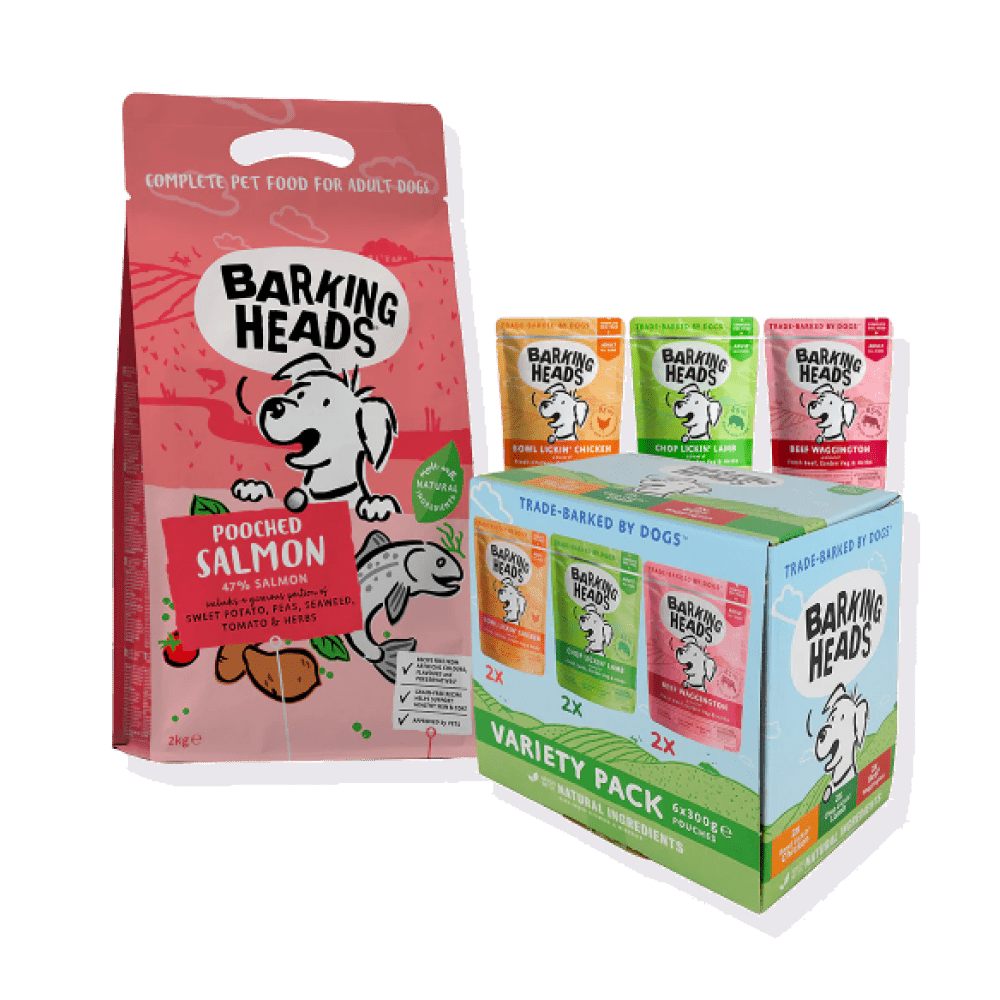
Natural ingredient dog food has become something owners actively look for rather than a niche preference, and Barkingheads has built an entire range around that shift. The brand groups its recipes by life stage and specific need, from puppy formulas to senior diets, while keeping fresh meat and fish as the starting point. What follows looks at how that range is structured and what sits inside each bowl.
What Food Means: Barkingheads’ Approach
For Barkingheads, natural ingredient dog food starts with a simple rule: recipes contain at least 50% meat or fish. The brand states plainly that its food is crafted by nutritional experts and contains no fillers and no artificial additives, often described on site as “no nasties”. That baseline applies across the dry and wet ranges, not just a single flagship product.
This approach extends beyond adult dog food into puppy, senior, and specialized diets, each built on the same principle of whole-food nutrition. Barkingheads frames this as a consistent standard rather than a marketing claim limited to one product line. The result is a range where ingredient quality is meant to carry through regardless of which recipe a dog eats.
Freshly Prepared Meat and Fish at the Core of Every Recipe
The All Hounder dry food line illustrates this well. The Bowl Lickin’ Goodness Chicken recipe is made with 50% free-run chicken blended with rice, oats, peas, and carrots, while the Lamb variant uses 50% grass-fed lamb with the same vegetable and grain base. Both are described as containing prebiotics from chicory root alongside selenium and vitamin E.
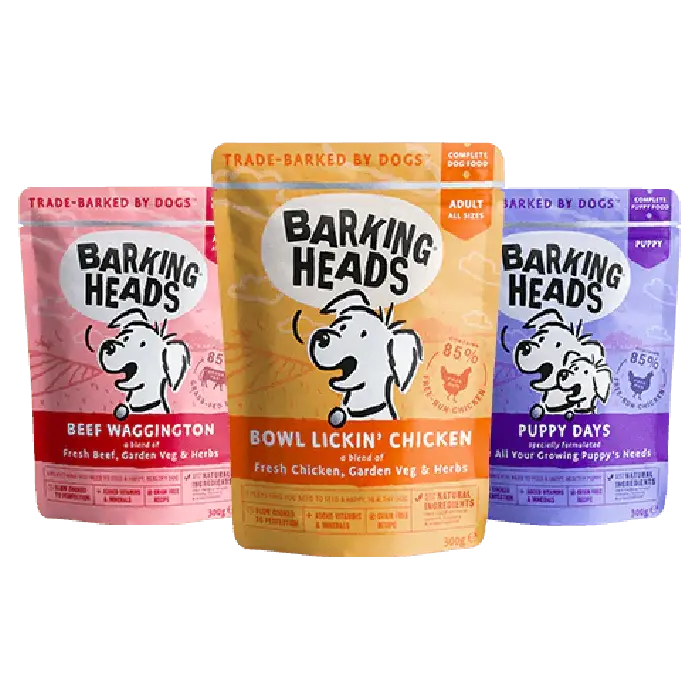
Fish-based options follow a similar pattern. The Salmon recipe pairs freshly prepared salmon with sweet potato and at least five fruits and vegetables, and the White Fish version does the same with white fish instead. On the wet food side, the Bowl Lickin’ Goodness Chicken pouch is slow-cooked and contains 85% freshly prepared ingredients, reflecting a higher meat content than the dry equivalents.
Grain-Free and Specialized Diets: Golden Years, Fat Dog Slim, and Little Paws
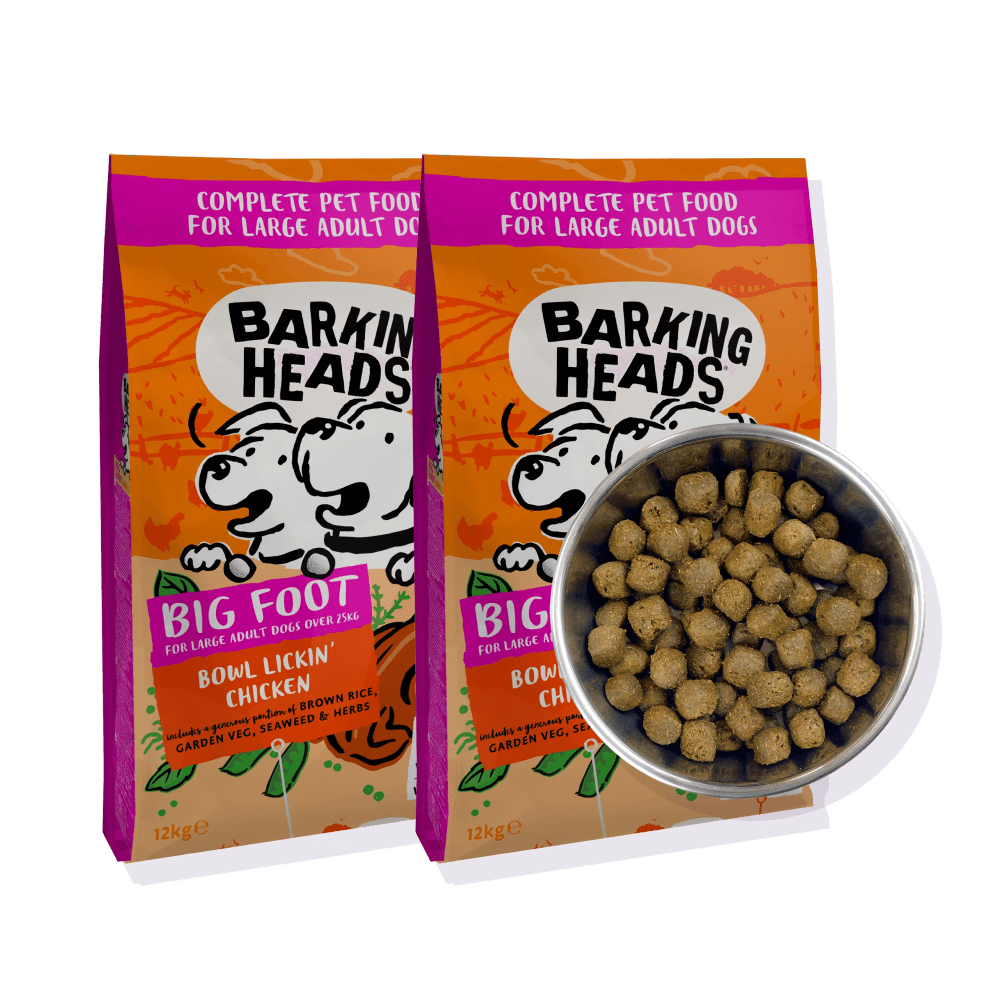
Beyond the core All Hounder range, Barkingheads offers recipes built for particular life stages and conditions. Golden Years targets senior dogs, Fat Dog Slim is formulated as a low-fat option, and Little Paws is designed around small breed needs. Big Foot, meanwhile, addresses large breed requirements, and a separate grain-free range sits alongside these for dogs with that specific dietary preference.
These specialized lines sit next to the puppy range, which is split into wet and dry formats. This structure means an owner can move a dog between recipes as its needs change, whether that is a shift toward a lower-fat formula or a size-specific blend, without leaving the natural ingredient dog food philosophy behind. None of these variants depart from the 50% meat or fish minimum that defines the brand’s recipes generally.
Mixed Feeding with Wet and Dry Food Bundles
Barkingheads also sells its products as bundles rather than single formats only. The Dry & Wet Dog Food Combo lets an owner pick kibble and wet food pouches and combine them into one box, described on site as mixed feeding made easy. A separate Dry Dog Food Multi-Buy allows selection of favourite dry recipes and bag sizes, while a Wet Dog Food Multi-Buy does the same for pouches.
A Variety Pack option contains six wet food pouches split evenly across chicken, lamb, and beef, giving a dog three flavours in one box. For households that go through food quickly, a Wet Dog Food Mega Pack brings together 40 grain-free 300g pouches across four recipes. These bundle formats give structure to how food gets delivered without changing what goes into the recipes themselves.
Digestive Support Through Natural Prebiotics and Whole Vegetables
Several Barkingheads recipes name chicory root as a prebiotic ingredient, included specifically to support healthy digestion. This sits alongside whole vegetables such as peas, carrots, and sweet potato, which appear across multiple dry food recipes rather than just one. The Tummy Loving Care White Fish recipe, for example, is built around white fish and sweet potato together with the same five-plus fruit and vegetable blend used elsewhere in the range.
The consistent use of these ingredients across different proteins, from duck to salmon to lamb, suggests digestion-focused formulation is treated as a baseline feature rather than something reserved for one product. That pattern runs through the following list of ingredients and the roles they play:
- Free-run chicken and grass-fed lamb each appear at 50% inclusion in their respective All Hounder dry recipes.
- Chicory root is included across several recipes as a natural source of prebiotics for digestive support.
- Sweet potato, peas, and carrots form a recurring vegetable base across the salmon, white fish, and duck recipes.
- Selenium and vitamin E are included in recipes such as the Chicken and Lamb dry food to support general nutrition.
- Wet food recipes such as Bowl Lickin’ Goodness Chicken contain 85% freshly prepared ingredients, a notably higher proportion than the dry equivalents.
Building a Tailored Subscription Around Dog’s Specific Needs
Barkingheads offers a subscription option that lets an owner build a recurring order around a dog’s particular recipe and format preferences. The brand also runs a rewards scheme, described as Barking Rewards, where points accumulate and unlock additional benefits over time. A referral scheme exists alongside this, giving both the referrer and the new customer a benefit on their next order.
Because the range spans dry food, wet food, puppy formulas, and specialized diets like Golden Years and Fat Dog Slim, a subscription can be adjusted as a dog’s needs change across its life. This flexibility sits on top of the same natural ingredient dog food standard that runs through every recipe in the catalogue. The structure is less about a single product and more about how the full range fits together over time.
Closing Thought
Natural ingredient dog food, as Barkingheads presents it, is less a single product than a consistent standard applied across an entire catalogue. That consistency, more than any one recipe, is what defines the range.