




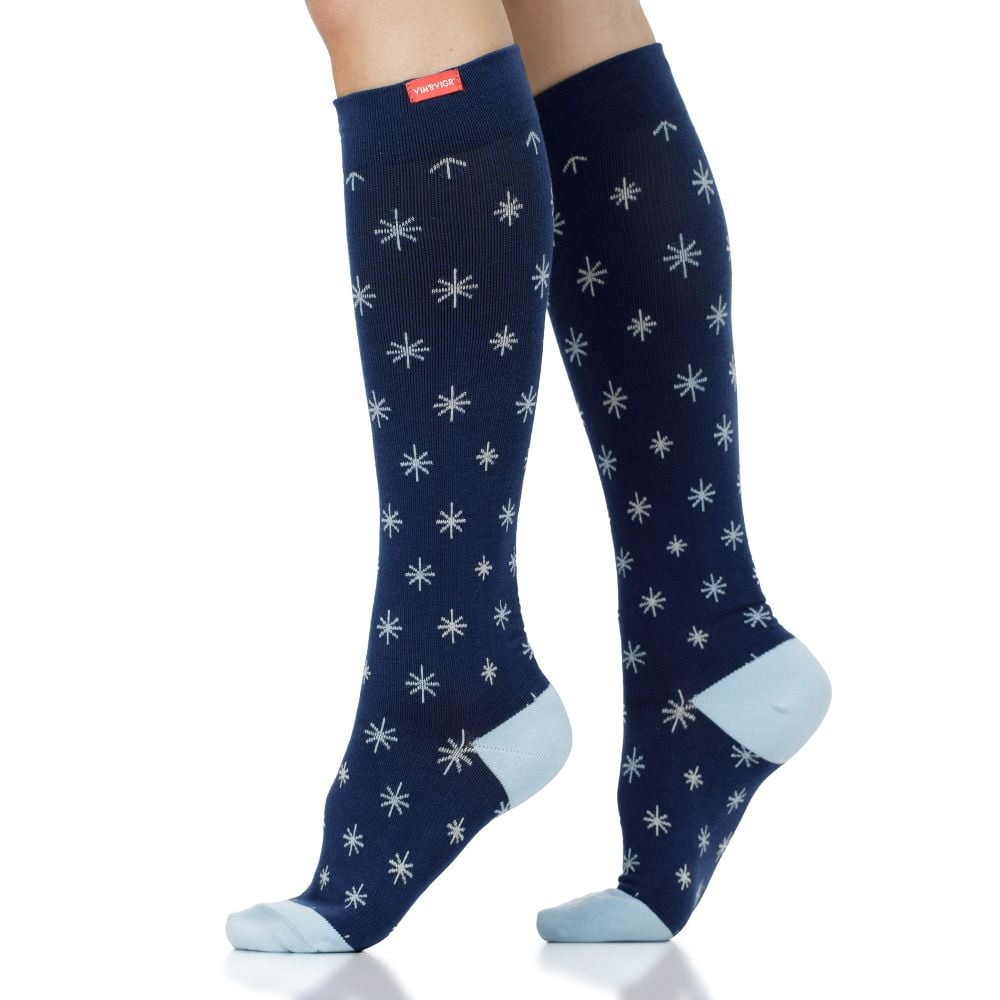
Cold weather changes how legs feel by the end of the day, from heavier ankles to achy calves after standing on frozen pavement. Winter compression socks address this seasonal shift by combining graduated compression with fabrics built for warmth and moisture control. The sections below look at how circulation behaves in cold months and how different sock constructions from Vimvigr respond to those conditions.
How Winter Affects Leg Circulation and Swelling
Cold temperatures cause blood vessels to narrow, which can slow circulation in the lower legs. Combined with heavier winter footwear and less daily movement, this often leads to a feeling of swelling or stiffness by evening. Graduated compression works against this by encouraging blood flow back toward the heart and reducing pooling in the legs and ankles, according to Vimvigr. This is why winter compression socks are often discussed alongside seasonal circulation concerns, and that mechanism is the foundation behind every sock style covered below.
Merino Wool Compression Socks for Temperature Regulation
Vimvigr offers knee-high compression socks made from high-grade Australian Merino Wool, found in styles such as Petite Bows and Parisian Stripe. Merino Wool compression socks are typically positioned in the 15-20 mmHg range and deliver super-fine softness, superb temperature regulation, and natural moisture-wicking properties. The specialized temperature control in Merino Wool makes it particularly suited to winter, as the fiber naturally insulates while managing sweat, so legs stay warm without becoming damp. For anyone layering against cold air, a wool-based pair addresses both warmth and moisture control without changing the graduated compression construction underneath.
Moisture-Wick Nylon Options for Active Winter Activities
Winter activity, whether shoveling snow or heading out for a cold-weather run, still produces sweat even when the air feels frigid. The Moisture Wick Nylon fabric collection is built to manage that dampness while retaining the graduated compression structure found across the sock range. The open toe Solid style in Moisture-Wick Nylon is available at 20-30 mmHg, a level described as medical-grade compression. For anyone seeking compression built for motion rather than standing still, compression leg sleeves at 15-20 mmHg are positioned for workouts, hiking, pickleball, and similar movement-heavy activity.
Graduated Compression Levels for Winter Health Concerns
Compression socks from this brand are structured around three graduated levels, 15-20 mmHg, 20-30 mmHg, and 30-40 mmHg. These socks are described as developed in partnership with vascular surgeons and vein clinics and are registered with the FDA, with HSA/FSA eligibility available. Open toe compression styles are offered specifically at 20-30 mmHg, while compression sleeves are built around the 15-20 mmHg level. Choosing a level among winter compression socks is less about the season and more about the degree of support sought, though cold-weather circulation challenges are often what prompt the search in the first place.
- Enhanced blood flow matters more in winter because cold air causes vessels to constrict and can slow circulation further.
- Reduced seasonal leg fatigue is tied to the same graduated compression mechanism that pushes blood back toward the heart rather than letting it pool.
- Supporting overall winter wellness fits into the broader positioning of compression therapy as one of the easiest and most reliable ways to support wellness.
- Consistent use through colder months keeps the circulation-support benefit active across the season rather than only on isolated days.
Layering and Styling Cold-Weather Compression Socks
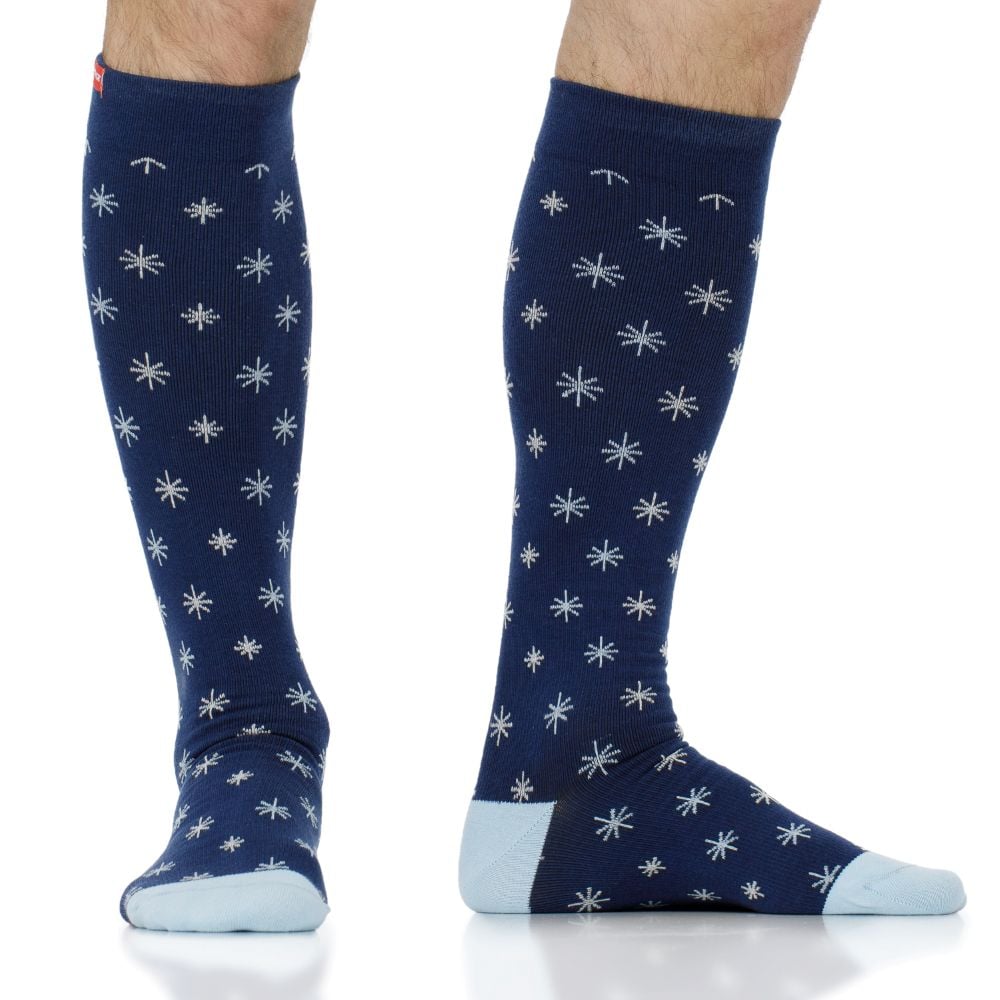
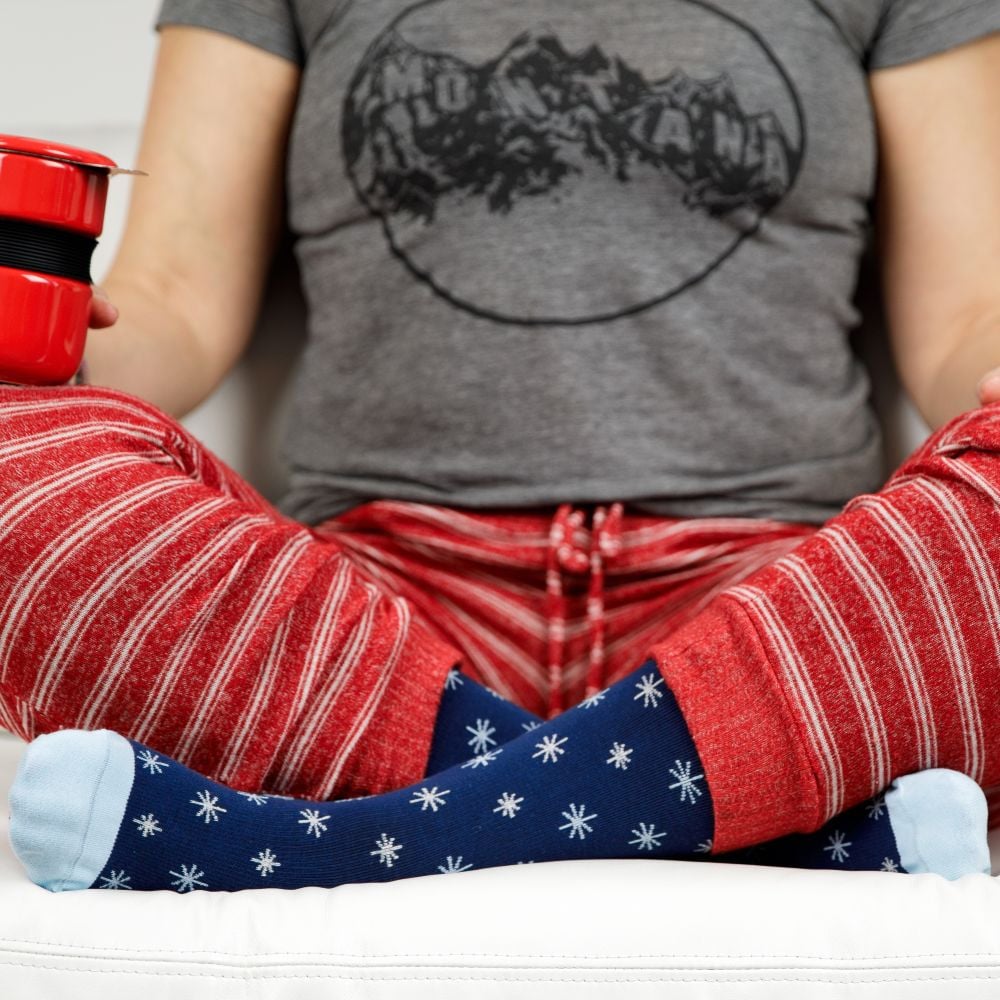
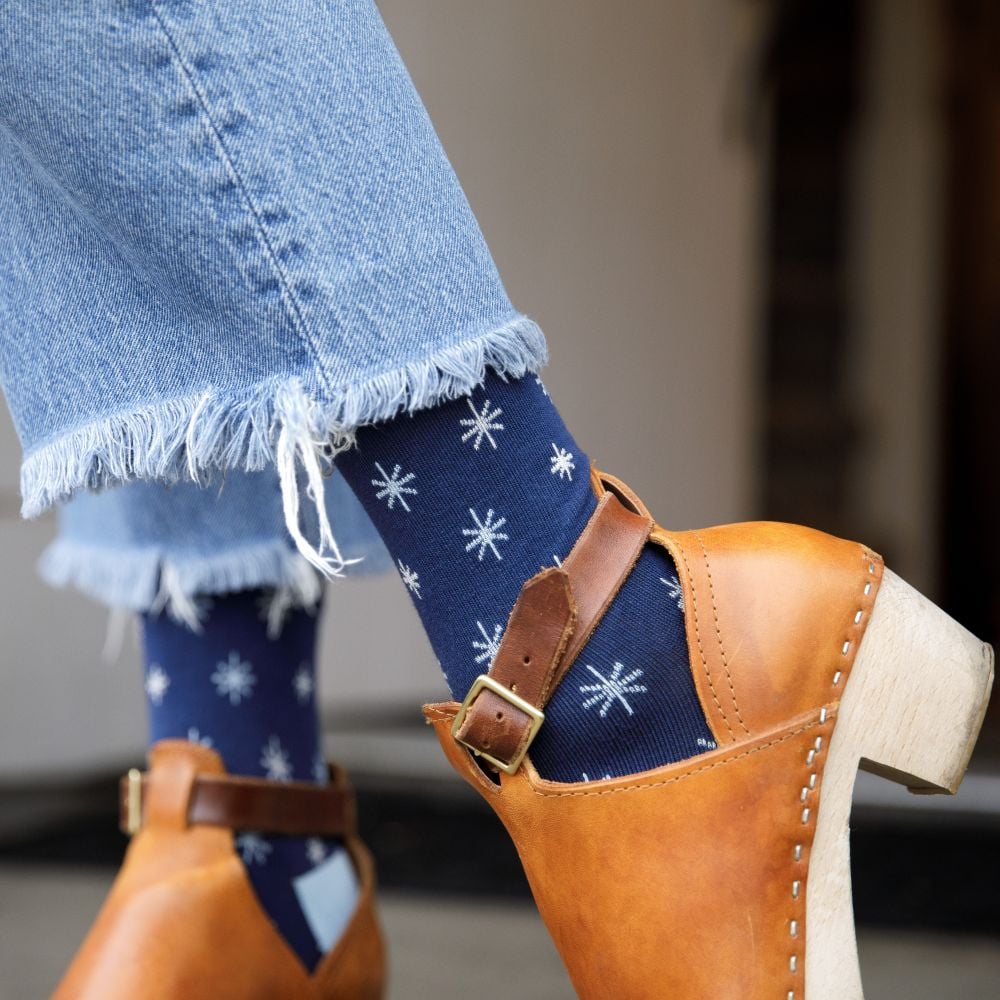
Winter dressing often means layering tights, boots, and heavier trousers, and compression hosiery needs to fit into that without bunching. Vimvigr‘s compression tights, available in 15-20 mmHg and 20-30 mmHg, offer full-leg coverage that can sit under winter outfits more seamlessly than a knee-high sock paired with separate leggings. Both footed and footless versions exist within that tights range, giving flexibility depending on the footwear involved. Knee-high styles such as the Cotton-based Swellegant and Snow Globe designs come in patterned options, which keeps layered winter compression socks from feeling purely functional while maintaining the graduated compression technology underneath.
Maintaining Compression Socks Through the Winter Season
Compression garments worn daily through a cold season benefit from basic care routines that protect the knit structure. Vimvigr‘s fabric collections include Cotton, Nylon, Merino Wool, and Moisture Wick Nylon, each with different blend compositions. The Swellegant style, for example, features a 48% Cotton blend that offers increased breathability, durability, and unrivaled softness alongside its graduated compression technology. Rotating between a couple of pairs across the winter stretch allows each pair time to rest between wears, which fits naturally with having both a wool-based and a nylon-based option on hand. The brand supports purchases with free U.S. shipping on orders over $75 and a 30-day postage paid returns policy, which gives room to test fit and feel before settling on a long-term seasonal pair.
Cold months put extra demands on legs, and winter compression socks remain a practical way to meet those demands without sacrificing style or comfort.