




Affordable portable power stations often get dismissed as stripped-down versions of pricier models, but this catalog challenges that assumption. It spans compact units built for travel, mid-capacity stations for backup power, and balcony solar storage systems meant to sit on a terrace for the long haul. This piece looks at three product lines from Ecoflow and what separates them in terms of capacity, charging speed, and portability.
EcoFlow DELTA 3 Classic: Affordable Capacity Meets Fast Charging
The DELTA 3 Classic delivers 1,024 Wh of capacity with a continuous output of 1,800 W and a peak of 3,600 W for short bursts. Its X-Boost mode lets it support devices demanding up to 2,400 W without stalling, which matters when running power tools or kitchen appliances off a single unit. Charging stands out here, since the station goes from 0 to 80% in just 45 minutes using AC power and reaches a full charge in about 60 minutes under the same method.
Built around LFP battery chemistry and backed by a 5-year warranty, the DELTA 3 Classic is positioned by EcoFlow as its strongest price-to-performance portable power station. It supports four separate charging methods, including AC, solar, and car charging, giving it flexibility whether it sits in a garage or travels along on a camping trip. Noise output is rated at 30 dB, which keeps the unit quiet during operation.
EcoFlow RIVER 2: Lightweight and Budget-Friendly Portable Power
The RIVER 2 targets a different use case, favoring portability over raw capacity. At 256 Wh and 300 W of output, combined with a full charge in 60 minutes, it suits smaller loads such as phones, lights, or compact electronics rather than power tools. A larger sibling in the same family, the RIVER 2 Max, raises that ceiling to 512 Wh of capacity and 500 W of output for those who need more headroom.
Weight is another selling point for this Ecoflow model. At 3.5 kg, the unit stays easy to carry between a car, tent, or balcony setup. It also carries TÜV Rheinland certification for safe charging, meaning the battery can be charged quickly without damaging its structure.
EcoFlow STREAM Series: Entry-Level Balcony Solar Storage Without Premium Costs
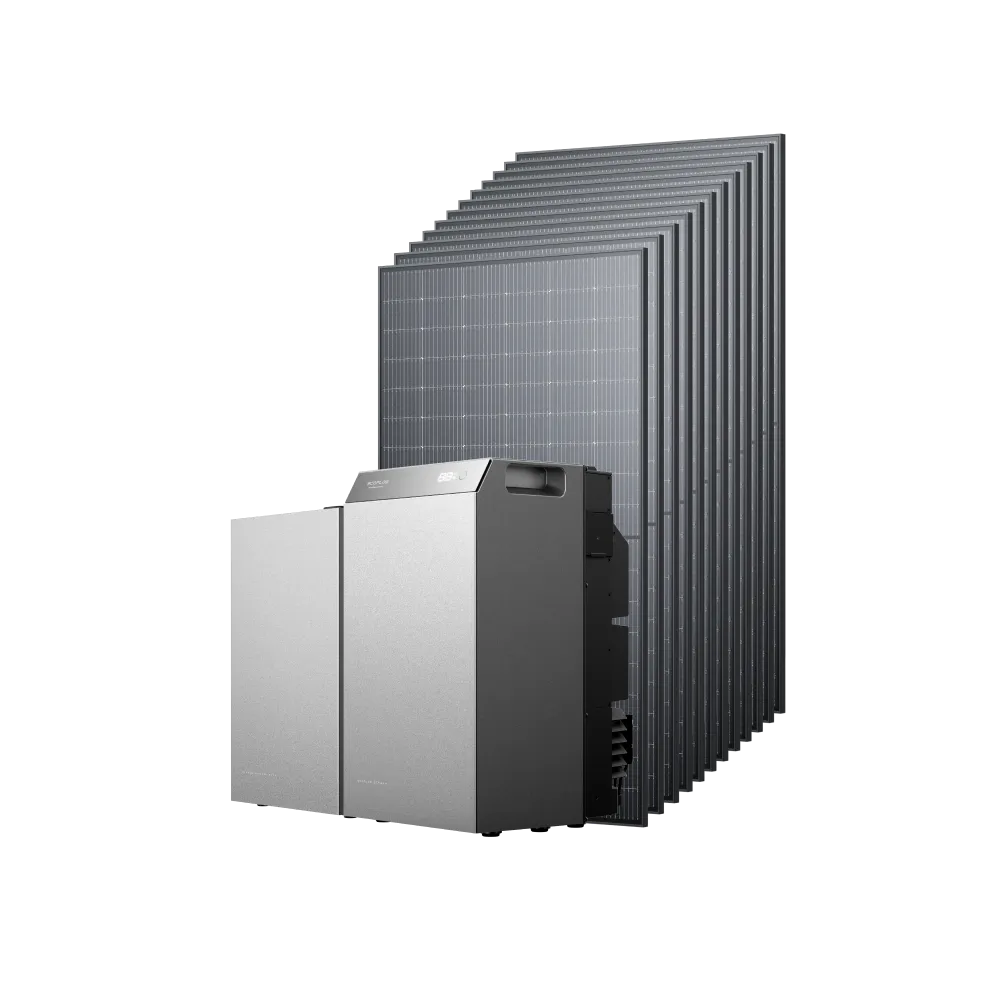
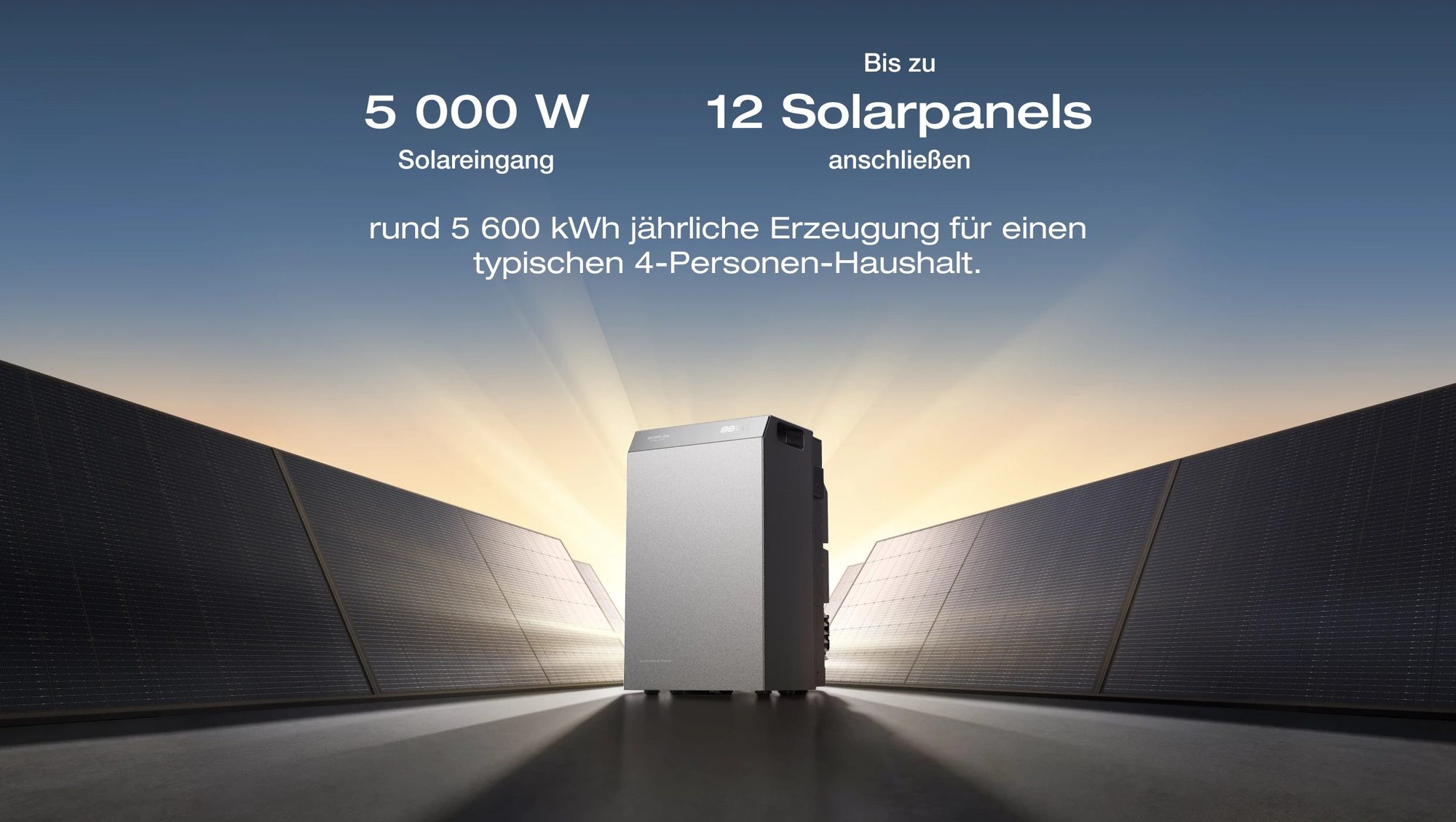
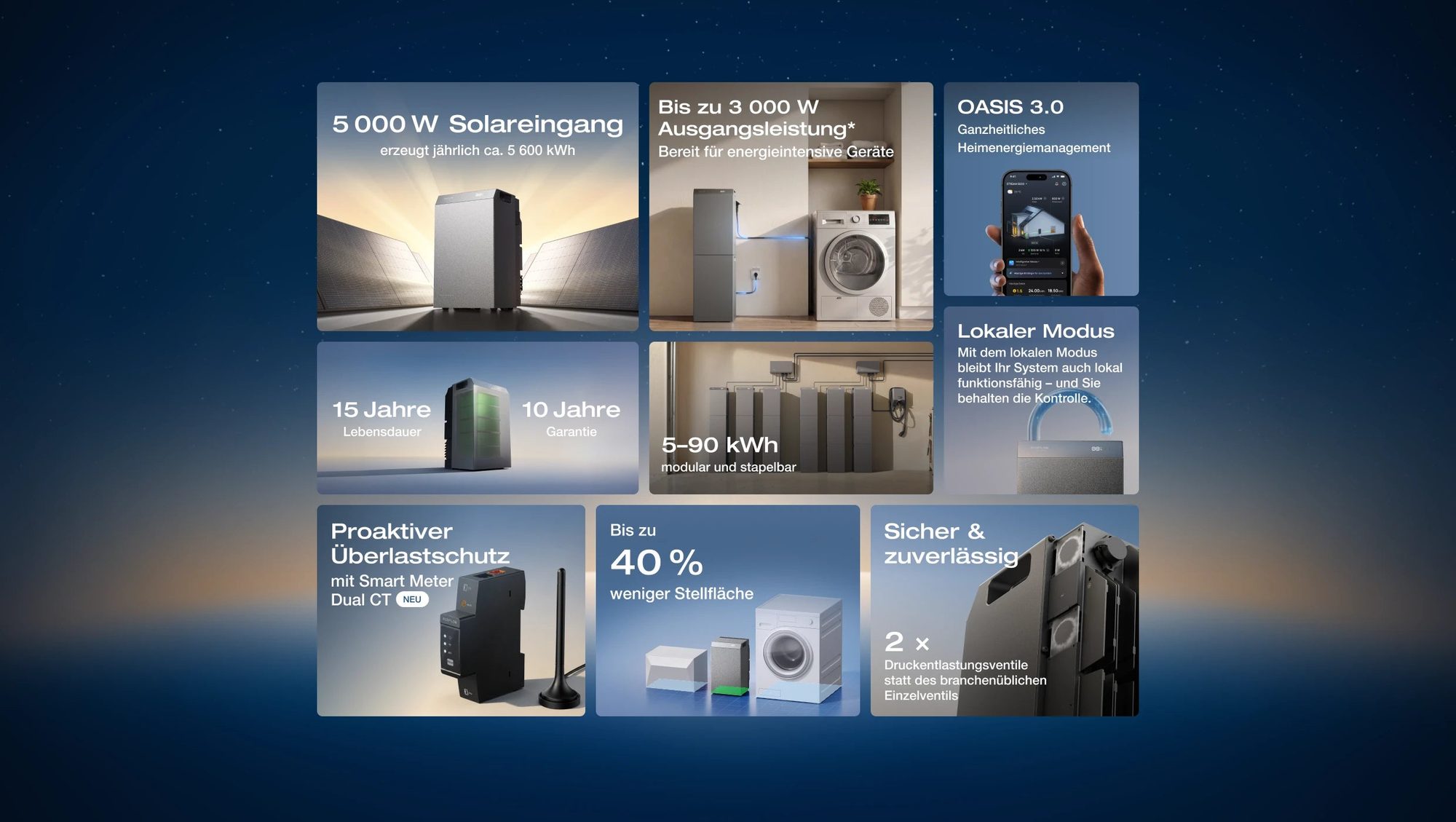
The STREAM series from Ecoflow targets balcony solar storage, a distinct category from portable power stations built for travel. The STREAM 5000 and the STREAM AC 5000 both carry 5,024 Wh of capacity and up to 3,000 W of AC output, but the STREAM 5000 pairs that with a 5,000 W solar input for a dedicated panel setup, while the STREAM AC 5000 is built to connect to an existing solar installation instead. A separate model, the STREAM Ultra X, pushes output further still with an 800 W threshold aimed at different household setups.
For the STREAM 5000, up to 12 solar panels can be connected, generating roughly 5,600 kWh annually, a figure associated with the typical consumption of a four-person household. Both the STREAM 5000 and STREAM AC 5000 are described as requiring 40% less footprint than prior designs, a relevant detail for balcony installations where space is limited. Both models can also pair with the EcoFlow PowerInsight home energy monitor, which shows solar generation, consumption, and battery charge and discharge data in real time on a 10-inch touchscreen.
Key Features That Justify the Lower Price Points
Across the DELTA 3 Classic, RIVER 2, and STREAM models, a few shared traits explain how these Ecoflow units stay within reach of budget-conscious buyers while retaining core functionality. Fast charging appears throughout the lineup, whether through the DELTA 3 Classic’s 45-minute AC charge or the RIVER 2’s 60-minute full charge. LFP battery chemistry also ties several of these models together, supporting repeated charge cycles without the bulk of older battery types.
- The DELTA 3 Classic delivers 1,800 W continuous output with a 3,600 W peak and 1,024 Wh of LFP battery capacity.
- The RIVER 2 offers 300 W of output from a 256 Wh battery while weighing only 3.5 kg.
- The RIVER 2 reaches a full charge from 0 to 100% in 60 minutes.
- The DELTA 3 Classic reaches an 80% charge in 45 minutes using AC power alone.
- The STREAM 5000 combines 5,024 Wh of capacity with a 5,000 W solar input and up to 3,000 W of AC output.
Comparing Runtime and Real-World Performance Across Budget Models
Runtime depends heavily on what each unit is designed to power. The RIVER 2 suits smaller electronics and short bursts of use rather than sustained appliance loads, while the DELTA 3 Classic handles higher-draw devices like power tools thanks to its 1,800 W continuous rating and 3,600 W peak. That difference makes the DELTA 3 Classic a more versatile choice among affordable portable power stations built for outdoor work or fishing trips.
Because the STREAM units stay mounted in place, their output over a year depends more on panel count and solar input than on carrying capacity, unlike the carryable RIVER 2 and DELTA 3 Classic. Comparing these lines side by side shows how the catalog separates affordable portable power stations by use case rather than simply by price, letting shoppers match capacity and portability to the task at hand.
Scaling Up: When to Upgrade from Budget Powerstations to Higher-Capacity Systems
For households whose needs outgrow a compact unit, the range from Ecoflow extends well beyond these three models. The DELTA 3 Max Plus, for instance, offers 2,048 Wh of capacity and 3,000 W of output, with support for expansion batteries that increase total stored energy. At the top end, the OCEAN 2 reaches 96 kWh of battery capacity paired with 12 kW of AC output, aimed at whole-home energy needs rather than portable or balcony use.
Moving from a RIVER 2 or DELTA 3 Classic to one of these larger systems generally comes down to how many appliances need simultaneous power and for how long. A camping setup or small backup need rarely requires the capacity of an OCEAN 2, while a household wanting broader outage coverage may find the smaller units limiting. In that sense, affordable portable power stations and larger home energy systems serve different points on the same spectrum rather than competing categories.
Functional differences between models, not just accessible pricing, ultimately shape which station fits which task.