




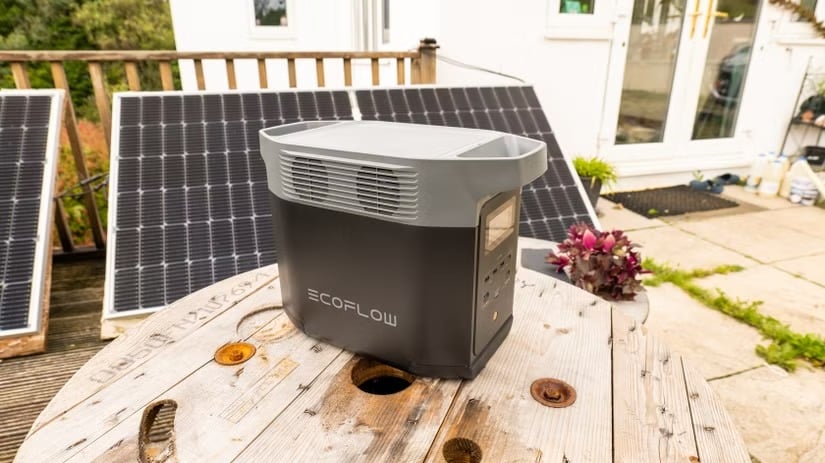
Ecoflow portable power stations cover a wide span of needs, from compact chargers that fit in a backpack to home-scale solar storage mounted on a balcony. Anyone comparing the RIVER 2, the DELTA 3 series, and the STREAM Ultra X will notice each model targets a distinct kind of energy demand. This overview breaks down what separates these product lines and where each one fits into daily or emergency use.
Understanding EcoFlow’s Three Product Categories
The range splits into three broad groups rather than one catch-all product. Lightweight portable stations handle mobility, higher-capacity stations handle heavier appliances and backup power, and balcony solar systems pair panels with battery storage for ongoing household use. Each group solves a different problem, whether that means charging a phone on a hike or keeping a refrigerator running during an outage.
Because the lineup spans such different situations, choosing among Ecoflow portable power stations often comes down to how much capacity and output a task actually requires. A compact unit built for weekend trips will not serve the same purpose as a solar storage system meant to offset daily household electricity draw. The sections below look at four specific models that show this spread clearly.
EcoFlow RIVER 2: Lightweight Portable Power for Mobile Use
The RIVER 2 is built around portability first. It holds 256 Wh of capacity and delivers 300 W of output, enough for small electronics and basic charging tasks rather than high-draw appliances. At 3.5 kg, EcoFlow lists it as 30% lighter than the industry standard, a detail that matters when the unit travels between a vehicle, a tent, or a balcony outlet.
Charging speed stands out as well. The RIVER 2 can go from 0 to 100% in just 60 minutes, which the brand describes as 70% faster than typical units in its class. Fast charging of this kind generally raises questions about battery safety, which is why independent certification such as TÜV Rheinland testing matters for small lithium batteries that get charged and discharged frequently on the move.
EcoFlow DELTA 3 Classic: Power Station for Outdoor Work and Camping
Stepping up in capacity, the DELTA 3 Classic holds 1,024 Wh and outputs 1,800 W continuously, with a peak of 3,600 W. That headroom covers power tools, small kitchen appliances, or several devices running at once during a camping trip or an outdoor work session. Its LFP battery chemistry is the same family used across other current Ecoflow stations.
The X-Boost feature lets the DELTA 3 Classic support devices demanding up to 2,400 W without tripping or slowing down, which widens the range of equipment it can realistically run. Charging is fast too, moving from 0 to 80% in 45 minutes on AC power. At 30 dB of operating noise, this model suits fishing trips, outdoor hobby use, and general camping rather than purely emergency backup.
EcoFlow DELTA 3 Max: High-Output Power Station for Home and Professional Use
The DELTA 3 Max Plus moves into higher-output territory with 2,048 Wh of capacity and a 3,000 W continuous AC output, peaking at 6,000 W. Ecoflow describes this as a 25% increase in output over the prior generation, aimed at running several household essentials at once, such as a microwave, kettle, refrigerator, and mixer together. That combination of capacity and output makes it a candidate for kitchens, garages, offices, or vehicle use where multiple devices draw power simultaneously.
Beyond raw output, the DELTA 3 Max Plus uses full-tab LFP cells paired with a Smart BMS offering continuous protection. Full-tab cell construction is generally associated with lower internal resistance, which in battery packs translates into steadier power delivery under heavy load. Five fast charging methods cover AC, solar, alternator, smart generator, and multi-charging setups, while a sub-10 millisecond automatic switch supports uninterrupted power during outages. Smart Output Priority Tech also lets specific circuits, such as a refrigerator or a Wi-Fi router, stay active through the app even when nobody manages the unit on site.
EcoFlow STREAM Ultra X: Scalable Balcony Solar System with Battery Storage
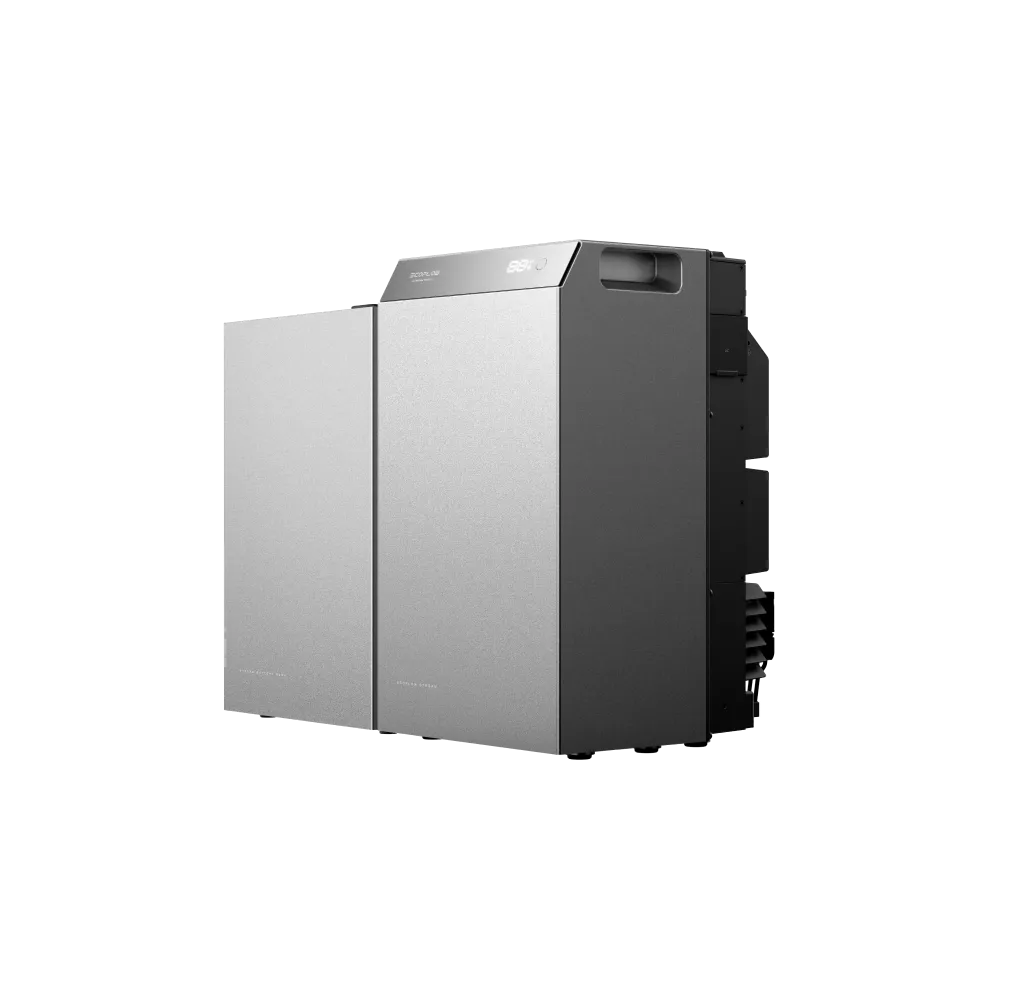
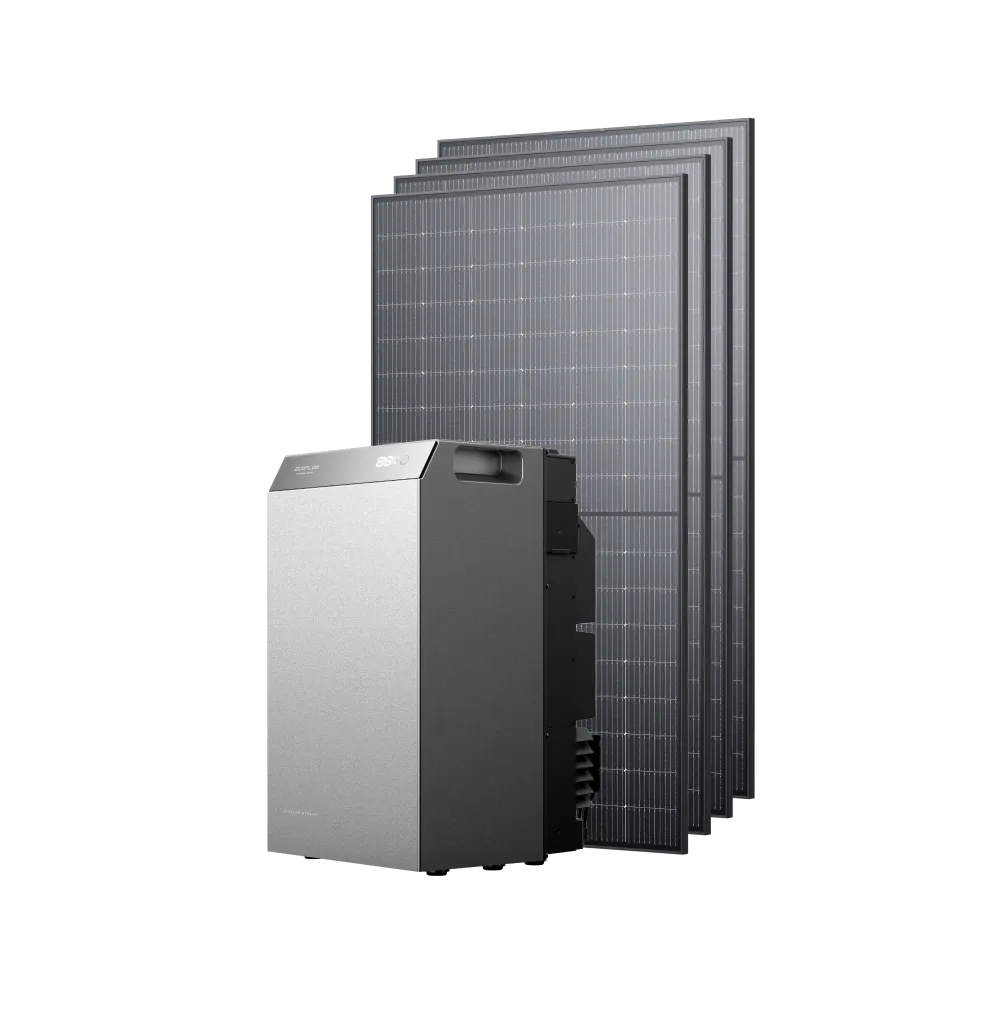
The STREAM Ultra X shifts the conversation from portable backup to ongoing home solar storage. When two units run in parallel, on-grid output reaches 2,300 W, enough to run power-hungry devices directly from stored solar energy. Capacity scales from 3.84 kWh up to 23 kWh depending on configuration, letting a household size the system to its own consumption pattern instead of being locked into one fixed capacity.
Scaling happens through two paths. Two STREAM Ultra X units can pair directly, or a single unit can connect with up to four STREAM extra batteries using a parallel cable. The system is installable without an electrician, which positions it between a simple balcony solar setup and a full home energy system.
Choosing Between EcoFlow’s Portable Stations and Solar Systems
Deciding among these options generally comes down to mobility versus ongoing household supply. A RIVER 2 suits short trips and light charging needs, while a DELTA 3 Max Plus suits heavier simultaneous loads at home or on a jobsite. The STREAM Ultra X, by contrast, is built for continuous balcony solar generation rather than occasional portable use, and this distinction is central to comparing Ecoflow portable power stations against balcony solar systems.
- The RIVER 2 offers 256 Wh of capacity and 300 W of output, making it suited to lightweight mobile charging.
- The DELTA 3 Classic provides 1,024 Wh of capacity with 1,800 W continuous output and 3,600 W peak, aimed at camping and outdoor work.
- The DELTA 3 Max Plus delivers 2,048 Wh of capacity with 3,000 W continuous output and 6,000 W peak, suited to home and professional use requiring multiple appliances at once.
- The STREAM Ultra X scales from 3.84 kWh to 23 kWh of storage and reaches 2,300 W of on-grid output when two units are paired, built for ongoing balcony solar supply.
Matching a use case to the right unit among these portable power stations and solar systems means weighing portability, output, and whether the goal is occasional backup or daily solar storage. Someone who travels frequently gains little from a 23 kWh balcony system, just as a household aiming to offset daily grid use would find a 256 Wh unit insufficient. Looking at capacity, output, and charging speed side by side makes the differences between these four models much clearer.
As home energy needs keep shifting between mobility and everyday reliance on stored solar power, having distinct models built for each scenario, rather than one compromise design, remains the more practical path forward.