




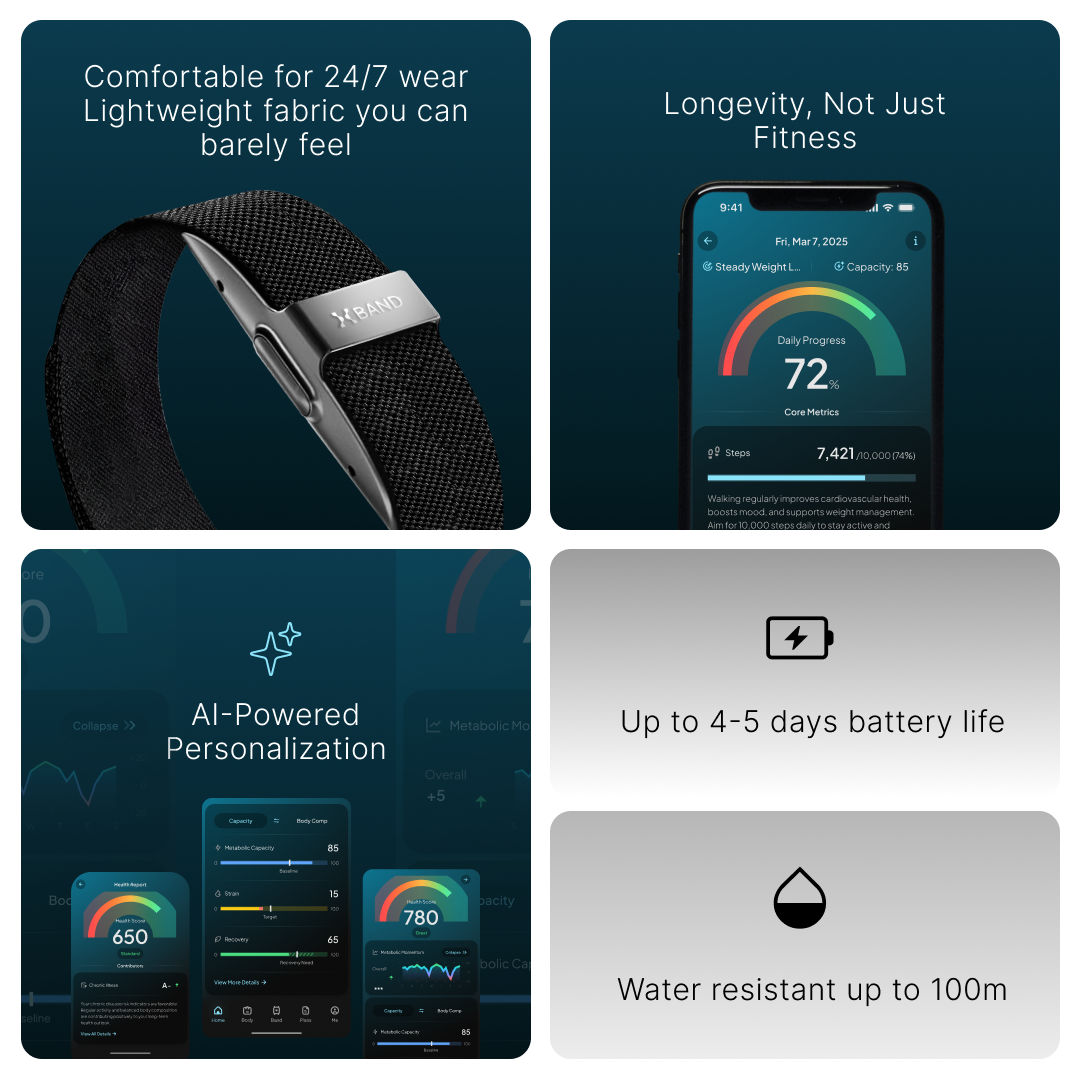
Wearable devices that track metabolic signals have moved from niche biohacking tools into everyday wellness routines. Metabolic monitoring keeps shifting from clinical settings into daily life, and a metabolic health tracking wearable like Hume Band 2.0 fits squarely into that shift. It is built for continuous, at-home measurement rather than occasional lab visits, pairing sensor hardware with an app layer to turn raw body data into something usable day to day.
What Continuous Metabolic Monitoring Looks Like Day to Day
Metabolic health tracking refers to monitoring the signals the body produces as it processes energy, recovers from activity, and responds to daily habits. Humehealth positions its Band 2.0 as a device built around in-home sensing rather than periodic checkups. Instead of a single snapshot, the device is designed to observe patterns over time, which is the core idea behind any metabolic health tracking wearable.
The brand describes its approach as combining hardware with an app so that data collection and interpretation happen within one ecosystem. That combination shapes how the band is presented across its product pages, and it is also why the device is marketed alongside its companion software rather than as hardware on its own.
How Hume Band 2.0 Sensors Deliver Precision Health Data
Hume Band 2.0 relies on built-in sensors to gather physiological readings throughout the day. According to the brand’s own accuracy materials, the device is positioned around reliable, consistent measurement rather than one-off readings. That is a common expectation for any wearable meant to support daily decisions.
The sensors are also covered under the device’s long-term warranty, which ties directly to measurement quality. Humehealth states that the warranty includes coverage for the advanced sensors that power the health insights, not just the outer shell. That detail suggests the sensing hardware is treated as a core, protected component rather than an afterthought.
The Hume App: Translating Sensor Data Into Actionable Wellness Insights
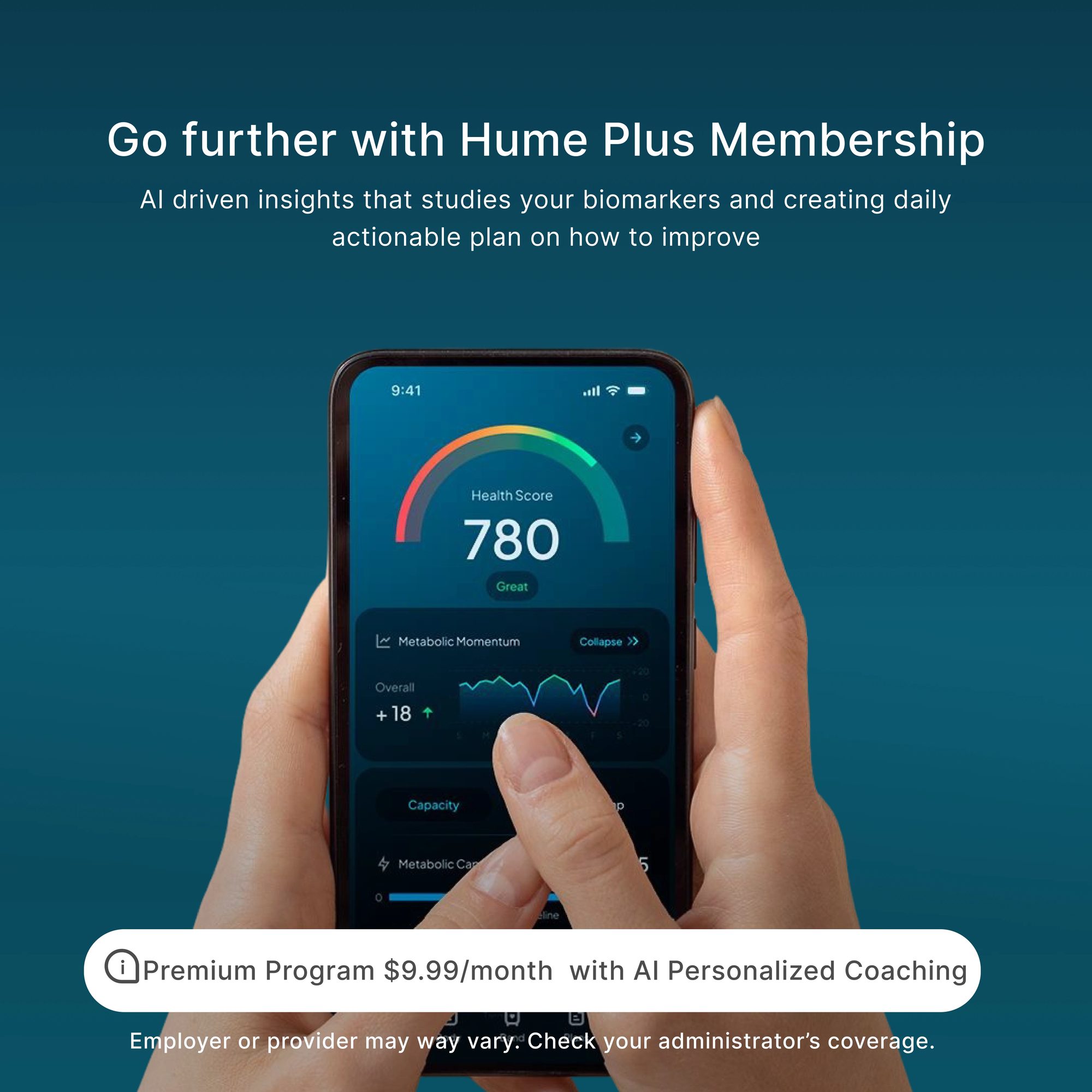
Sensor readings alone are not useful without a way to interpret them, and this is where the companion app comes in. Humehealth includes a free app alongside the device, meant to turn collected data into insights that can be reviewed regularly. Free shipping alongside the free app is listed as a standard part of the offering.
Because the app and the band are sold together as one ecosystem, the emphasis stays on practical takeaways rather than raw numbers alone. For someone wearing a metabolic health tracking wearable through a normal week, the information is meant to be reviewed regularly, not left unread in a dashboard.
Customizable Band Straps and Everyday Wearability
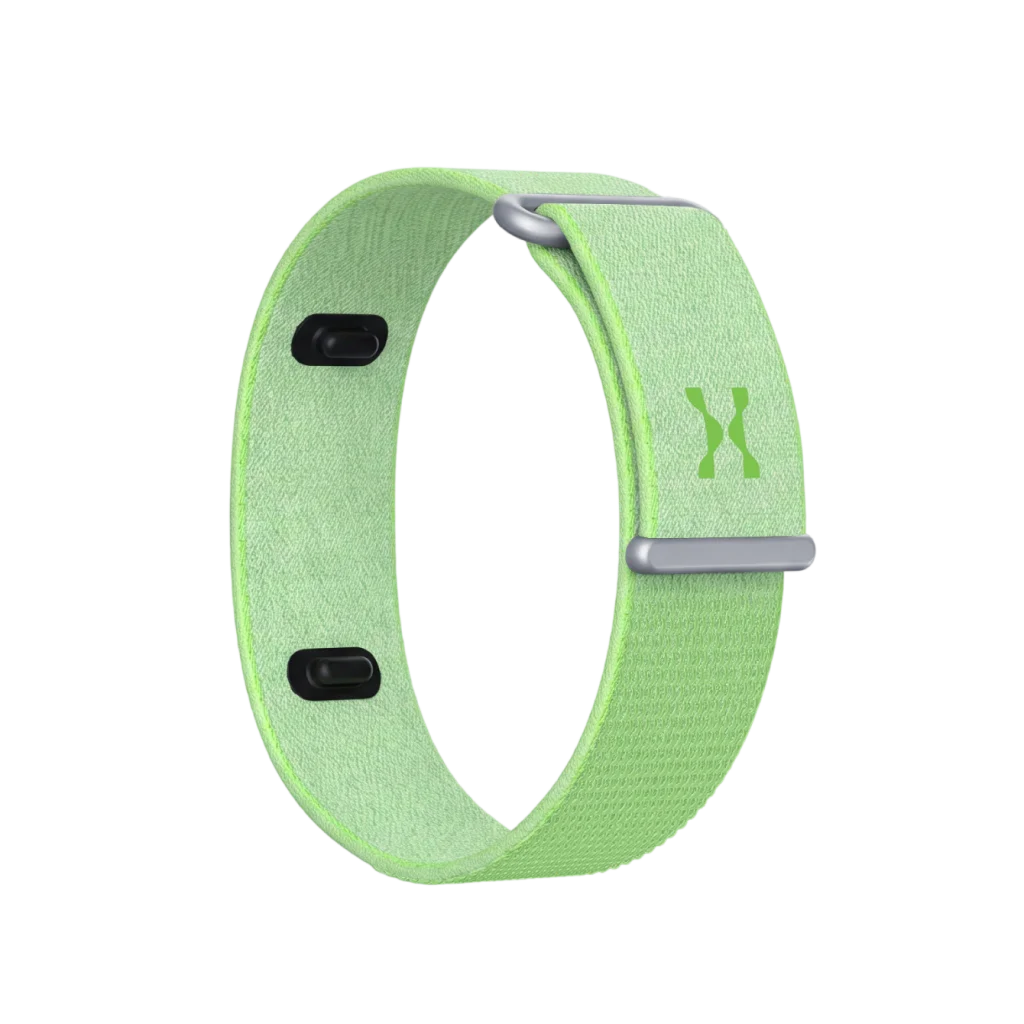
Wearability matters for any device meant to be worn continuously, and strap options play a part in that. The Band 2.0 CloudFit Strap, described on the accessories page as an upgraded band strap, uses a soft, breathable woven fabric with a secure hook-and-loop closure. It is built specifically for the Band 2.0, with precision cutouts designed to keep the sensors properly positioned.
This strap, known as HumeWeave, is marketed as an everyday option suited to training, deep work, travel, and sleep alike. Offering a dedicated strap built around sensor placement shows that comfort and accuracy are treated as connected design goals rather than separate concerns. For continuous wear, that kind of attention to strap design is part of what keeps a wearable practical rather than a gadget set aside after a few days.
Sensor Accuracy and Long-Term Reliability with the 10-Year Warranty
Long-term reliability is a recurring theme in how Humehealth presents its hardware. The 10-Year Warranty is described as covering every component of the device, including the shell and the sensors responsible for health readings. That coverage is framed as protection for what the brand calls a decade of health tracking, rather than a short-term guarantee.
On-request servicing is included as part of that warranty, intended to address any accuracy drift over time. If a sensor reading seems off, recalibration can be requested so the device keeps performing as expected. That structure positions the warranty as an ongoing accuracy safeguard, not just a repair policy for physical damage.
Accuracy reports are also referenced on the brand’s own site, reinforcing the idea that measurement precision is treated as a selling point rather than an assumption. Taken together, the warranty terms and the sensor coverage point to a product built for sustained use.
Key Metrics Tracked and How They Shape Daily Choices
A metabolic health tracking wearable is only as useful as the range of signals it captures. Hume Band 2.0 is built to monitor several categories of data that feed into the app’s daily insights, giving a broader picture than a single metric could provide.
- Continuous metabolic signals collected throughout the day feed into the app’s ongoing data history.
- Activity-related readings help connect movement patterns to the rest of the recorded data.
- Recovery-related signals are gathered overnight, adding a sleep-adjacent layer to the overall picture.
- All of this data is centralized in the companion app, where it becomes reviewable rather than scattered across separate tools.
Bringing these signals into one app, rather than spreading them across several devices, is part of why the ecosystem is described as a single connected system. For anyone comparing a metabolic health tracking wearable against simpler fitness trackers, this breadth of connected data is often the main point worth noting.
Continuous, at-home metabolic tracking looks set to become a more ordinary part of personal wellness routines going forward.