



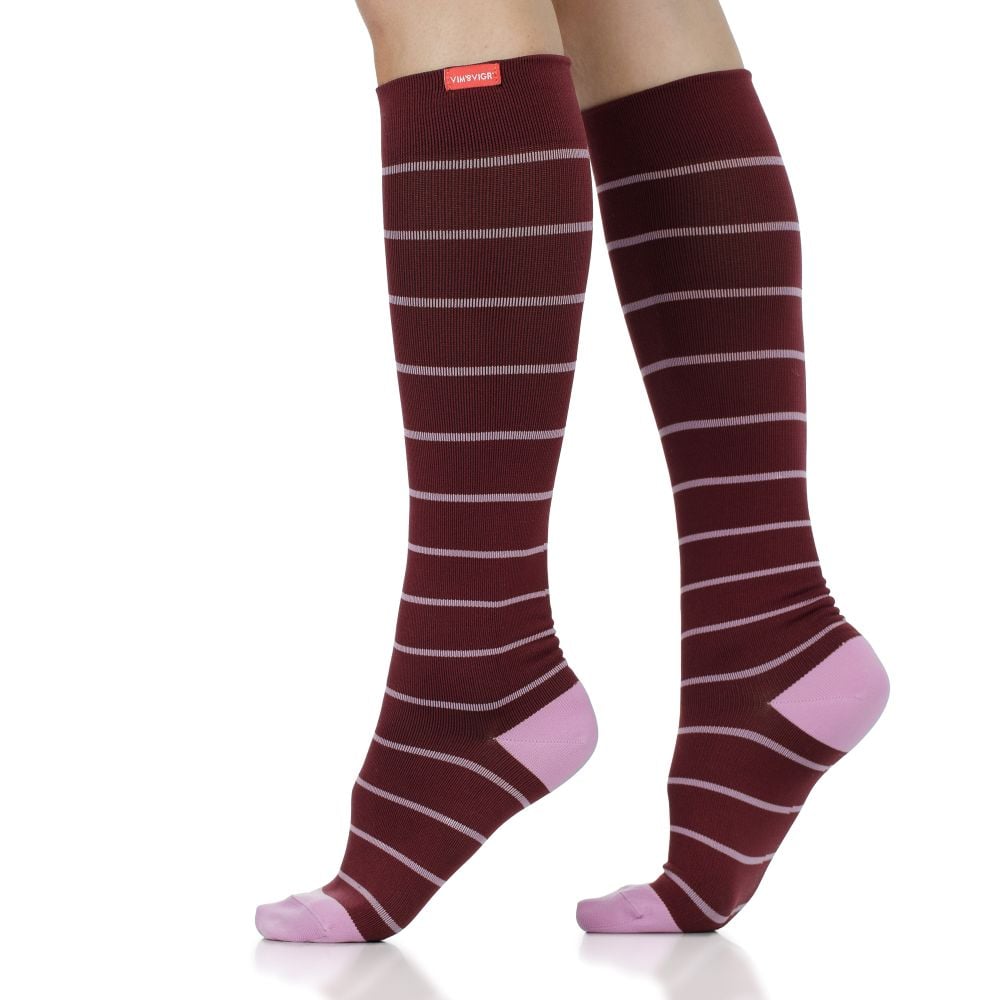
For readers already comfortable with how graduated compression works, the more useful question becomes how strength and fabric change daily wear. Compression sock materials and levels interact in ways that decide whether a sock feels light and breezy or firm and clinical. Vimvigr organizes its range around both variables, pairing specific mmHg strengths with specific fabric collections rather than offering one generic sock.
Understanding Compression Strength: 15-20 mmHg vs. 20-30 mmHg vs. 30-40 mmHg
Vimvigr‘s signature knee-high compression socks come in three strength levels, 15-20 mmHg, 20-30 mmHg, and 30-40 mmHg, while open toe styles sit specifically at 20-30 mmHg and compression tights span both 15-20 mmHg and 20-30 mmHg. The brand describes the 20-30 mmHg range as moderate-firm and medical-grade, generally recommended or prescribed by a doctor, which places it a step above the everyday 15-20 mmHg option. Compression sleeves, used for activities such as running, hiking, and pickleball, are available only at 15-20 mmHg, which sets them apart from the knee-high sock line.
That spread across strength levels is part of why compression sock materials and levels cannot be reduced to a single formula. A 15-20 mmHg sock and a 30-40 mmHg sock from the same brand can serve very different purposes even when they share a silhouette.
Cotton Compression Socks: Breathability and Everyday Comfort
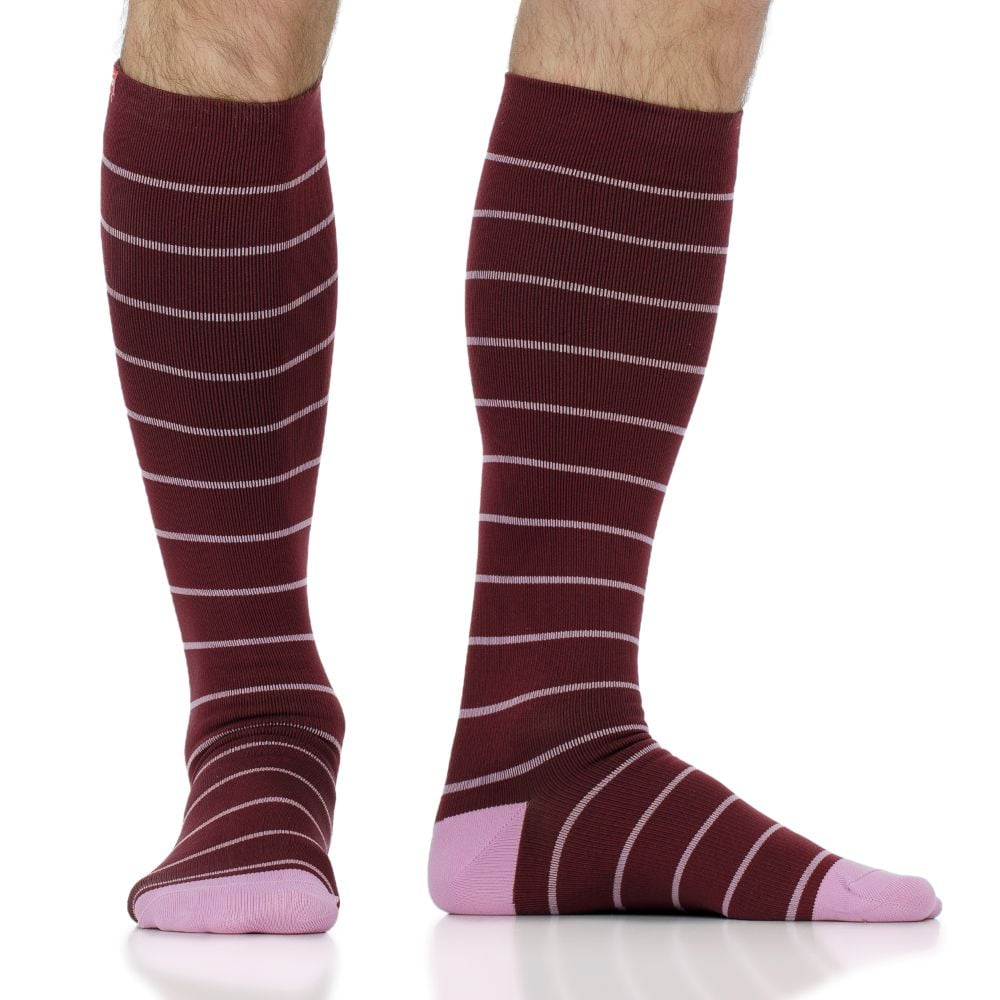
Cotton is one of four fabric collections Vimvigr lists, alongside Nylon, Merino Wool, and Moisture Wick Nylon. Styles such as Swellegant, Snow Globe, Pinstripe, and Rugby Stripe use a custom cotton blend, listed at 48% cotton. The brand describes this blend as offering increased breathability, durability, and softness relative to its other fabric options.
The open toe cotton styles, including the Thick Stripe and the Heathered Collection, are built on a 200-needle count construction for flexibility and comfort through the arch of the foot. That needle count detail shows how the brand applies the same cotton construction logic across both closed-toe and open toe formats.
Nylon and Moisture-Wick Nylon Compression Socks: Durability and Performance
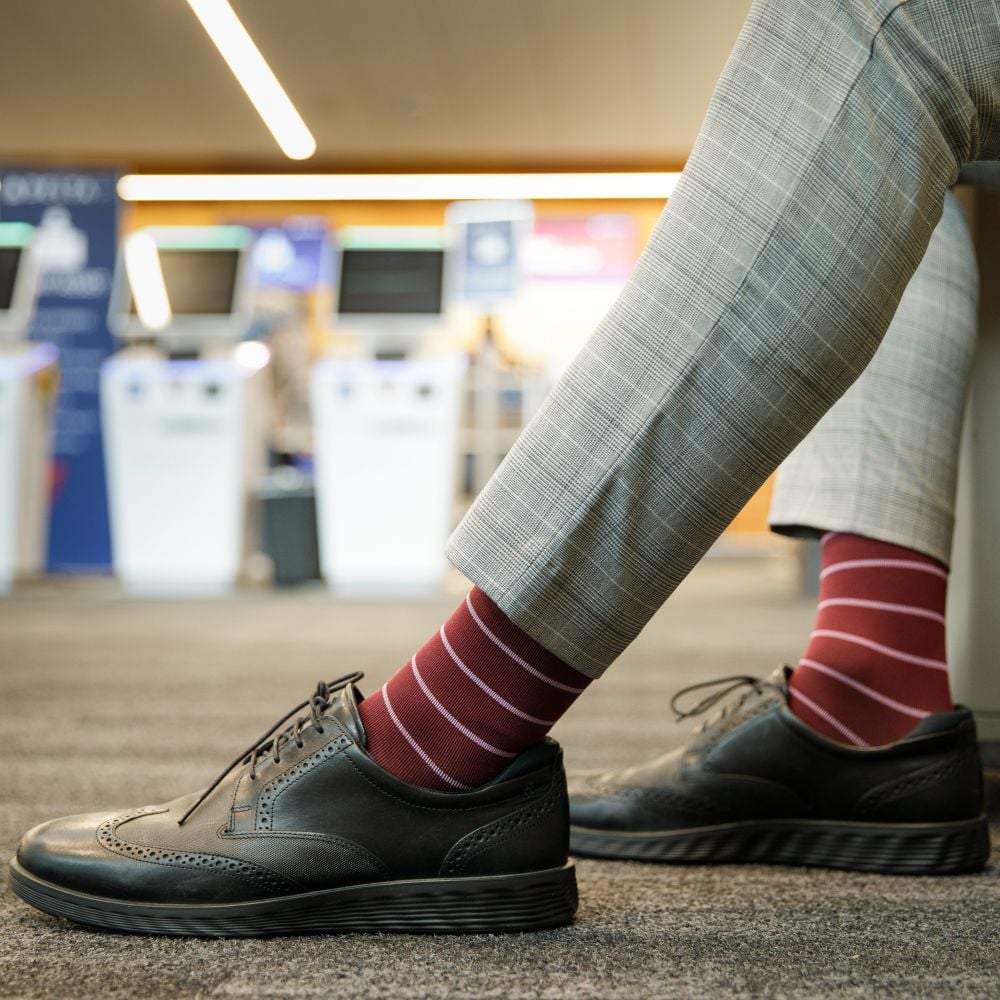
The Classic Nylon fabric used in styles such as Petite Bat is knit with four-way stretch, which the brand states increases strength, flexibility, and ease of wear. A related option, Choice Nylon, seen in the Nautical Stripe design, offers the same benefits as Classic Nylon with an added seamless toe. Moisture Wick Nylon appears in the open toe Solid style, where the brand pairs it with its 200-needle count construction rather than the plain cotton used elsewhere in the open toe line.
Nylon also extends beyond the sock line itself. Compression leg sleeves and compression tights are both built in nylon fabric, which positions nylon as the more performance-oriented side of the compression sock materials and levels lineup across the catalogue.
Merino Wool Compression Socks: Temperature Regulation and Natural Fibers
Merino Wool is the fourth fabric collection in the range, used in designs such as Petite Bows and Parisian Stripe. The brand describes it as high-grade Australian Merino Wool, noted for super-fine softness, temperature regulation, and natural moisture-wicking properties. Parisian Stripe sits specifically within the 15-20 mmHg category, which shows how one fabric collection can appear inside more than one strength grouping.
This combination of natural fiber and graduated compression sets the wool collection apart from the cotton and nylon lines in how the sock responds to temperature and moisture through a day of wear.
Open Toe Compression Socks: Medical-Grade Support Without Full Coverage
Open toe compression socks from Vimvigr use the same graduated compression technology as the closed-toe line, built at 20-30 mmHg, but leave the toes exposed while maintaining compression through the arch of the foot instead. The category spans three named styles, the Thick Stripe in premium cotton, the Solid in moisture-wick nylon, and the Heathered Collection in cotton, each sharing the 20-30 mmHg strength even as their fabric differs. Because toe coverage is removed while arch compression stays intact, this format extends the brand’s approach to compression sock materials and levels into situations calling for breathability at the toe.
Wide Calf and Specialty Fits in the Vimvigr Range
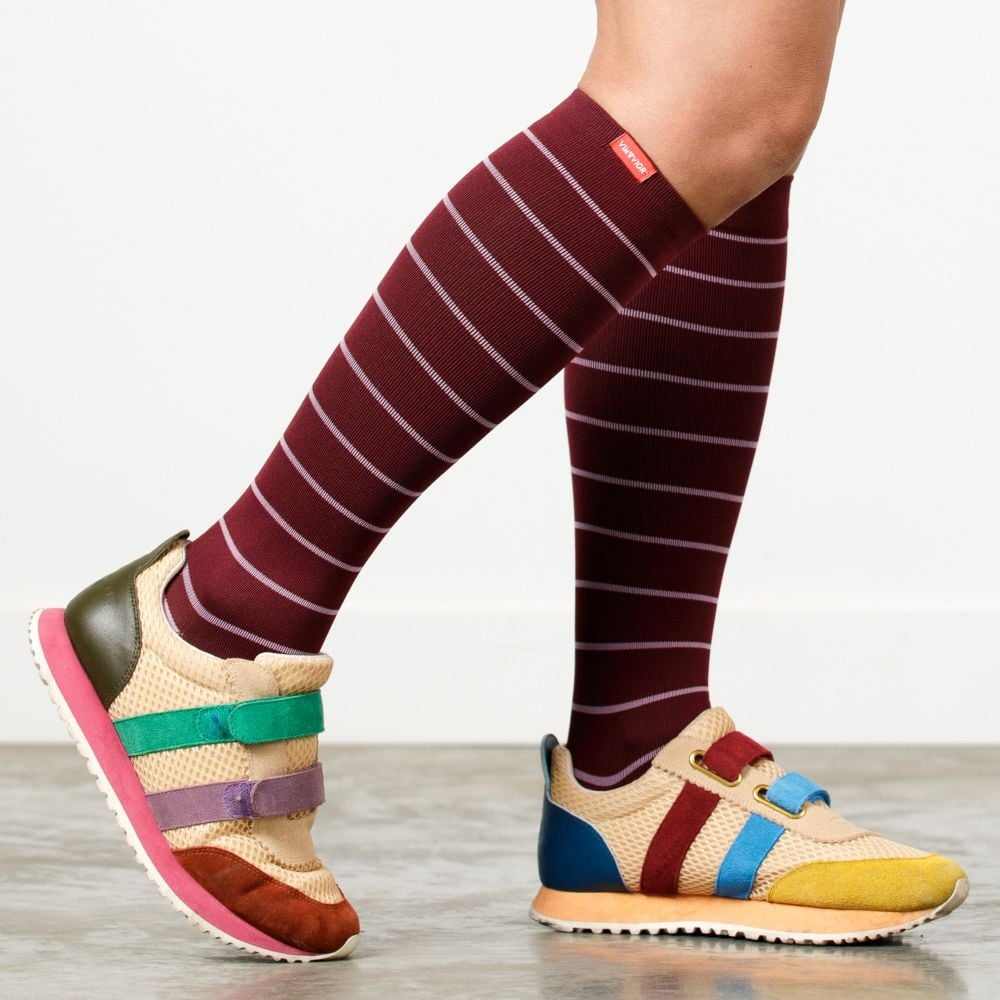
Beyond fabric and strength, the catalogue includes dedicated fits such as Women’s Wide Calf Compression Socks and Men’s Wide Calf Compression Socks. The range is also separated by use case, including categories for nurses, travel, work, and athletic performance, as well as conditions such as diabetes, varicose veins, pregnancy, and POTS. Compression tights add another format choice, offered in a footless 15-20 mmHg version and a footed 20-30 mmHg version, both built in nylon with moisture-wicking properties through the leg.
This structure treats fit and format as decisions separate from fabric and strength, even within the same product family. A wide calf fit, for example, can still be paired with any of the fabric collections Vimvigr offers.
The way a fabric handles moisture and temperature, combined with its compression strength, shapes how a sock performs across a full day. The list below highlights how the brand’s fabric blends differ in practice.
- Cotton blends, used at 48% cotton in styles like Swellegant and Pinstripe, are described as offering increased breathability compared with the brand’s other fabrics.
- Classic Nylon is knit with four-way stretch, which the brand states adds strength and flexibility during repeated daily wear.
- Choice Nylon, found in the Nautical Stripe design, adds a seamless toe construction not present in standard Classic Nylon.
- Moisture Wick Nylon is used in the open toe Solid style, where it is paired with a 200-needle count for flexibility.
- Merino Wool is described as offering super-fine softness, temperature regulation, and natural moisture-wicking in styles such as Petite Bows and Parisian Stripe.
- Compression tights built in nylon carry moisture-wicking properties through the entire leg rather than just the foot.
Taken together, these combinations show that compression sock materials and levels are not a fixed formula within the range. Each collection, from cotton to Merino Wool to the two nylon types, pairs with specific strength levels and formats, from knee-high socks to open toe designs, tights, and sleeves.
Strength and fabric remain two separate choices inside the same catalogue, and that separation is what gives the range its breadth.