




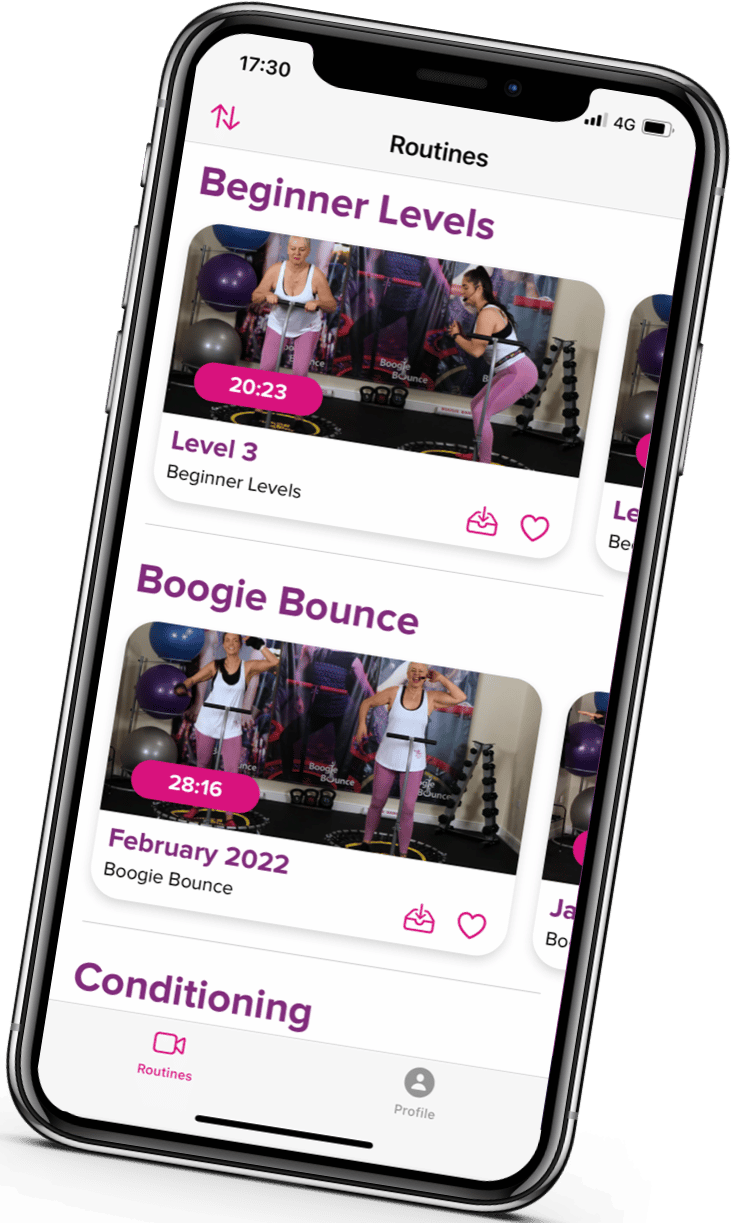
Rebounder exercise has grown from a niche fitness trend into a recognised category of low-impact training, valued by people who want cardio benefits without the joint strain of running. The category spans everything from simple home bouncing to structured, music-led sessions. Boogiebounce sits within that landscape as a choreographed, dance-inspired take on rebounding, built around a specific trampoline and handle design.
Defining the Bounce: Trampolines, Impact, and the Rebounder Category
Rebounder exercise means working out on a small, springy trampoline rather than a flat surface. The rebound effect absorbs impact as the feet land, which reduces stress on knees, hips, and ankles compared with running on pavement. That absorption is what gives the category its low-impact label, even though the cardiovascular demand can still be high.
Because the surface gives way slightly on landing, muscles throughout the legs and core engage to maintain balance. This turns a simple bounce into a full-body movement rather than just a leg exercise. Boogiebounce frames its programmes around this same principle, pairing the rebound with choreography rather than repetitive jumping alone.
The Science of Rebounding: Gravity, Momentum, and Calorie Burn in Bounce Training
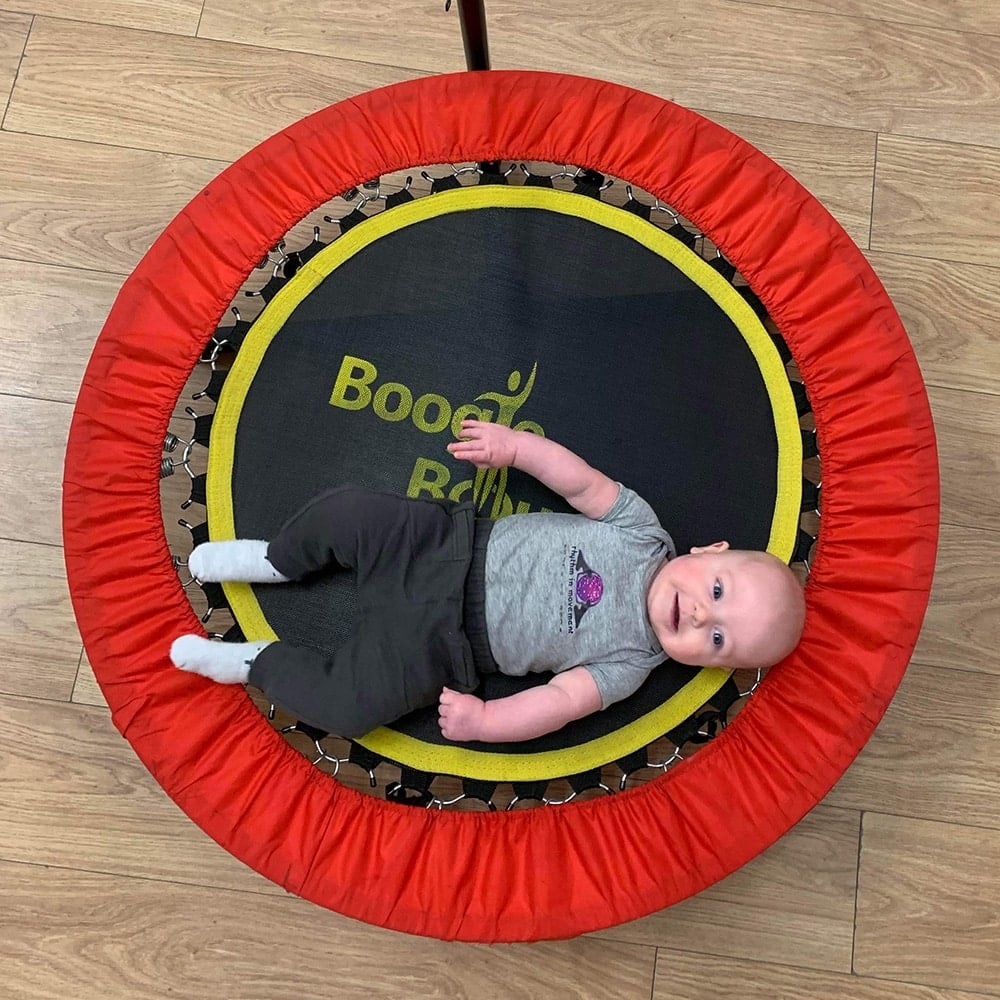
Rebounding relies on gravity and momentum working together. As the body rises and falls, it moves against increased G-force at the top and bottom of each bounce, which recruits stabilising muscles more than steady, flat-ground movement does. This is part of why bounce-based cardio is often discussed alongside strength and toning outcomes, not just heart rate.
Published materials from Boogiebounce point to a study comparing trampoline training with traditional running, reporting that trampoline training improved maximal oxygen consumption more effectively and reduced fat percentage by 31.61% in the trampoline group, compared with 20.3% in the running group. Those figures come from a study the brand cites in its own benefits content, rather than a brand-run trial. The takeaway for the category is that rebounder exercise can produce meaningful aerobic results in a shorter session than some traditional cardio formats.
Boogiebounce’s Dance-Inspired and HIIT Approach to Rebounder Fitness
Boogiebounce describes itself as a complete trampoline exercise programme performed to choreographed, dance-inspired routines rather than freeform jumping. Sessions draw on High Intensity Interval Training techniques, mixing bursts of effort with recovery, while staying low impact throughout. Routines use an eclectic mix of tracks spanning several decades, which keeps the format closer to a dance class than a conventional gym circuit.
Beyond the core programme, the brand also runs Box n’ Bounce, a boxing-inspired session using adjustable wrist weights to work the arms and glutes, and BBX Strength & Tone, which targets muscle groups to support posture. There is also a resistance-band format called Boogie Bands. Having several formats on one piece of equipment lets a single rebounder double as a platform for cardio, strength, and endurance work.
Elite Rebounder and Studio Rebounder: Design Differences Across the Range
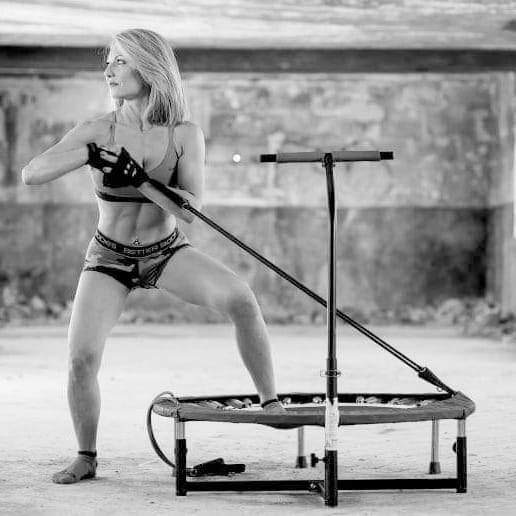
Boogiebounce sells two main rebounder bundles, the Elite Rebounder and the Studio Rebounder, both built as double-folding mini trampolines with a T-bar handle. The Elite Rebounder pairs 32 durable silent bungees with removable clips, weighs 9.5 kg, and carries a 127 kg weight limit, while the Studio Rebounder uses 32 high-quality springs for a near-silent rebound, weighs 9.2 kg, and shares that same 127 kg limit, with each model shipping in its own branded storage bag for the bungees or springs respectively.
Both bundles fold using the same mechanism, described as foldable and storable by one person in a couple of minutes, and both ship with gripper socks, workout links, spare parts, and a one-month free trial of an app with Smart TV casting. The main practical difference between the two comes down to the bungee versus spring rebound design rather than size or capacity. Either option is positioned for use at home rather than only in a studio setting.
The Role of the T-Bar Handle and Support in Accessible Rebounder Workouts
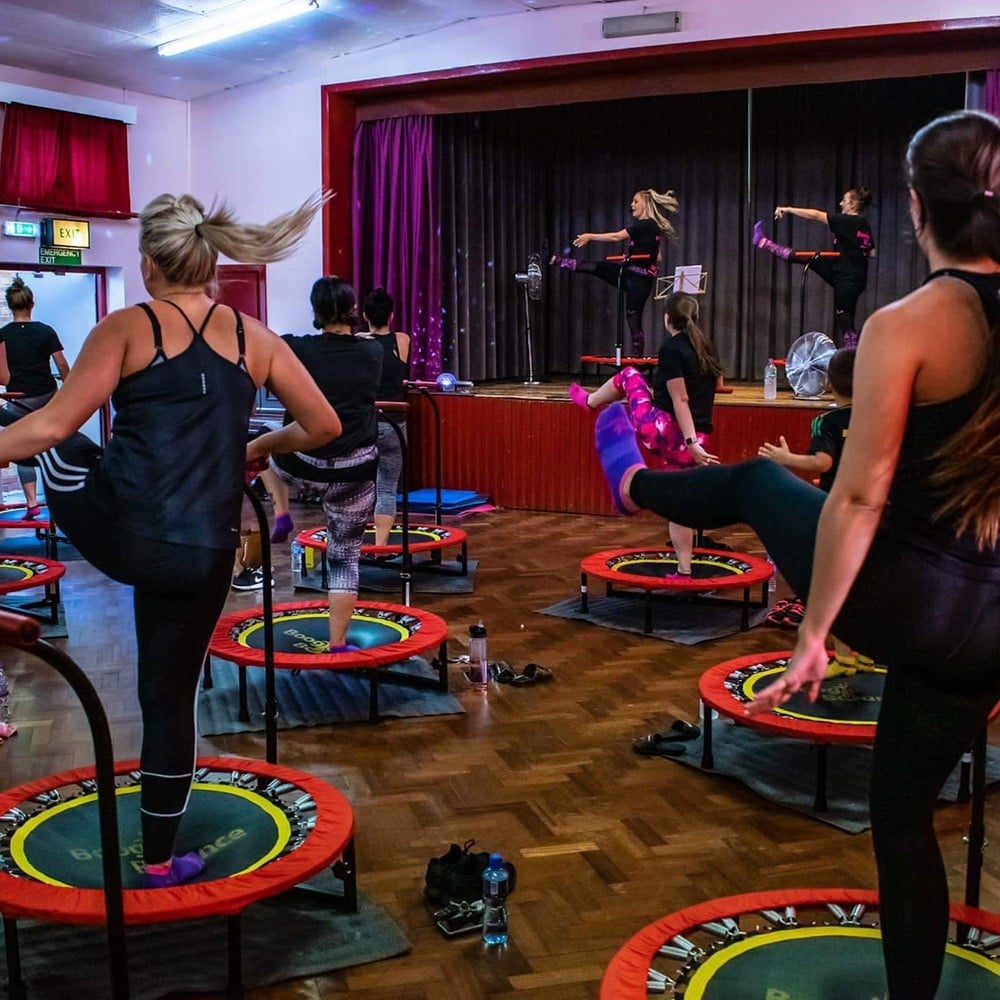
A T-bar handle is fitted to both the Elite and Studio rebounders, giving a stability point during faster or more complex routines. This kind of support matters for a format that layers choreography and interval work onto a bouncing surface, since balance can otherwise be the limiting factor. Boogiebounce also runs a GLP-1 exercise support programme, built around short, joint-friendly rebounder sessions lasting 10 to 25 minutes, following an 8-week plan designed to sit alongside medically supervised weight management.
That programme does not recommend or oppose medication itself. Instead, it focuses on building a simple exercise habit around whatever plan a person is already following with a clinician. Sessions are described as gentle cardio and toning work intended to sit alongside that routine, with the handle helping keep the movements accessible rather than physically demanding from the outset.
- Rebounder exercise engages stabilising muscles throughout the legs and core, supporting overall strength alongside cardio fitness.
- The rebound surface works with gravity to challenge balance on every landing, which choreography can build on directly.
- Absorbing impact through the trampoline surface is kinder to joints than exercising on a hard, flat floor.
- Pelvic floor strength is listed among the benefits associated with rebounder workouts.
- Programmes such as BBX Strength & Tone are aimed specifically at strengthening muscles and joints to support posture.
Rebounder Fitness in Daily Routines: App, YouTube, and Class Options
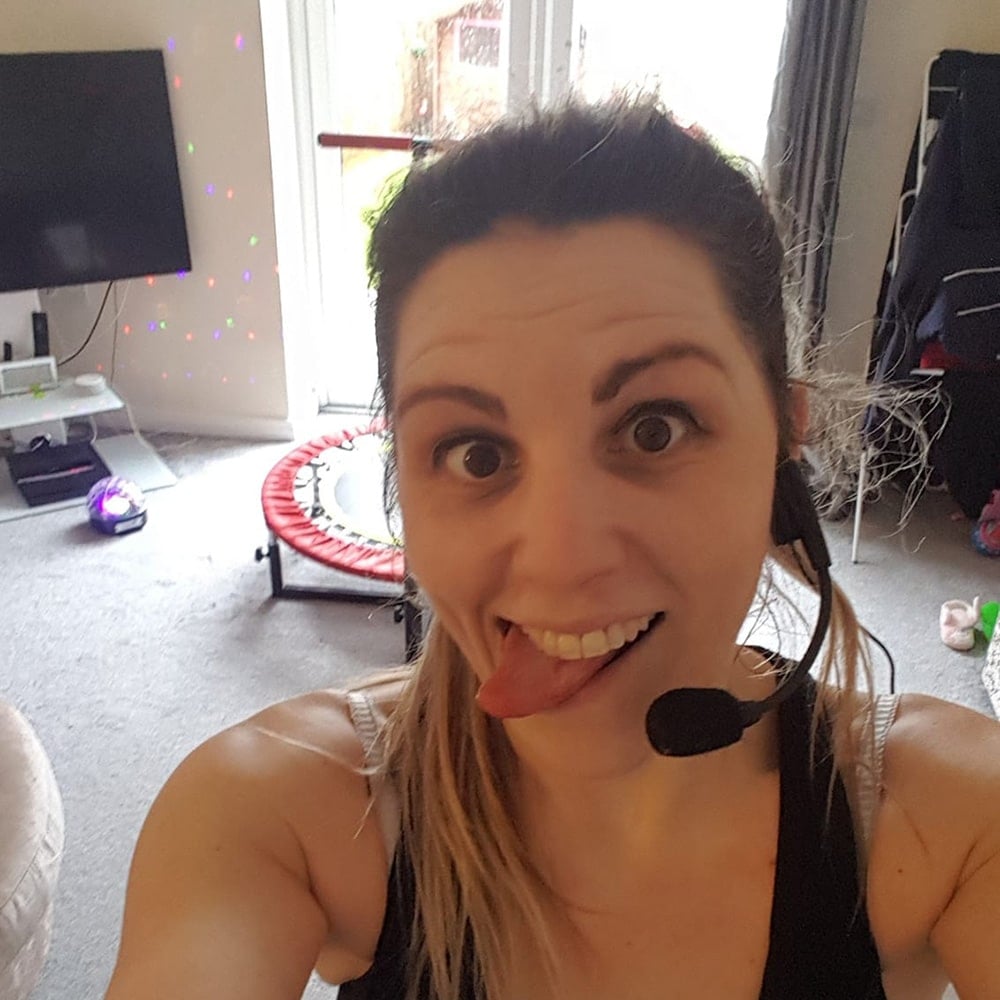
Boogiebounce offers more than one way to access its sessions. People can join nationwide classes in person, follow along through an app, or use a YouTube Membership, all built around the same choreographed format. Each rebounder bundle includes a free trial period of the app, which tracks progress and can cast sessions to a Smart TV.
Beyond individual use, the brand also runs programmes for schools, covering Primary through Further Education with teacher-led or virtual delivery and ready-made routines. There is also an Experience Days option, bringing rebounders and qualified instructors directly into a school setting without any equipment purchase. Across these formats, the common thread is the same mini trampoline and T-bar handle setup adapted to different audiences and settings.
Rebounder exercise keeps its appeal by fitting into short windows of time without demanding a change of location. As more formats, from classes to apps, make bounce training easier to reach, the category looks set to keep growing alongside more traditional cardio options.