




Searching online for organic period products myths quickly turns up a tangle of claims, some accurate and some stretched by marketing copy. Organic cotton tampons, reusable pads, and period pants all get grouped into vague promises about comfort, safety, and sustainability. This piece checks what Wearedame‘s toxin-free range actually states about materials, sizing, and absorbency, and separates that from the broader hype surrounding organic period care. Untangling organic period products myths from documented product details is the clearest way to judge what these items really deliver.
Why Switching to Organic Tampons Doesn’t Automatically Change a Period
One of the most persistent myths is that switching materials alone transforms a period overnight. Wearedame states that many customers report a period becoming lighter, shorter, or less painful within 60 days of switching to its organic tampons, not instantly. That distinction matters because it sets a realistic timeline rather than an instant fix.
The brand also notes that 80% of its customers experienced lighter, shorter, or less painful periods after switching from traditional products. That figure describes a reported outcome among existing customers, not a guaranteed result for every person. Reading the claim this way avoids overstating what organic cotton tampons can promise on their own.
Reusable Period Pants vs. Traditional Underwear: What the Absorbency Claims Really Mean

Reusable period pants are often described as functioning exactly like ordinary underwear, which is only partly true. An FAQ on the brand’s site explains that the pants are worn like normal underwear except for a built-in protective layer that absorbs flow. That layer is the functional difference, not a marketing add-on, and the same FAQ also recommends washing the pants before first use for maximum absorbency.
Absorbency is expressed in tampon or pad equivalents rather than vague terms like heavy or light, and the figures differ noticeably between styles. The Bikini Period Pant absorbs the equivalent of 3-4 tampons or pads and the Night Period Pants absorb the equivalent of 5 tampons or pads with added high back padding, while the High Waist Period Pants sit lower still at the equivalent of 3 tampons or pads per wear. That spread shows absorbency is tied to the specific style chosen, not a single blanket figure across the whole period pants range.
The Truth About Toxin-Free Materials in Period Pads and Pants
A common assumption is that any product labelled organic is automatically free from synthetic additives, but the claim needs checking against the actual materials used. Wearedame‘s organic tampons are made using GOTS certified organic cotton, without toxins, dyes, bleaches, or plastics, and the wrappers are compostable cellulose. The brand also states the tampons are tested regularly for heavy metals, which is a specific quality check rather than a general wellness claim.
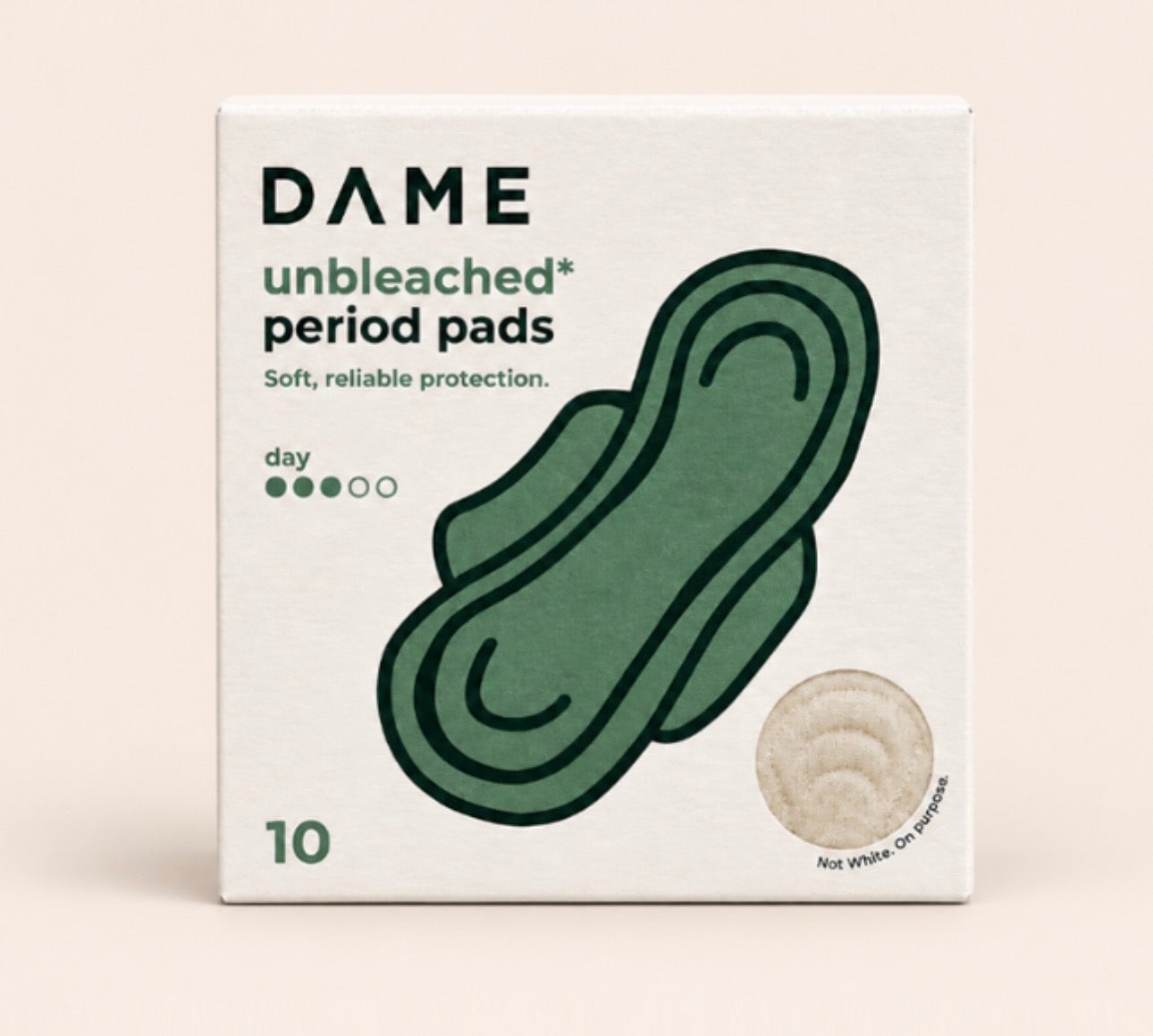
The Unbleached Period Pads follow a similar standard, made from 100% organic cotton and free from toxins and additives. That consistency across the tampon and pad lines suggests the toxin-free label refers to a defined material standard, not just a marketing phrase. This is exactly where organic period products myths tend to diverge from documented fact.
Organic Cotton and Odour Control: What the Technology Actually Does
Odour control is frequently treated as a vague selling point, but the product pages name specific mechanisms behind it. The reusable period pads use what the brand calls DAMEdry technology, where five layers work together, a top layer wicks moisture, a waterproof lining prevents leaks, and an antimicrobial layer addresses odour. The pads are also described as infused with freshMNT, a natural odour crunching technology.
Several period pants, including the Night, High Waist, Shortie, and Thong styles, are described as having built-in odour-control technology alongside organic cotton construction. That detail separates a stated feature from a generic freshness claim often seen elsewhere in the category. Odour control, in this range, is tied to a named material process rather than left as an unexplained promise.
DAME’s Organic Tampon Applicator and the Reusable vs. Disposable Debate
Reusable applicators are sometimes dismissed as a novelty rather than a genuine alternative to disposable ones. Wearedame‘s Reusable Tampon Applicator is described as award-winning and made from medical-grade materials, tested to medical standard. The brand states it contains sanipolymers that keep it antimicrobial and that it is built to last over 10 years.
That longevity claim is specific to the applicator rather than to the tampons themselves, which remain a single-use organic cotton product. Pairing the applicator with the Organic Tampons range, including the Postal Pack of 34 with free letterbox delivery, is presented as a way to cut plastic waste from applicators without changing the tampon itself.
Absorption Equivalents and Flow Matching: How DAME Sizes Products Correctly
Flow matching across a range of organic and reusable products is often oversimplified into light, medium, or heavy labels. Wearedame does use those flow categories for browsing, but it backs them with absorption equivalents and lengths stated per product. The Reusable Period Pads come in four sizes, Mini, Liner, Regular, and Night, with the Liner measuring 17cm and absorbing up to 1 regular tampon or pad, and the Night pad measuring 28cm while absorbing up to 4.
The Organic Tampons Value Pack is offered in 3 absorbency levels, which allows a mix to match changing flow across a cycle rather than relying on a single absorbency throughout. This structure, stated directly on the product pages, gives a more concrete answer to flow-matching questions than general organic period products myths tend to offer.
- Organic materials do not guarantee a faster change in period symptoms, since the brand links its reported outcomes to a 60-day window.
- Reusable period pants are not identical to ordinary underwear, because they rely on a built-in absorbent layer rather than fabric alone.
- Absorbency in organic and reusable products is typically measured in tampon or pad equivalents, not simply labelled light, medium, or heavy.
- Toxin-free labelling refers to the absence of specific substances such as bleach, dyes, and plastics, rather than a blanket wellness claim.
- Reusable applicators and reusable pads address plastic waste in different ways than compostable tampon wrappers do, since each targets a different part of the product.
Reading the Claims Behind the Range

Separating organic period products myths from documented specifications reveals a narrower, more specific set of claims than marketing language sometimes suggests. The figures and materials described apply to particular products and particular conditions, not to the category as a whole.