




Power outages, remote worksites, and balcony solar setups all demand different solutions, and that is where a portable power station earns its place in a home energy plan. Ecoflow builds a range of battery systems that stretch from compact camping units to larger, expandable setups meant for whole-home backup. Understanding what separates each line helps match the right unit to the right job, whether that job is running a drill on a job site or keeping a refrigerator cold during a blackout.
Understanding EcoFlow’s Portable Power Station Range
Ecoflow organizes its lineup around a few distinct product families rather than a single catalog of near-identical boxes. The RIVER series covers lighter, smaller-capacity needs, while the DELTA series moves into higher output and larger battery banks suited to tools and appliances. The STREAM series takes a different direction entirely, pairing battery storage with solar input built for balconies and connected home systems. Across all of these, a portable power station functions as a rechargeable battery unit that stores energy from an outlet or solar panels and releases it through standard outputs.
DELTA 3 Classic: Compact Power for Outdoor Work and Camping
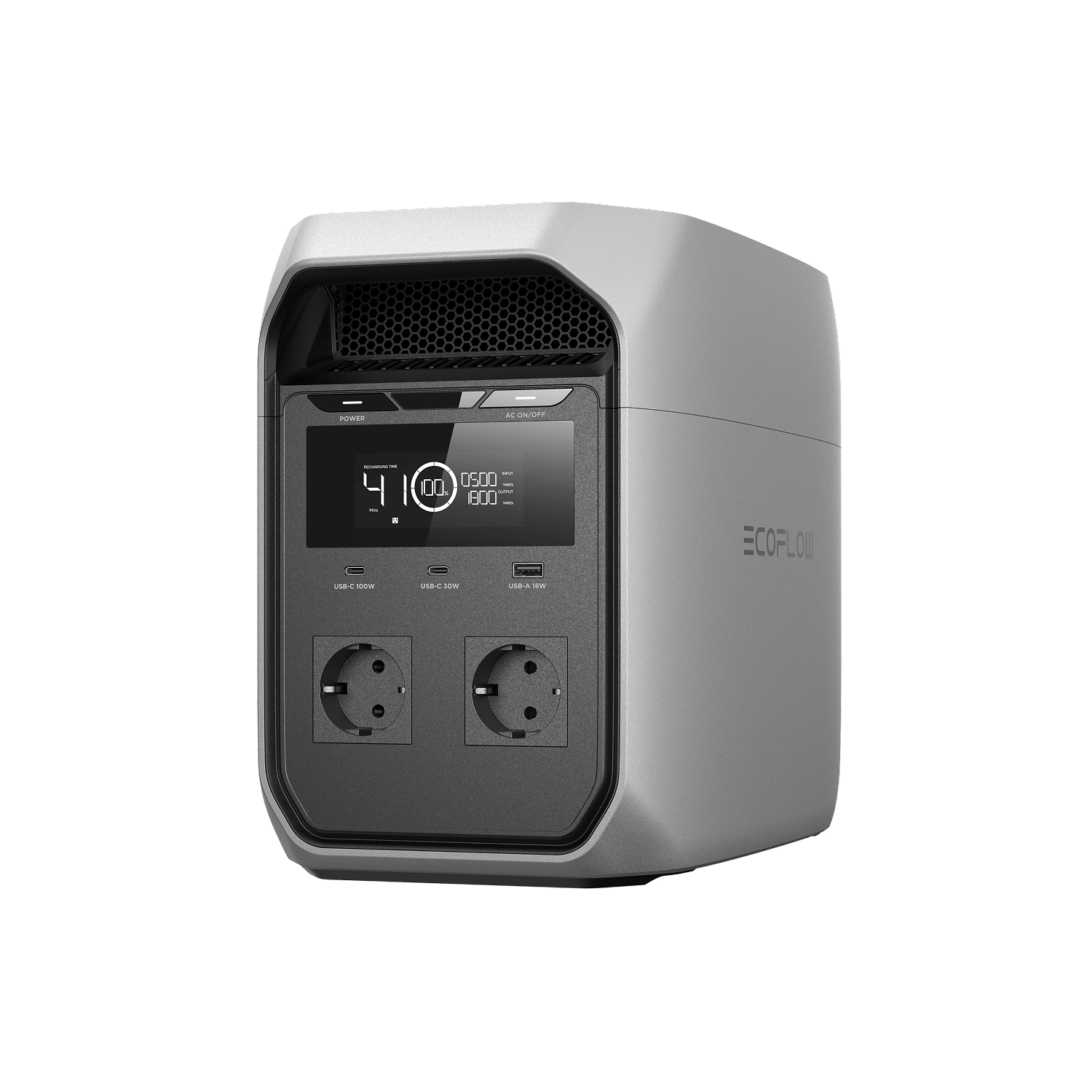
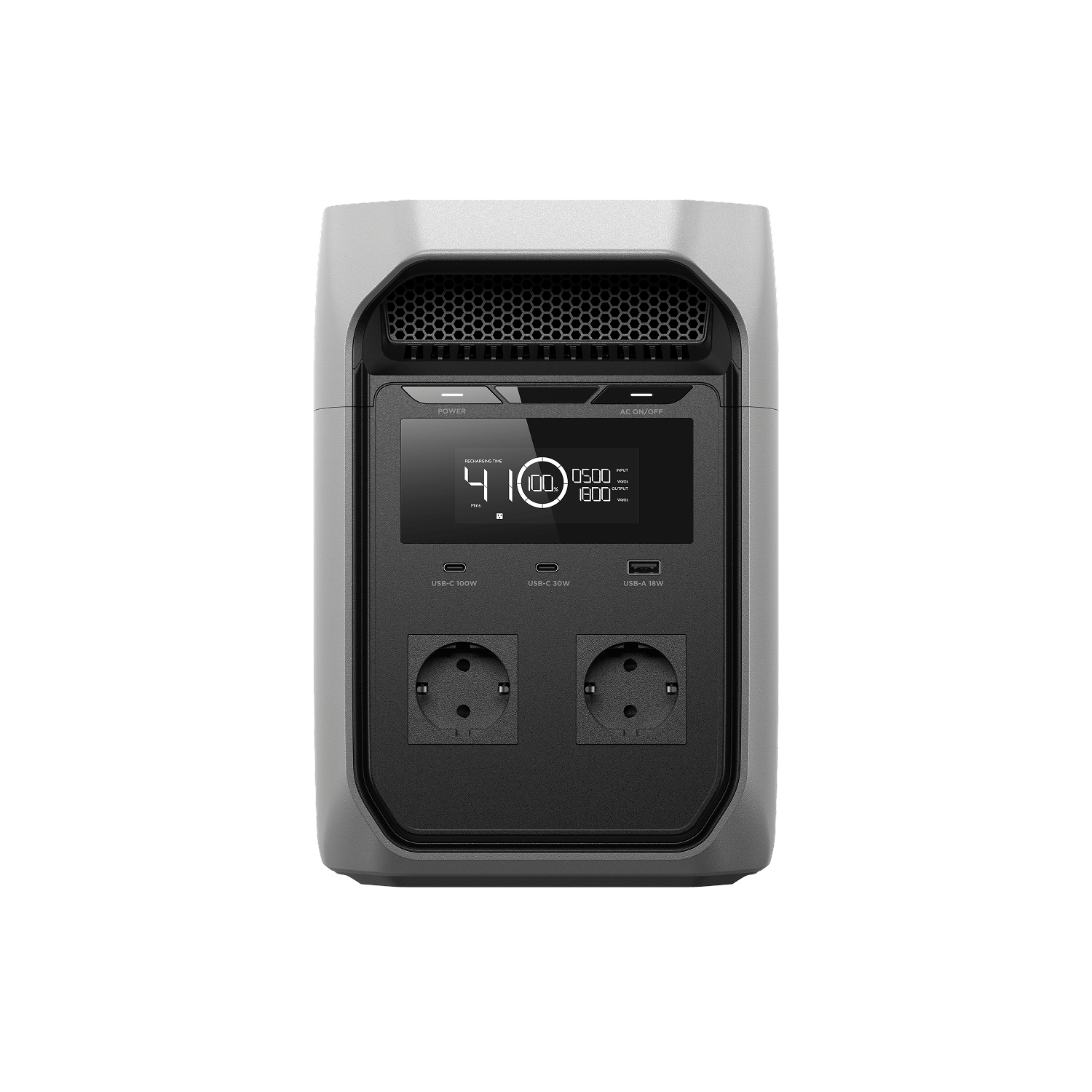
The DELTA 3 Classic sits at the smaller end of the DELTA lineup, with 1,024 Wh of capacity and a 1,800 W continuous output. Its peak output reaches 3,600 W, and the built-in X-Boost mode extends support to devices drawing up to 2,400 W without tripping or cutting power. It uses an LFP battery chemistry and runs at a quiet 30 dB, which fits camping, fishing trips, or outdoor home-improvement work. Charging is fast too, since the unit goes from 0 to 80% in 45 minutes on AC power and reaches a full charge in roughly 60 minutes.
DELTA 3 Max Series: Mid-Capacity Systems for Extended Runtime
Stepping up in both capacity and output, the DELTA 3 Max Plus offers 2,048 Wh of storage paired with a 3,000 W AC output and a 6,000 W peak rating. X-Boost 3.0 extends compatibility to appliances pulling as much as 3,900 W, which covers most kitchen and workshop equipment running at once. A DSP chip inside the inverter checks voltage and current every 33 microseconds to maintain a stable sine wave output for sensitive electronics. On top of that, Smart Output Priority Tech lets specific circuits, such as a refrigerator or a Wi-Fi router, stay powered through an app while non-essential outputs are paused, and Smart Power Reserve lets a battery percentage be set aside for the essentials.
STREAM Ultra X: Balcony Solar Storage and Home Energy Integration
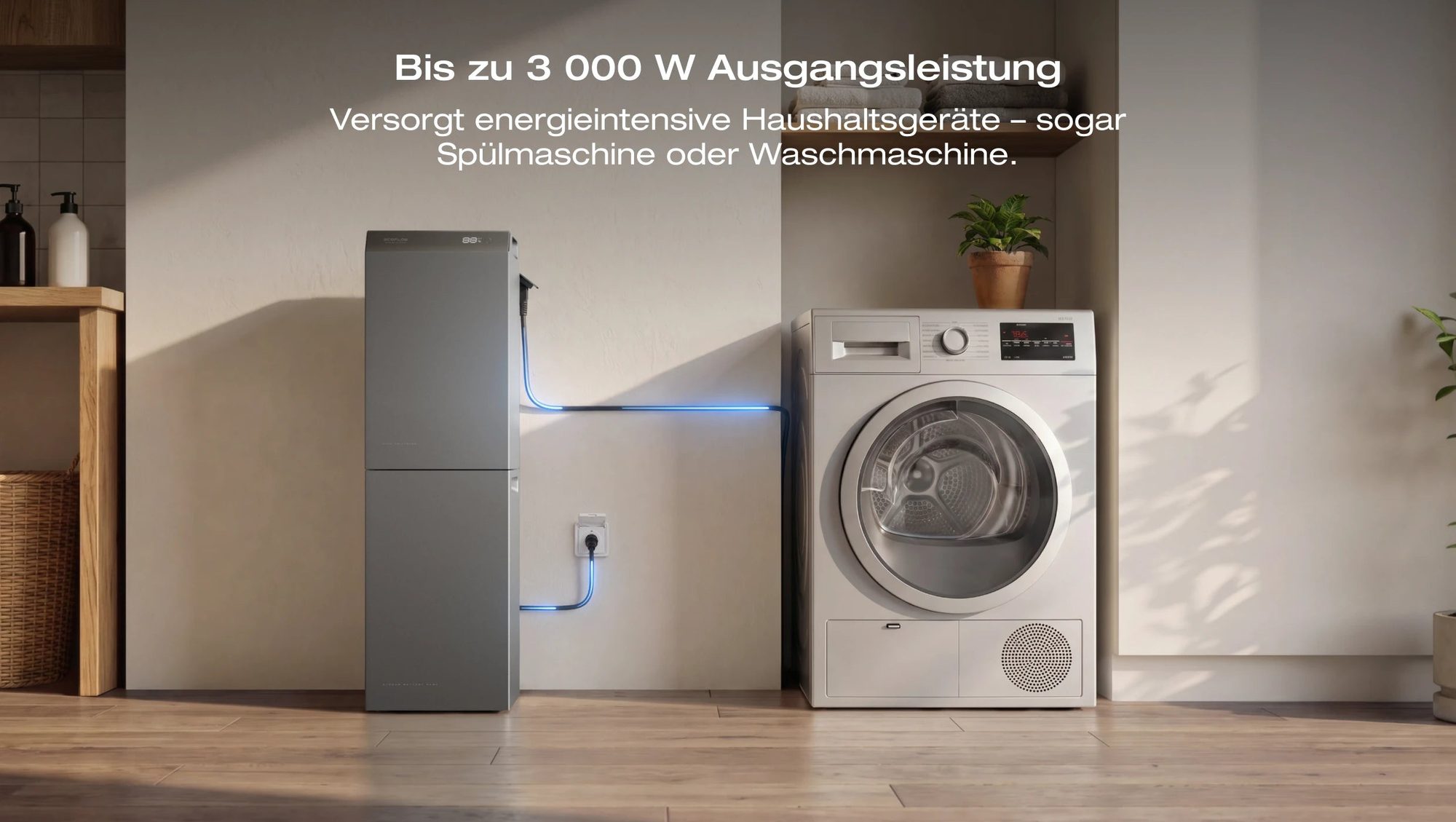
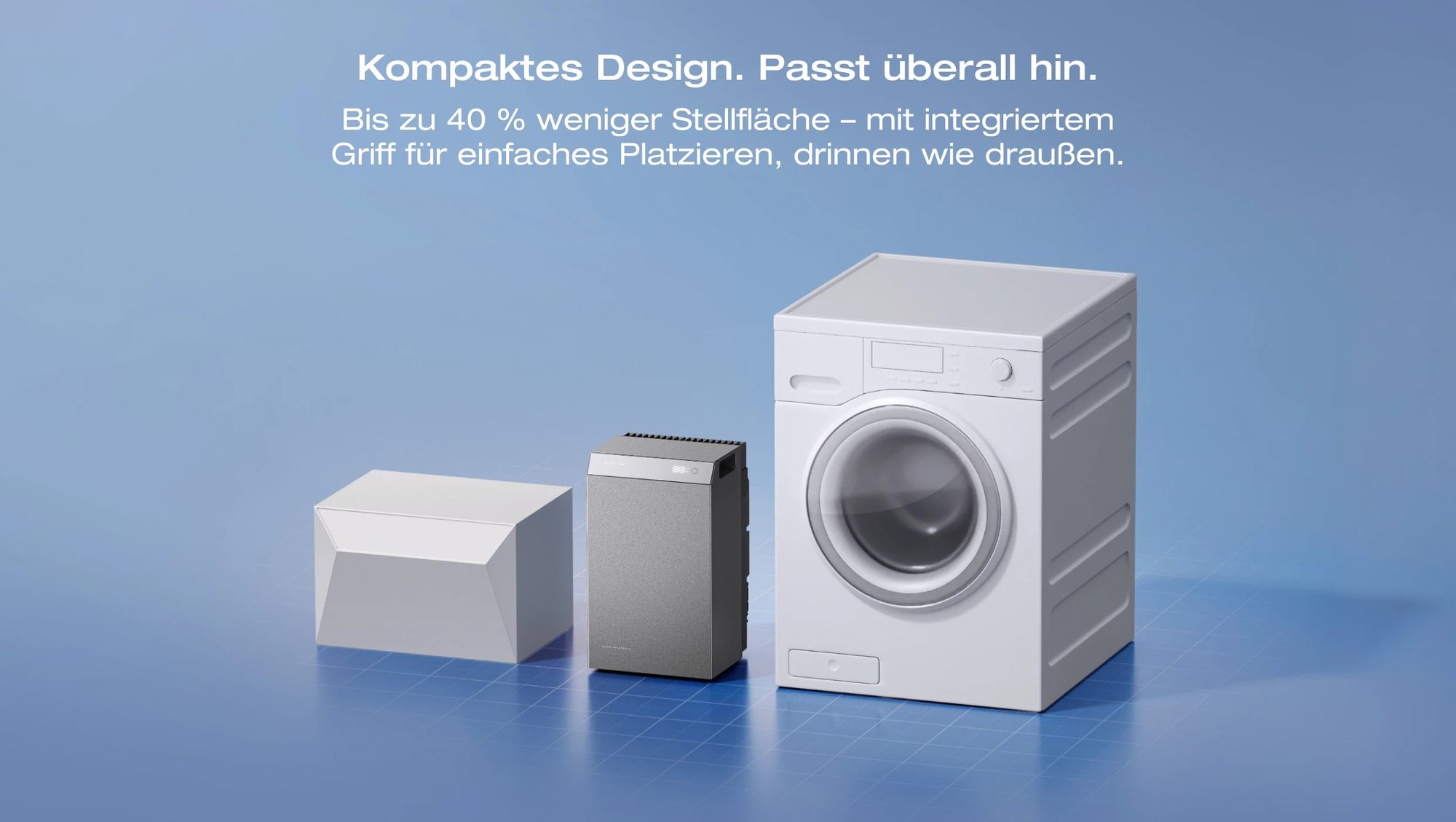
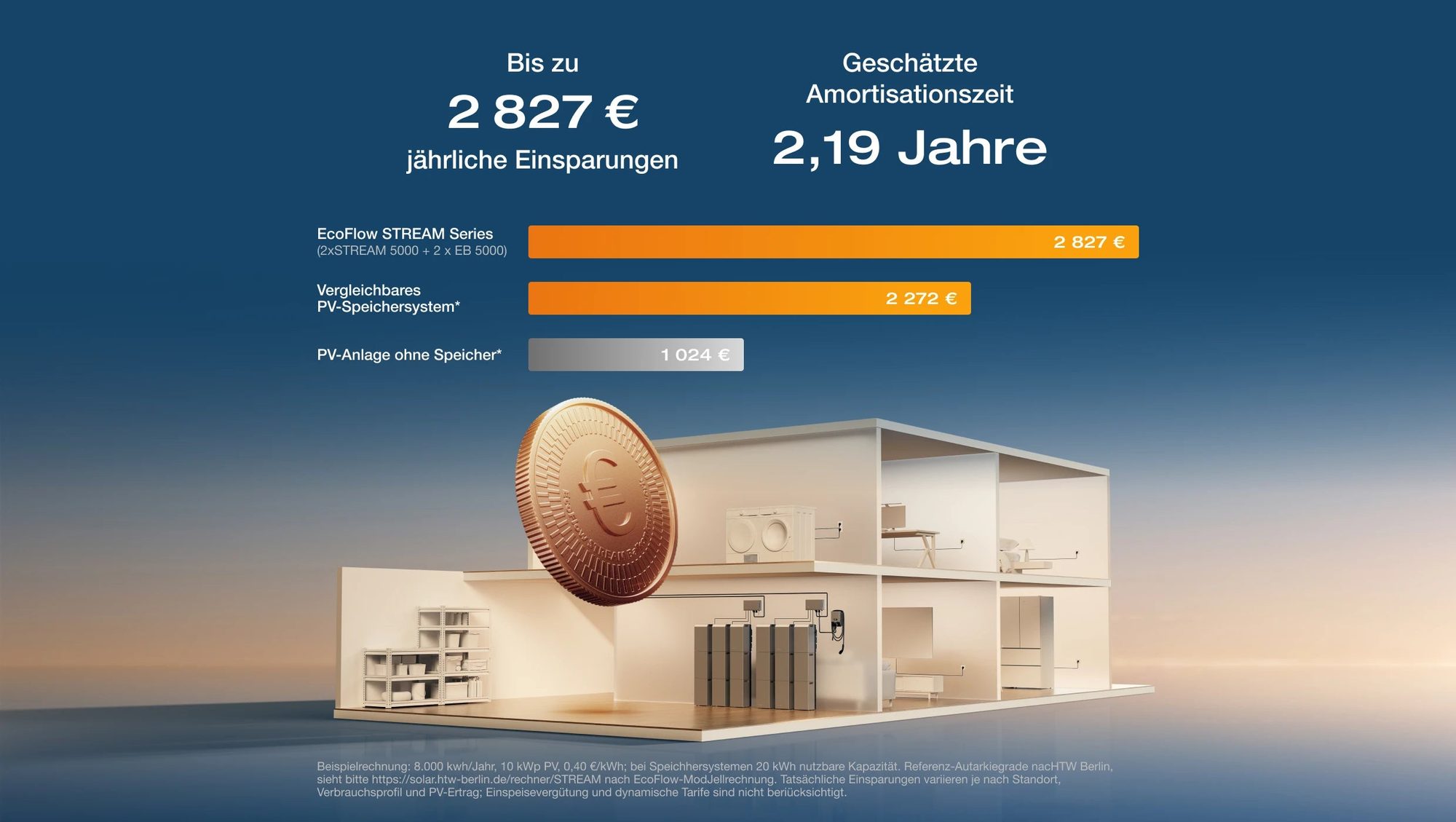
Where the DELTA series focuses on portability, EcoFlow’s STREAM line targets grid-connected and balcony solar setups. The STREAM Ultra X is rated at 800 W and is positioned as a balcony solar storage unit that pairs panel input with home-ready output. Alongside it, the STREAM 5000 offers a larger 5,024 Wh capacity, accepts up to 5,000 W of solar input, and delivers up to 3,000 W of AC output. It can connect up to 12 solar panels and is built to generate close to 5,600 kWh per year, an amount the brand notes is enough for the typical electricity use of a four-person household.
Expandability and Multi-Device Support Across EcoFlow Systems
Several Ecoflow units are built to grow rather than stay fixed at their starting capacity. The DELTA 3 Max Plus, for instance, works with an additional battery expansion adapter that links two smart extra batteries using a single cable, raising total stored energy without replacing the main unit. This same compatibility extends to other batteries in the family, including the DELTA Pro 3 smart extra battery. Multiple charging methods, including AC, solar, vehicle, and a smart generator, also mean that a single unit can draw power from whichever source is available at a given moment, which supports running several devices or appliances without needing to switch chargers constantly.
Real-World Power Demands and Which System Matches Each Use Case
Matching a portable power station to an actual situation comes down to how much continuous output is needed and for how long. A camping trip with lights and a phone charger asks far less of a unit than a kitchen running several appliances during a grid outage. Reviewing typical demands against Ecoflow‘s lineup makes the differences clearer.
- Running power tools on a job site calls for the DELTA 3 Classic’s 1,800 W output and 3,600 W peak, which covers drills, saws, and similar equipment.
- Operating a microwave, kettle, refrigerator, and blender at the same time fits within the DELTA 3 Max Plus’s 3,000 W output and its 6,000 W peak rating.
- Maintaining backup power for a router and refrigerator during a longer outage is supported by Smart Output Priority Tech on the DELTA 3 Max Plus, which keeps selected circuits active.
- Storing solar energy generated on a balcony and feeding it into household circuits is the role built into the STREAM Ultra X and the STREAM 5000.
- Expanding stored capacity for extended outages without buying a second full unit is handled through the extra battery and expansion adapter compatible with the DELTA 3 Max Plus.
Taken together, these scenarios show that no single unit covers every situation equally well. A compact camping trip and a multi-day grid outage place very different demands on a portable power station, and Ecoflow‘s separation into distinct product lines reflects that gap. Choosing between a DELTA, a STREAM, or an expanded battery setup ultimately comes down to how much output, runtime, and solar input a given situation actually requires.
Home energy needs rarely stay the same from one season to the next, and a flexible battery setup can adapt as those needs shift.