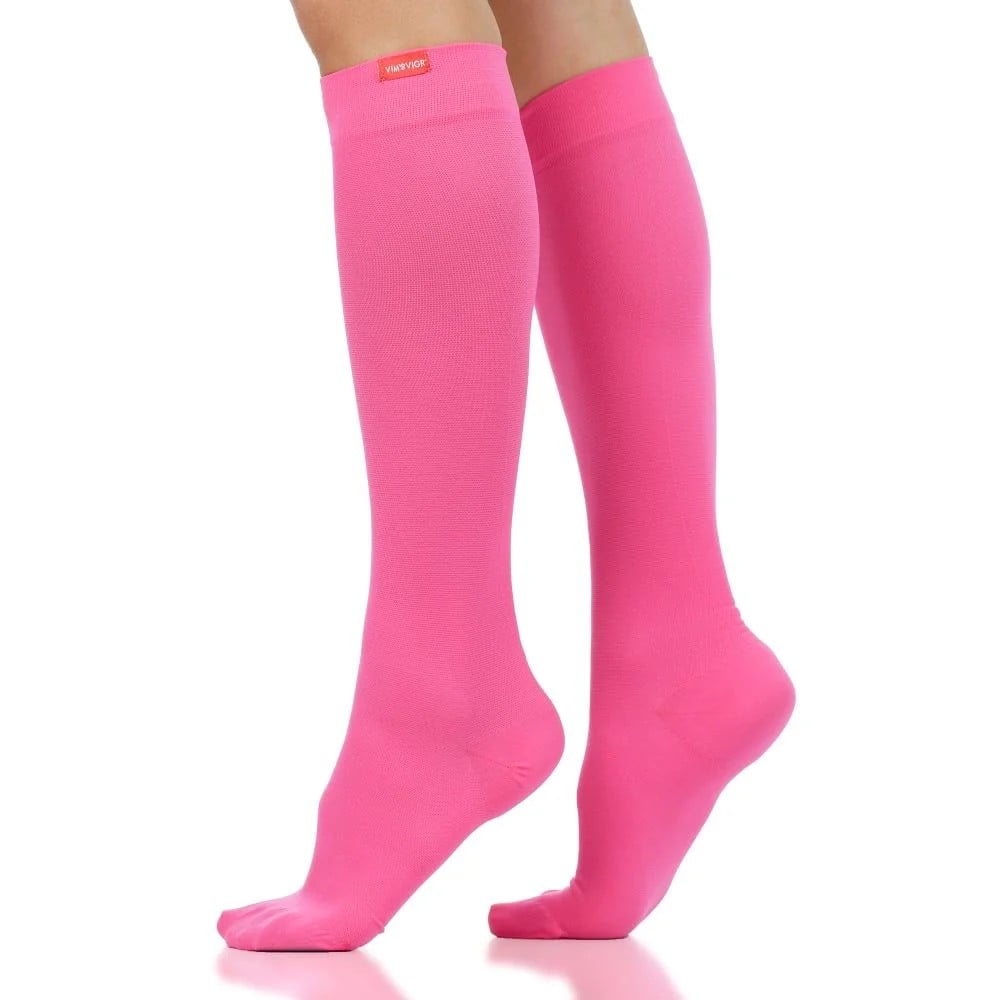



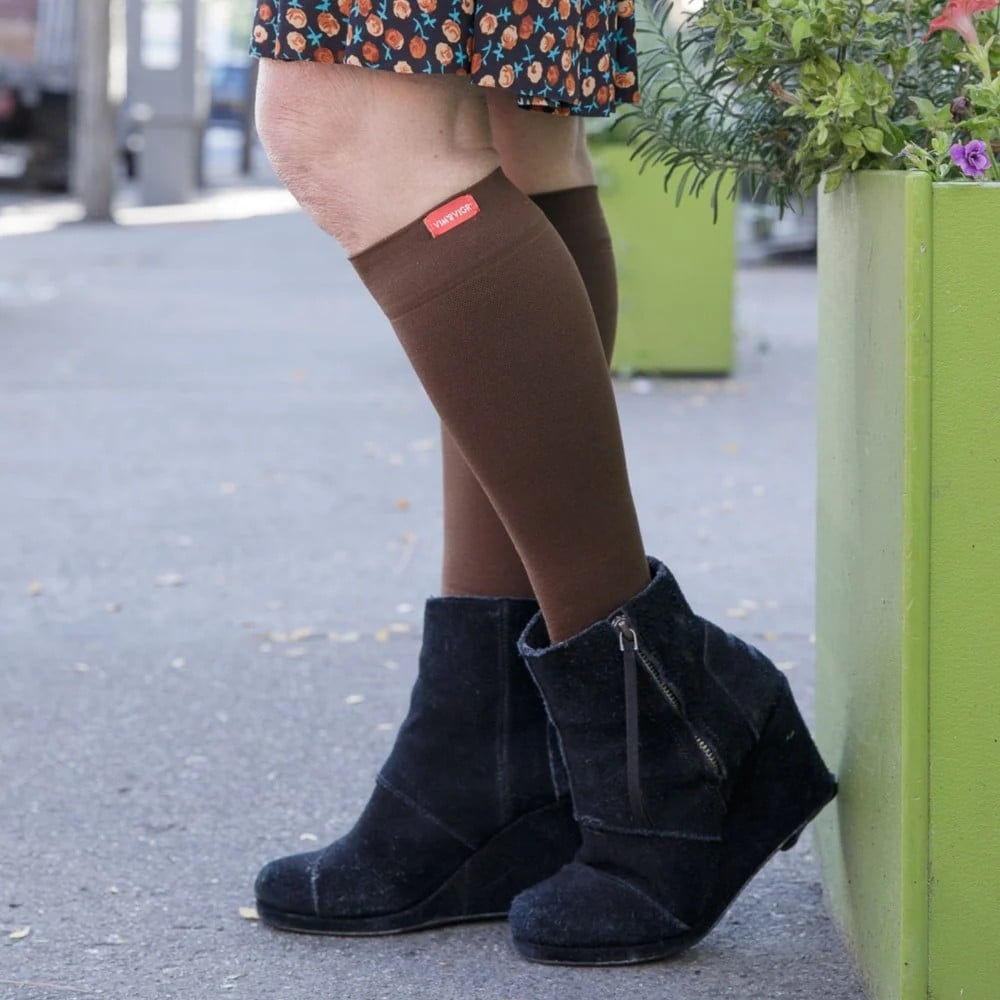
Two pairs of compression socks can carry the same stated pressure range and still feel noticeably different. Fabric density, stretch, moisture handling and the shape of the garment all influence how easy a sock is to put on and how it feels through a full day. The compression number should therefore be separated from fabric preference. VIM& VIGR explains that different fabrics can feel tighter or stretchier even when they are designed for the same compression level. Its range includes cotton, merino wool and moisture-wicking nylon, providing useful examples of how material choice can be matched to climate, footwear and personal preference. The first decision remains the medically appropriate compression range and correct size. Fabric comes next as a way to improve comfort and make regular use more realistic, not as a way to change the prescribed or selected level of support.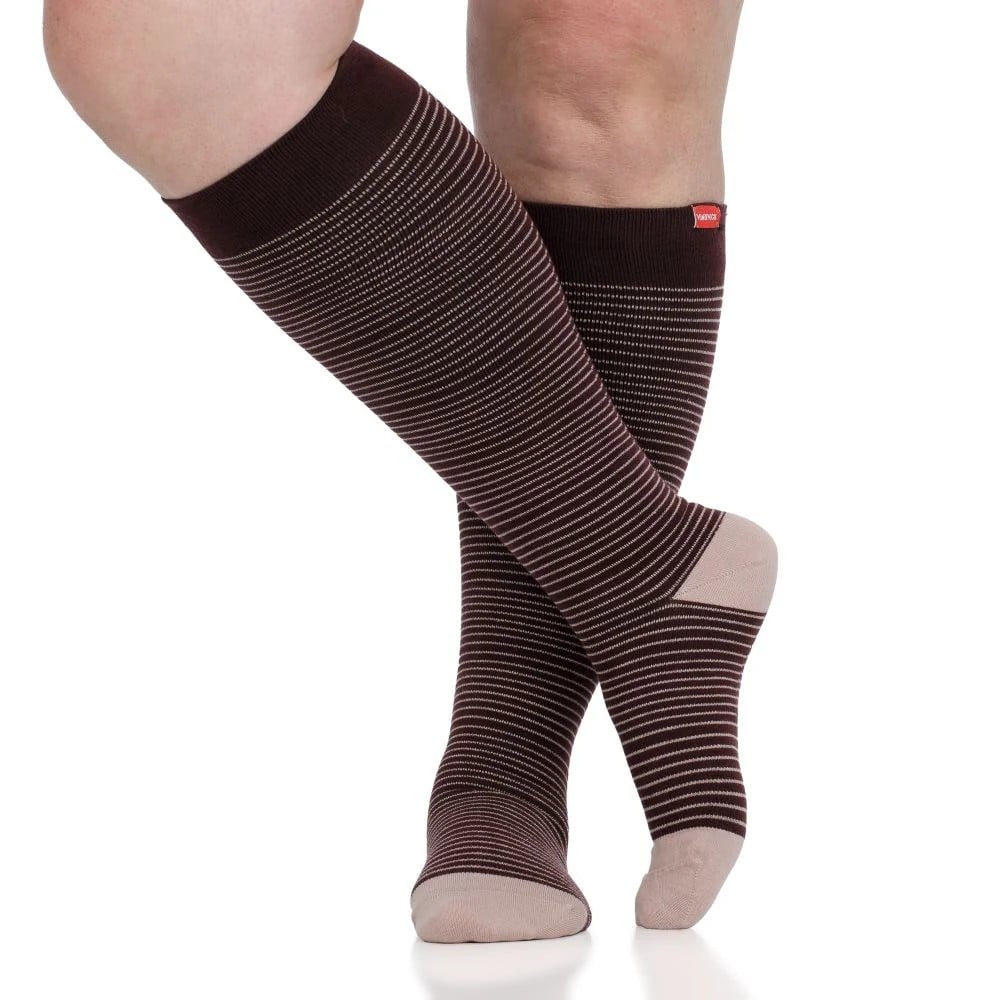
The compression number describes pressure, not texture
Compression levels are commonly shown as ranges such as 15-20 mmHg or 20-30 mmHg. Within a brand’s specifications, that number refers to the intended graduated pressure rather than how soft, thick or stretchy a fabric feels in the hand. VIM & VIGR notes that its denser nylon options may feel more compressive while cotton can feel stretchier even when the listed compression range is the same. That distinction helps explain why a person should not judge the support level by touch alone. Stronger is not automatically better, and difficulty pulling on a garment does not prove that it provides a higher therapeutic pressure. The stated range, size chart and product testing are more meaningful references. Anyone using compression for a diagnosed condition should follow professional guidance about the required range instead of switching levels based on subjective tightness. Wardrobe compatibility can be considered after the technical fit is correct. Some patterns disappear easily under trousers while others are intended to be visible, allowing the same support level to fit different dress settings.
Cotton, merino and nylon suit different daily priorities
Cotton blends can appeal to people who prefer a familiar textile feel and a little more perceived stretch. Merino wool is associated with temperature regulation and natural moisture management, which can make it attractive across changing conditions. Moisture-wicking nylon is designed with active moisture control in mind and can work well for people whose feet and lower legs become warm during the day. VIM & VIGR offers all three material categories, but no fabric is universally superior. Shoe volume matters because a thicker or differently textured sock can change the fit inside a close shoe. Climate matters because warmth that feels comfortable in one season may be excessive in another. Skin sensitivity and laundering preferences also deserve attention. A person is more likely to use compression consistently when the fabric feels acceptable for the actual work, travel or activity environment rather than only during a brief try-on at home. Merino and synthetic fabrics can also differ in drying time after washing. Anyone who wears compression most days may benefit from planning a rotation so no pair has to be worn while still damp.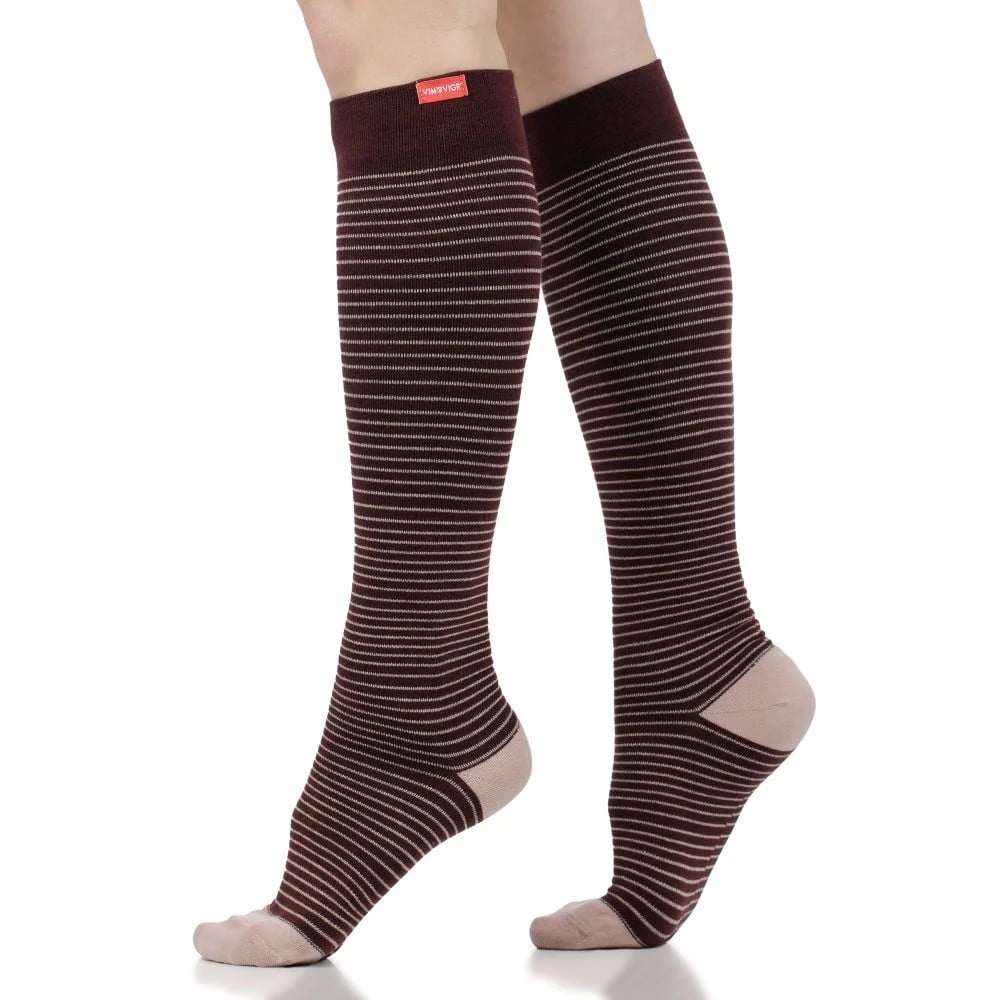
Comfort should be checked at several points during wear
The first five minutes do not reveal everything about a compression garment. VIM & VIGR designs graduated socks for extended wear, so the fit should remain orderly as the person walks, sits and changes footwear during the day. Several observations can help distinguish normal close fit from a problem that deserves attention. Fit should be reassessed after body-size changes. A sock that once matched the measurement chart may no longer be the correct size after a substantial change in calf circumference or swelling pattern.
- The heel should remain seated in the intended position rather than pulling upward or twisting around the foot as the day progresses.
- The fabric should stay smooth over the ankle and calf without deep folds that concentrate pressure in one narrow area.
- The toe area should allow normal comfort and should not create numbness, unusual discoloration or persistent pain.
- The top band should remain flat and secure without being folded down, rolled or deliberately doubled to make the sock shorter.
A small rotation can be more practical than one universal pair
People who wear compression frequently may find that one fabric works better for warm days and another for cooler conditions or formal clothing. That does not require changing the compression level without reason. It means keeping the medically or personally appropriate range while selecting a fabric that suits the setting. The styles from VIM & VIGR show how the same broader purpose can be offered in different materials and patterns. A rotation also gives pairs time to dry fully after washing and reduces repeated wear of one garment. Care instructions matter because heat, harsh treatment or inappropriate drying can shorten the useful life of elastic fibers. Over time, a sock that has become stretched or no longer stays in place should be reassessed rather than kept solely because it is comfortable to put on. Everyday comfort is strongest when size, pressure range, textile feel and care habits all support one another. Comfort can also be seasonal. A fabric preferred in winter may feel too warm in summer, which is a practical reason to vary material while keeping size and compression guidance consistent.