



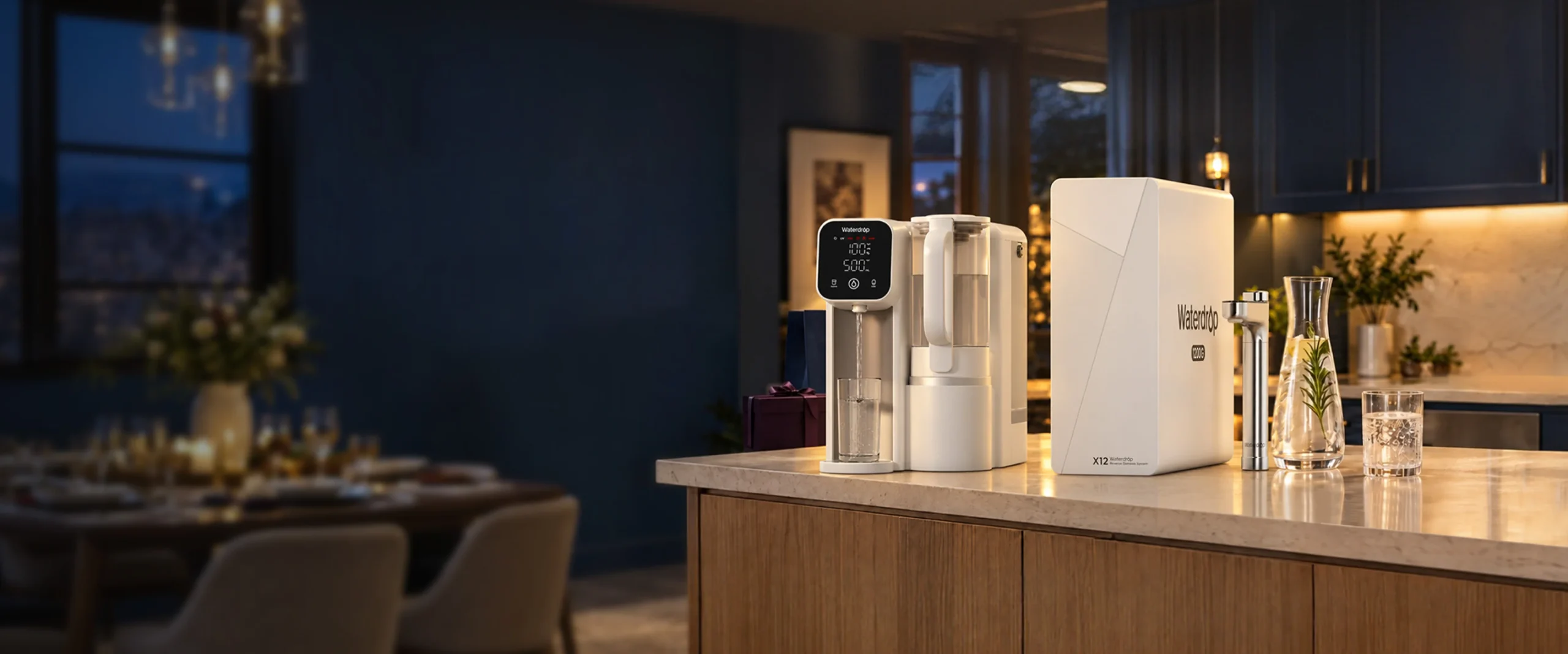
Clean drinking water has become a common household priority, and reverse osmosis water filters sit at the center of that shift. Waterdropfilter offers a wide span of options, from undersink systems to countertop units and electric jugs, covering different budgets and kitchen layouts. This article walks through the main product lines and what separates them, along with how certification standards apply across the range.
Understanding Reverse Osmosis Filtration and Its Value
Reverse osmosis water filters push water through a fine membrane, capturing contaminants along the way. This category has grown popular because it addresses a broad set of water quality concerns in one system rather than several separate devices. Waterdropfilter positions its systems as a way to access this filtration method without requiring a single premium format, spreading the approach across undersink, countertop, and jug-based products.
Choosing among reverse osmosis water filters often comes down to kitchen space, installation preference, and how much water a household needs daily. Undersink units tend to suit permanent installations, while countertop and jug formats suit renters or smaller spaces. The catalogue is structured around exactly these three formats, which the sections below cover in turn.
Undersink RO Systems: The G3P800 and G3P600 Range
The G3P800 is a tankless alkaline reverse osmosis system built for under-the-sink installation. It is marketed as a high-flow unit, and its replacement filters come in distinct lifespans, with the G3-N1CF rated for up to 6 months or 550 gallons, and the G3-N3CB rated for up to 12 months or 1,100 gallons. This filter-by-filter spread, rather than a single fixed schedule, lets a household plan replacements around actual usage.
The G3P600 shares the same filter family and carries a similarly varied filter set. Its replacement bundle includes the WD-G3P600-RO filter, rated for up to 24 months or 2,200 gallons, alongside the WD-MNR35 remineralization filter, rated for up to 12 months or 1,100 gallons. A further undersink model, the G2P600, is a 600 GPD tankless system certified to NSF/ANSI 372 as lead-free, and its matching G2CF filter is rated for up to 24 months or 3,300 gallons.
Countertop RO Systems: The K19-HG and M6SL Options
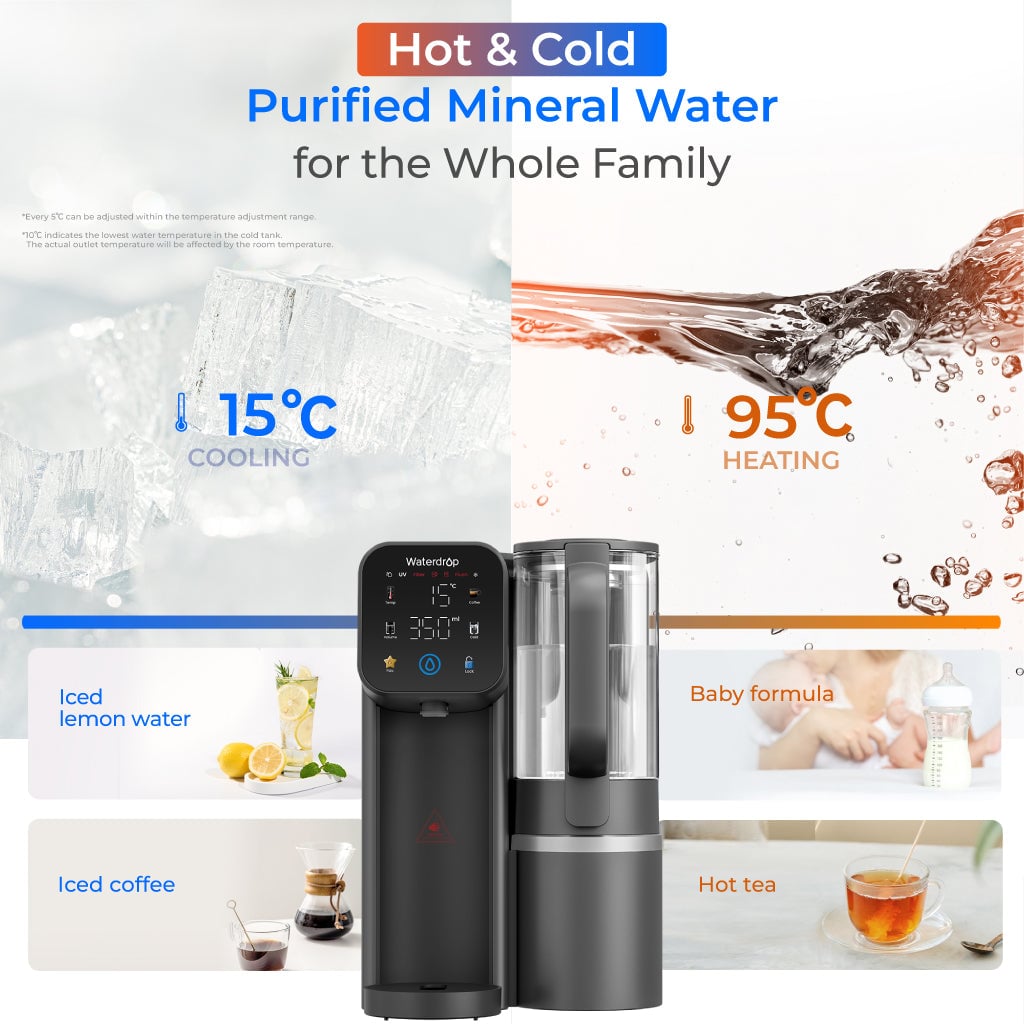
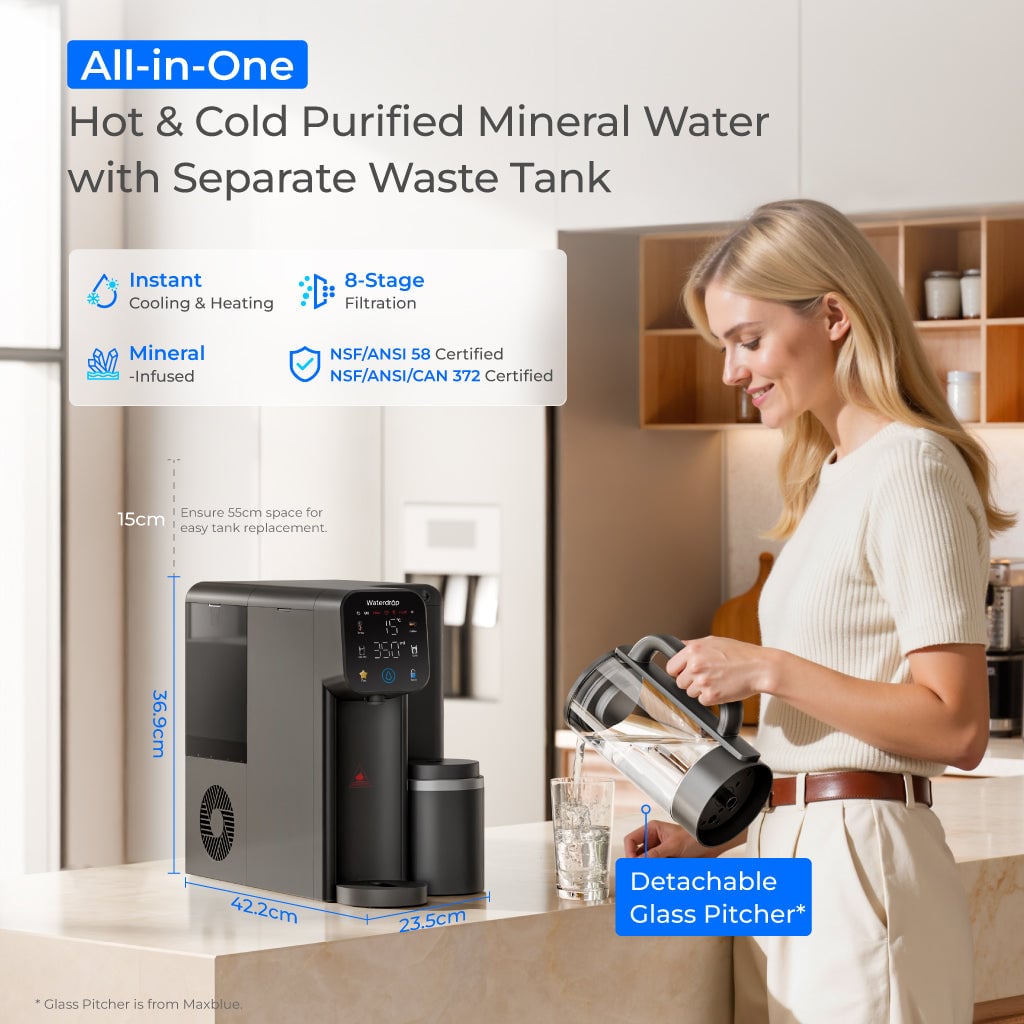
For households that cannot or do not want to modify plumbing, Waterdropfilter also sells countertop reverse osmosis units. The K19-HG is described as an alkaline instant hot water system with 6-stage filtration, pairing purification with on-demand heating. Its replacement filter, the K19RFG, is sold separately for ongoing maintenance.
The M6SL is marketed as a mineral reverse osmosis countertop system, focused on remineralized output rather than heating features. Alongside it sits the M6HG, described as a mineral instant hot RO system that removes 99% of lead according to the product listing. These countertop options give access to reverse osmosis filtration without a permanent undersink setup, which matters for renters in particular.
Electric Water Filter Jugs: Compact Filtration with the ED Series
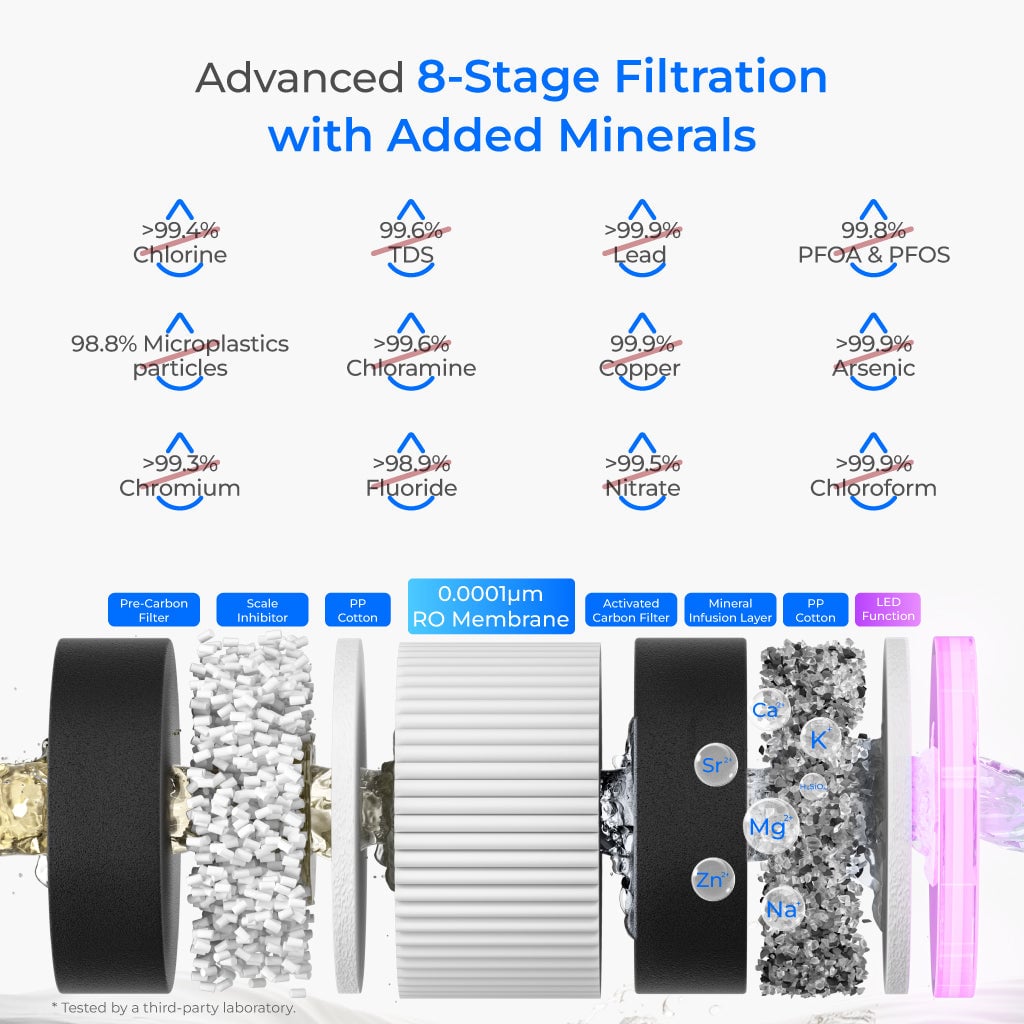
Beyond full RO systems, a line of electric filter jugs sits under the ED designation. The ED05TB and ED05TP are both electric 0 TDS water filter jugs with a 3.5 L capacity and a 1-month filter life. The ED01P is an electric instant filter jug with a 3-month filter life, and NSF certification is noted directly in its product listing.
Two further jug-style products round out the lineup from Waterdropfilter. The ED11W is an electric water filter dispenser with a 3.5 L capacity that ships with 2 filters included. The ED25TW is a 3.5 L mineral water filter jug, aimed at households wanting mineral-enhanced output without an undersink or countertop RO unit taking up space.
Replacement Filters and Long-Term Operating Value
Every system, whether undersink, countertop, or jug-based, relies on a replacement filter schedule to keep performing as intended. Waterdropfilter lists these lifespans directly on each filter’s product page, measured in months or gallons of water processed. This structure lets a household track exactly when a given filter needs swapping rather than guessing.
- The G3-N1CF filter for the G3P800 and G3P600 systems lasts up to 6 months or 550 gallons.
- The G3-N3CB filter for the same systems lasts up to 12 months or 1,100 gallons.
- The WD-G3P600-RO filter extends to up to 24 months or 2,200 gallons of clean water.
- The WD-MNR35 remineralization filter is rated for up to 12 months or 1,100 gallons.
- The G2CF filter for the G2P600 system is rated for up to 24 months or 3,300 gallons.
- The G5P500-RO filter for the G5P500 and G5P500A systems is rated for up to 6 months.
- The ED05TB and ED05TP electric jugs each carry a 1-month filter life.
- The ED01P electric instant filter jug carries a 3-month filter life.
This spread of lifespans means a single household might manage several replacement schedules at once if it runs more than one product from the range. For example, an undersink G3P600 paired with an ED-series jug would need separate filter orders on separate timelines. These replacement filters are sold individually through the site, organized by compatible model.
NSF Certification and Contaminant Removal Standards
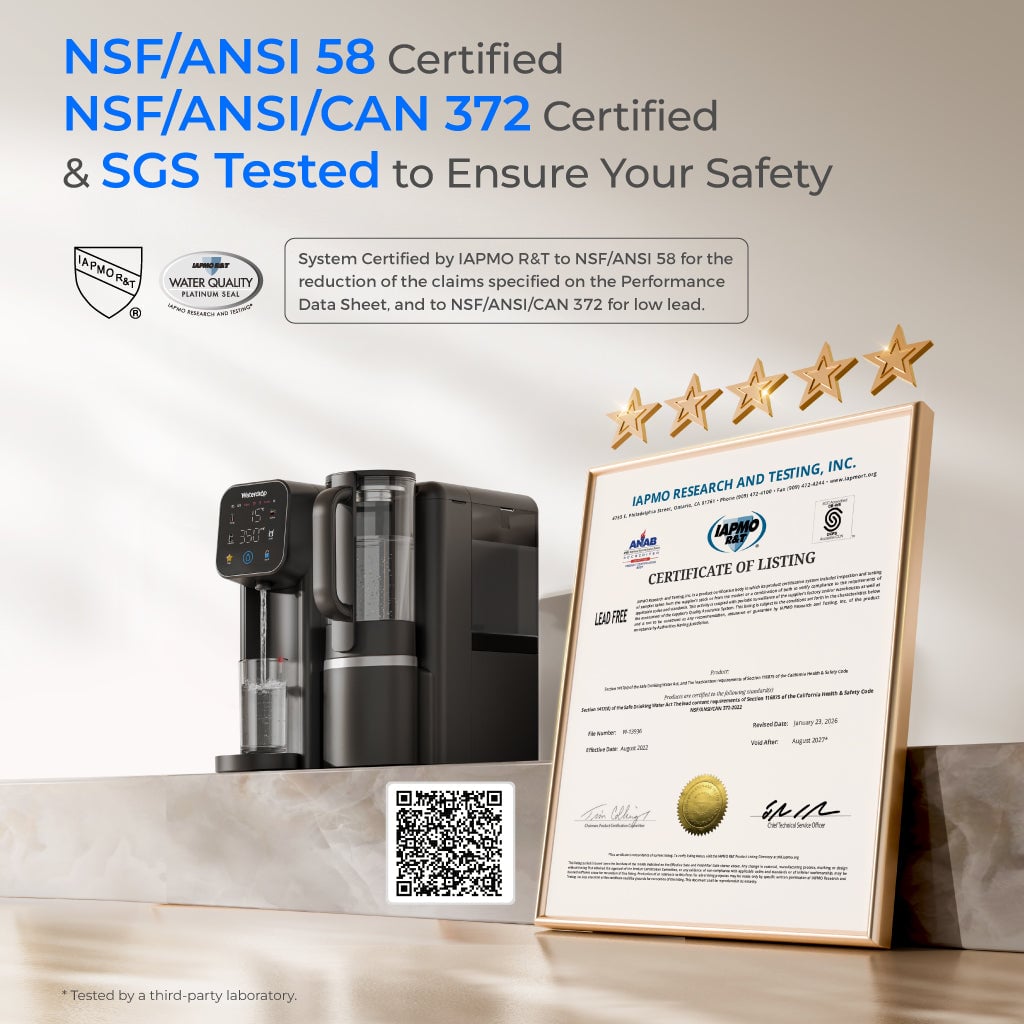
Certification matters when comparing reverse osmosis water filters, since it signals third-party testing against recognized standards. The G2P600 system carries NSF/ANSI 372 certification for its lead-free construction, while the ED01P jug lists its own NSF certification directly on its product page, showing that certification spans both full RO systems and smaller jug-based filters.
Beyond certification marks, individual filters carry contaminant-specific claims tested by third-party labs, such as the G5P500-RO filter’s noted ability to add alkaline minerals and reduce chlorine, taste, and odor. The M6HG countertop system is listed as removing 99% of lead. Together, these certifications and lab-tested claims give a way to compare systems beyond format and capacity alone, and Waterdropfilter‘s own listings remain one of the clearer references for judging any brand selling reverse osmosis water filters.
Across undersink, countertop, and jug formats, the range keeps expanding in a way that lets households match filtration method to kitchen setup.